


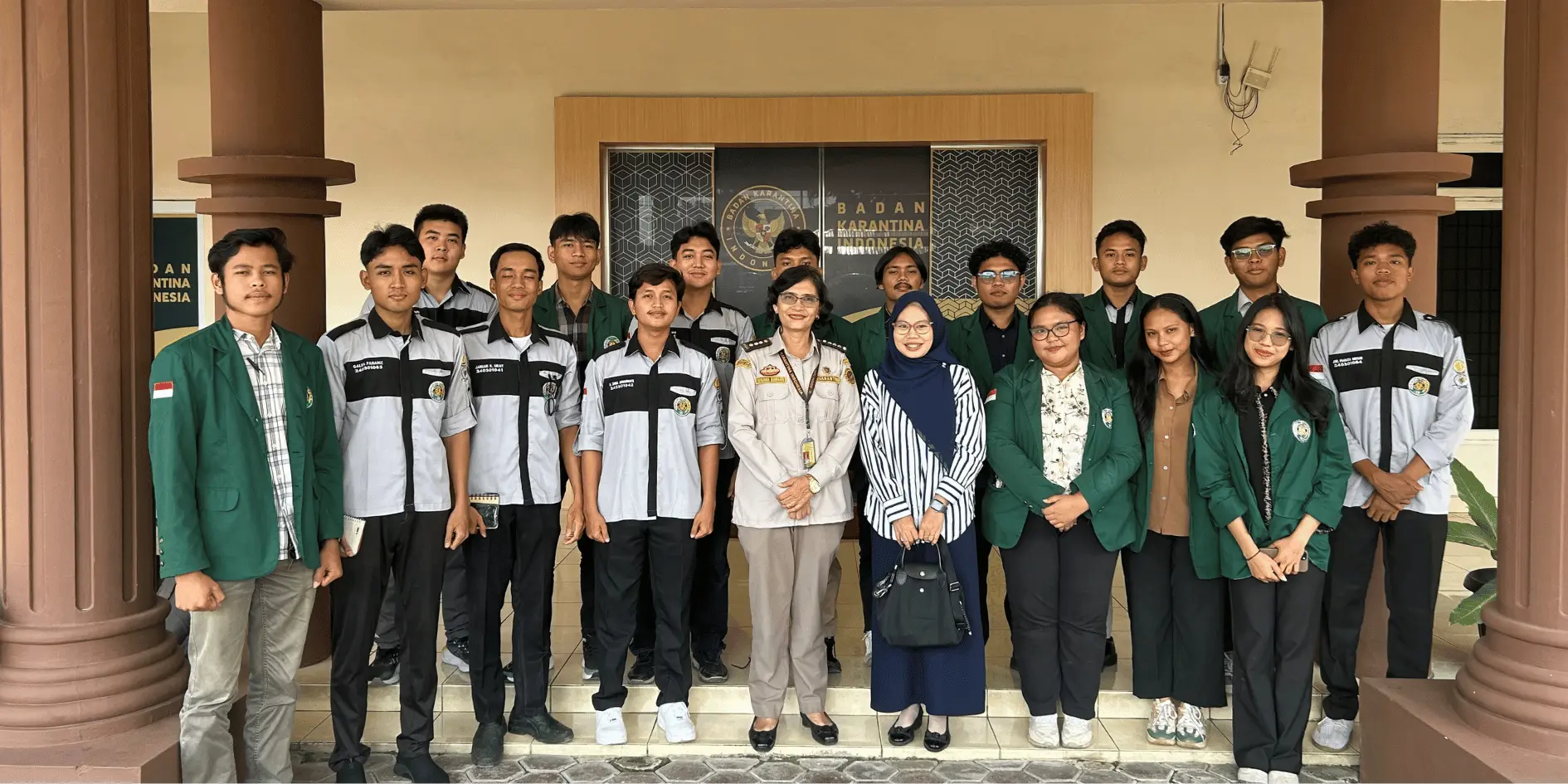
Plant quarantine is an important part of maintaining the health and safety of agricultural commodities. Through the Learning Outside the Study Program (PLPS), students of the Undergraduate Program in Agrotechnology, Faculty of Agriculture, Universitas Sumatera Utara (FP USU), had the opportunity to gain direct experience of plant quarantine practices at the Indonesian Quarantine Agency – North Sumatra Center for Animal, Fish, and Plant Quarantine.
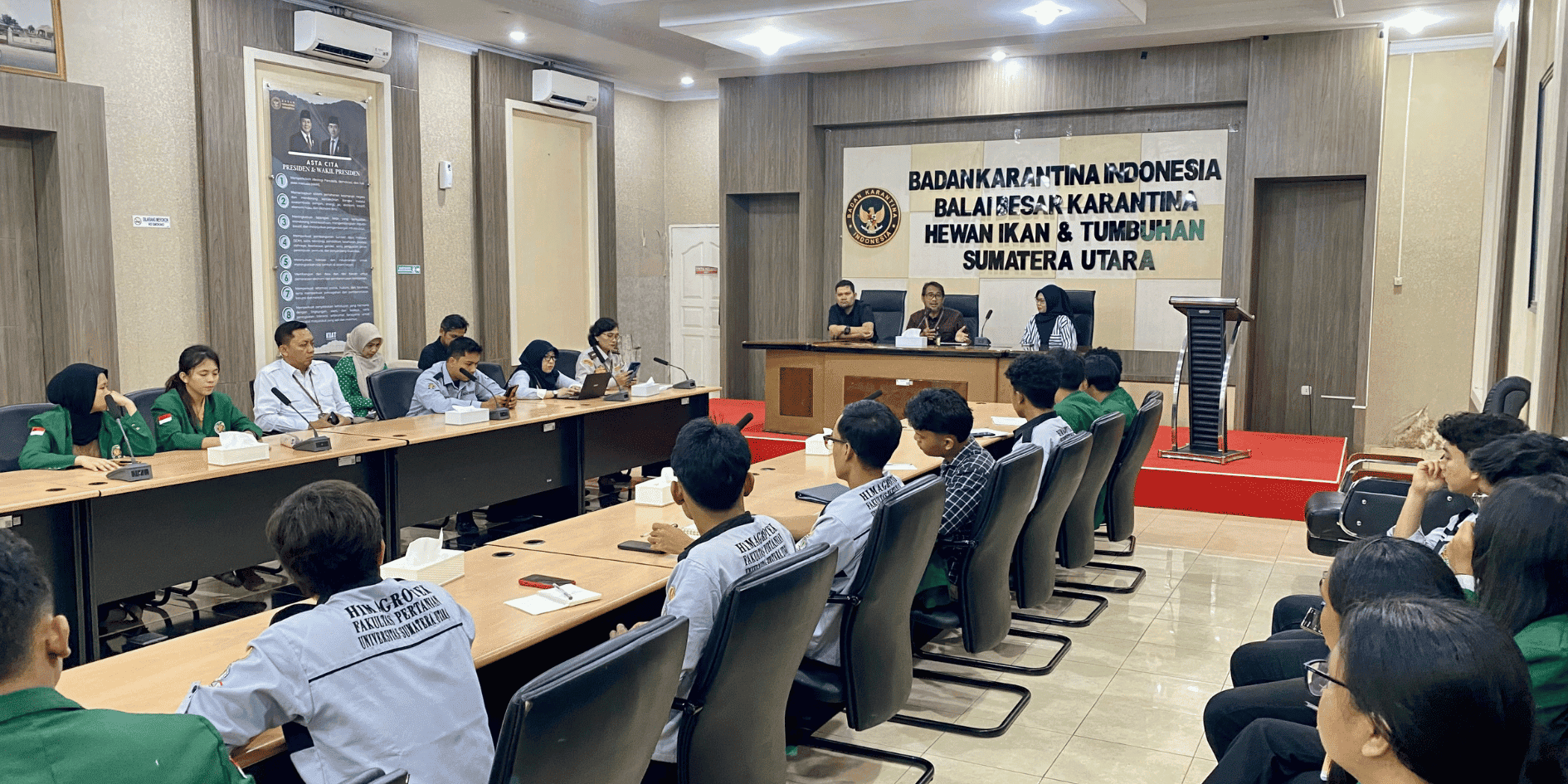
The quarantine work environment provided students with experience in understanding various activities related to plant health inspections and supervision of the movement of agricultural commodities. These activities introduced students to the role of quarantine in ensuring that agricultural commodities transported across regions comply with applicable health and safety requirements.
Through direct involvement during the activity, students were able to observe the connection between the knowledge they had learned in the field of plant protection and quarantine practices in the field. Knowledge of plant pests, plant health, and agricultural commodity management became part of the learning experience that could be applied in a more practical work context. The experience at the Center for Animal, Fish, and Plant Quarantine also provided opportunities for students to develop technical skills and analytical abilities. Interaction with various activities in the quarantine sector helped students understand that plant protection does not only take place at the cultivation stage but also includes monitoring the movement of commodities to maintain plant health and prevent the spread of plant pests.
This PLPS activity also enriched students' experience in becoming familiar with a work environment closely related to the field of agrotechnology. The experience serves as a foundation for developing professional competencies while broadening students' understanding of the role of plant protection knowledge in supporting a healthy and sustainable agricultural system.
Learning in the field, developing competencies, and contributing to healthy and sustainable agriculture.
This PLPS activity also supports the achievement of the Sustainable Development Goals (SDGs), particularly:
SDG 4 – Quality Education
SDG 8 – Decent Work and Economic Growth
SDG 12 – Responsible Consumption and Production