


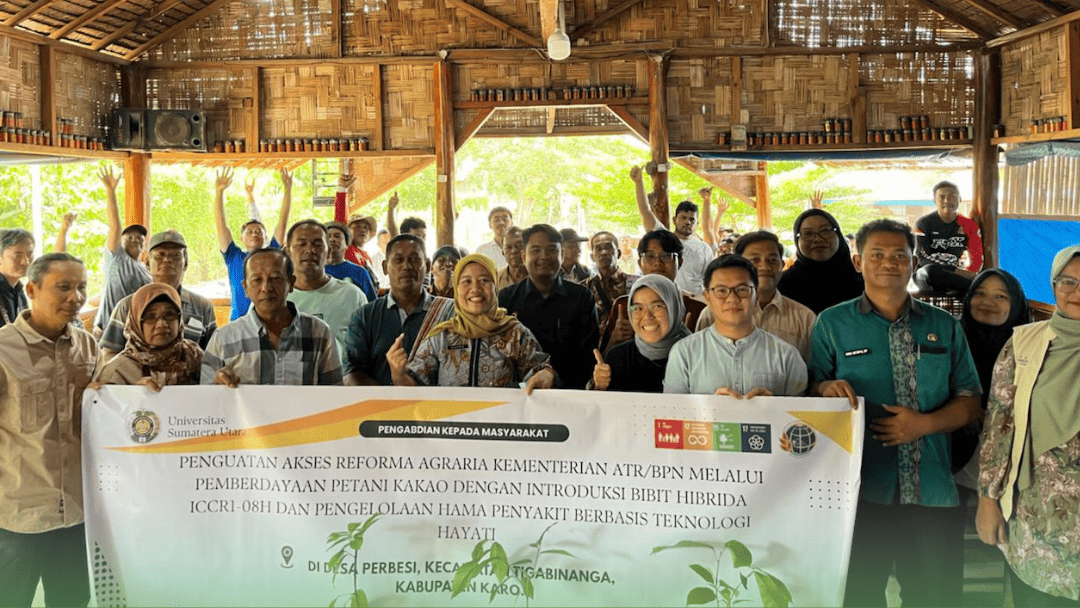
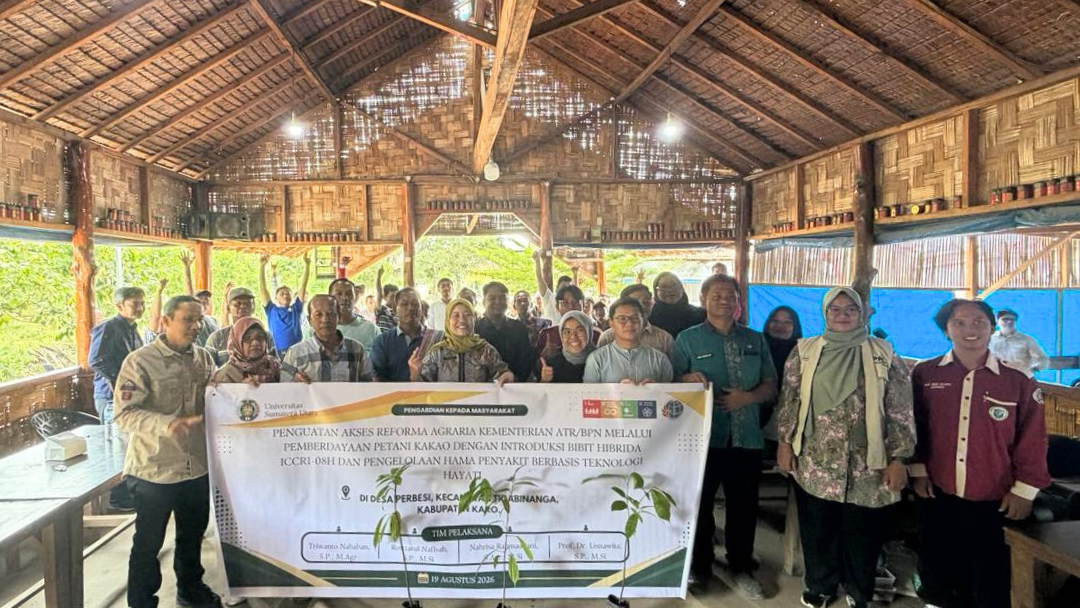
MEDAN — The Agrotechnology Study Program of the Faculty of Agriculture, Universitas Sumatera Utara (FP USU), demonstrated its commitment to community empowerment through a Community Service Program for cocoa farmers in Perbesi Village, Tigabinanga District, Karo Regency. The program, titled “Strengthening Access to Agrarian Reform through the Empowerment of Cocoa Farmers with the Introduction of ICCRI-08H Hybrid Seedlings and Biological Technology-Based Pest Management,” was initiated by Triwanto Nababan, S.P., M.Agr., together with Nahrisa Rahmadhani, S.Agr., M.Si., Rouzatul Nafisah, S.P., M.Si., and Prof. Dr. Lisnawita, S.P., M.Si., along with students from the Doctoral Program in Agricultural Sciences, Bahditra Zanifer from the Master's Program in Agrotechnology, and undergraduate students in Agrotechnology, Medina Shafira, Elfrido Naibaho, and Arif Budi Sejati. Held on Friday, August 21, 2026, the activity represented a concrete contribution by the university to strengthening farmers’ capacity while promoting increased productivity, sustainable farming practices, and the downstream development of cocoa.
The activity was attended by the Head of the Karo Regency Land Office, Nhora Herawaty Saragih, S.ST., M.Si.; Head of Perbesi Village, Martinus Sebayang; representatives of the Karo Regency Agriculture Office; and representatives of Rumah BUMN. Through the program, farmers were introduced not only to superior ICCRI-08H hybrid seedlings but also to biological technology for managing cocoa pests and diseases.
The Cocoa Farming Spirit in Tigabinanga Begins to Decline
Perbesi Village, Tigabinanga District, Karo Regency, is an area where agricultural activities play an important role in supporting the local economy. Cocoa is one of the main commodities cultivated by the community. However, farmers’ interest in cocoa cultivation has begun to decline due to various challenges in the field, particularly difficulties in controlling pests and diseases affecting cocoa plants. This condition has also become a challenge to the sustainability of cocoa production and is reflected in the decline in cocoa cultivation areas in Tigabinanga District. Karo Regency data recorded a cocoa cultivation area of 1,021.57 hectares in 2022, which decreased to 896.57 hectares in 2023, representing a reduction of approximately 125 hectares, or 12.2 percent, in one year.
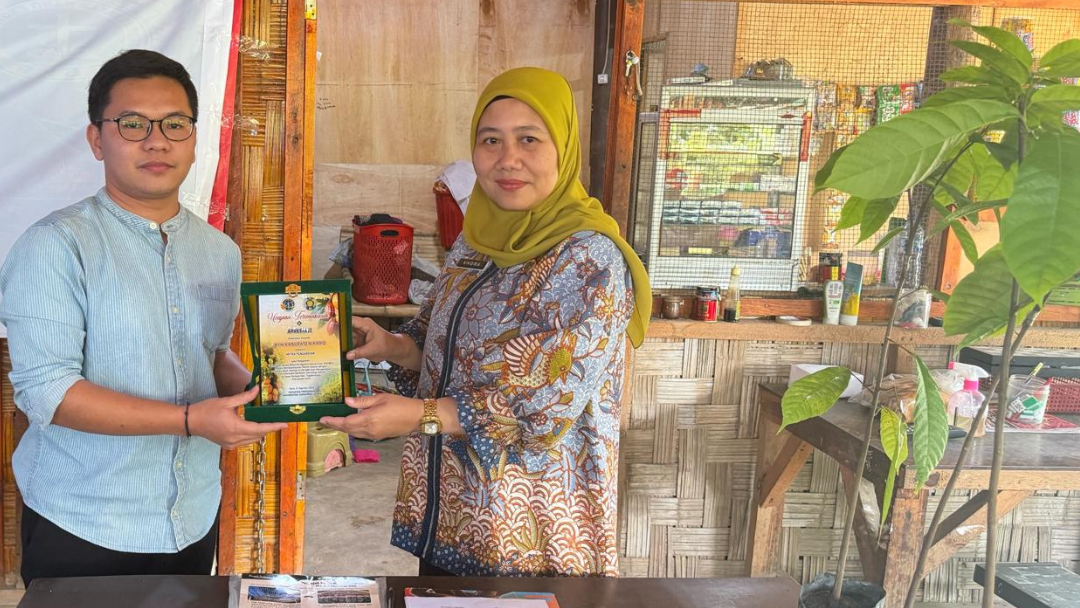
The decline in cultivation area is a concern because it may affect the sustainability of production and the income of communities dependent on plantation commodities. This condition indicates that cocoa development requires not only efforts to maintain existing cultivation areas but also improvements in productivity through better planting materials, crop management, and pest and disease control. Without appropriate management, plant pests and diseases may further reduce productivity and diminish the attractiveness of cocoa farming for farmers.
Introducing Superior Hybrid Seedlings and Biological Technology
The community service team introduced 1,300 superior ICCRI-08H hybrid cocoa seedlings to the community as an effort to increase crop productivity while addressing cultivation challenges in the field. ICCRI-08H is a hybrid developed through the crossing of superior clones. The variety has a high productivity potential of 1.83–2.5 tons per hectare, resistance to black pod disease and Vascular Streak Dieback (VSD), as well as tolerance to dry climatic conditions. The introduction of these seedlings is expected to help farmers obtain cocoa plants that are more adaptable and resilient to environmental conditions that pose challenges to cultivation.
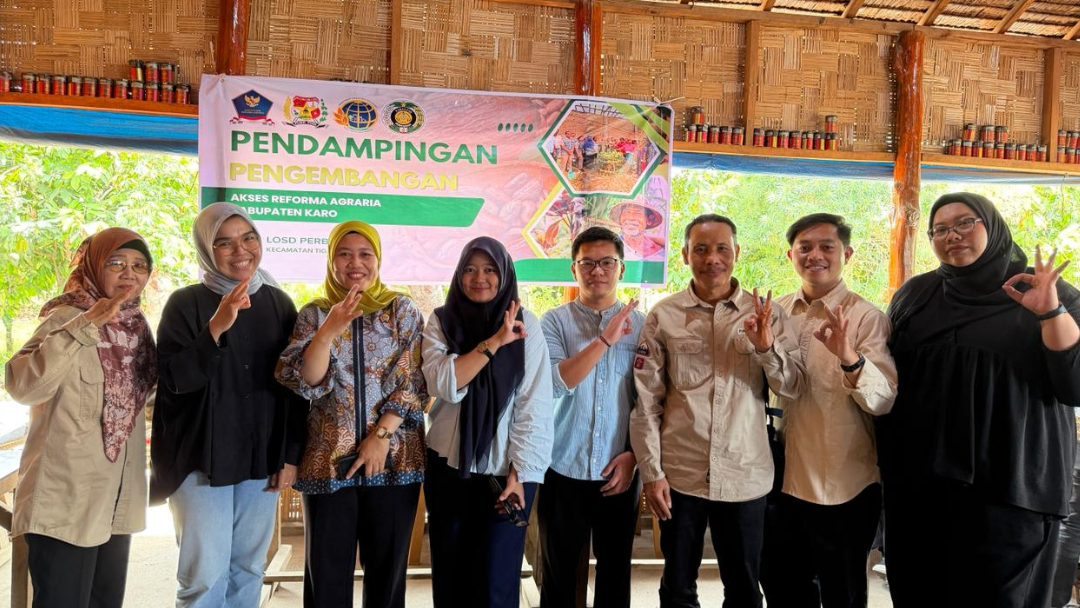
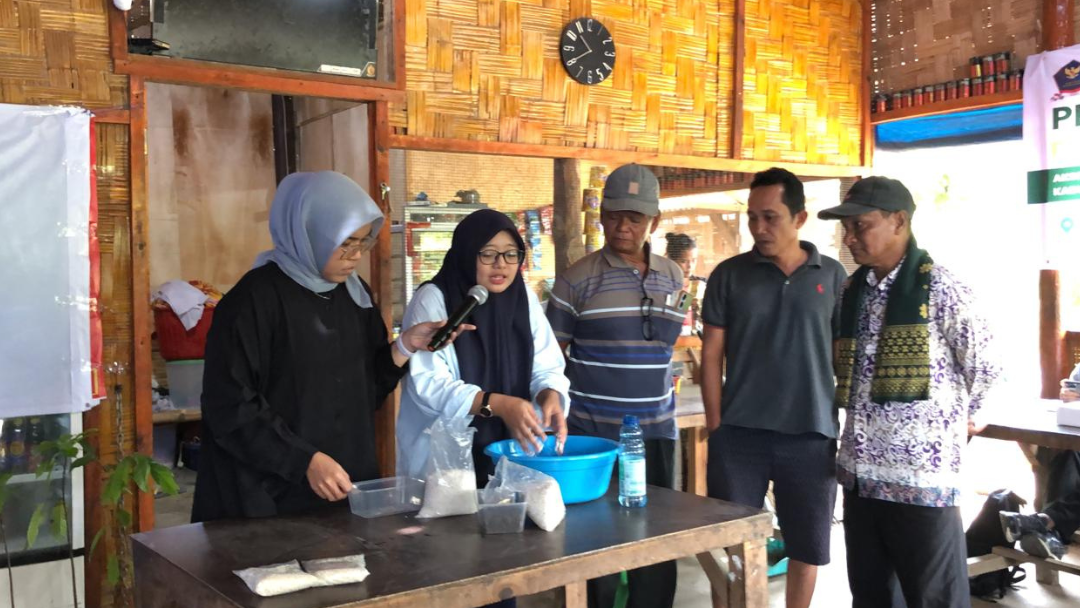
In addition to introducing improved planting materials, the team provided knowledge on pest and disease management using biological control agents, including Trichoderma spp. This approach is expected to provide a sustainable and environmentally friendly alternative for managing pests and diseases.
The activity included socialization, training, field practice, simulation of the collection and application of biological control agents, as well as mentoring and joint evaluation with the community. Through these activities, farmers gained not only information but also hands-on experience in applying the introduced technology. The community service team explained that the program was not limited to technical aspects of cultivation but was also designed to strengthen farmers’ capacity to understand, develop, and independently apply biological technologies in a sustainable manner.
Working Together to Build the Future of Cocoa
The program received enthusiastic responses and support from various stakeholders, including the Perbesi Village Government and the Karo Regency Land Office and its staff, as well as the Karo Regency Agriculture Office and Rumah BUMN Karo. This cross-sectoral synergy serves as an important foundation for empowering farmers and developing more productive and sustainable cocoa farming in Perbesi Village, in line with cocoa development programs in Karo Regency.
The activity also involved two students from the Faculty of Agriculture, Universitas Sumatera Utara, as part of the Kampus Berdampak recognition program. Their involvement provided an opportunity to apply knowledge gained through coursework directly in the community while gaining experience interacting with farmers and understanding the real-world challenges of cocoa cultivation and management.
This Community Service Program represents a concrete contribution by higher education institutions to supporting several Sustainable Development Goals (SDGs), including SDG 1 – No Poverty, through strengthening farmers’ productivity and welfare; SDG 12 – Responsible Consumption and Production, through the application of biological technology in crop management; SDG 15 – Life on Land, through the use of biological control agents to support more environmentally friendly crop management; and SDG 17 – Partnerships for the Goals, through collaboration among higher education institutions, government, and communities.
The Community Service Program was funded through the TALENTA Community Service Program, Perintis Scheme, from the Non-PNBP funding source of Universitas Sumatera Utara for the 2026 Fiscal Year.
Going forward, the community service team hopes that the use of ICCRI-08H superior hybrid seedlings and Trichoderma spp. biological control agents can continue to be developed and independently implemented by the people of Perbesi Village. Through continued synergy among higher education institutions, government, and communities, these efforts are expected not only to improve the productivity and sustainability of cocoa cultivation but also to pave the way for stronger downstream development and help revive the prominence of cocoa in Karo Regency.