


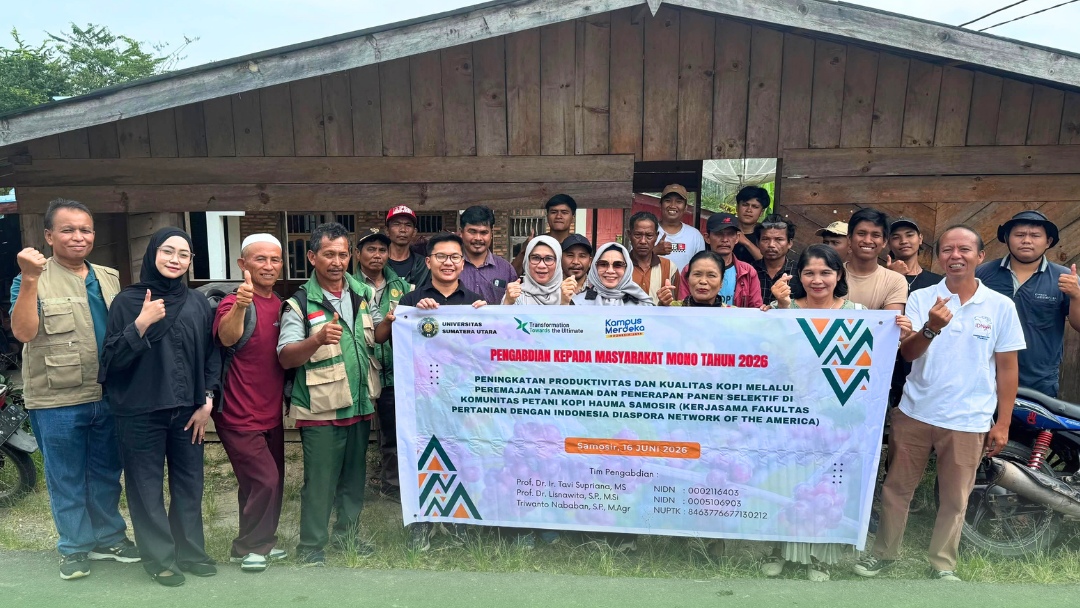
The Community Service Team from the Faculty of Agriculture, Universitas Sumatera Utara (USU), conducted an outreach and mentoring program on coffee plant health management in Sarimarihit Village, Sianjur Mula-Mula District, Samosir Regency, on Thursday, July 16, 2026. The program, attended by 30 participants, combined classroom instruction with hands-on field practice at the coffee plantation owned by Sihar Simbolon. The implementation team was led by Prof. Dr. Ir. Tavi Supriana, M.S., with Prof. Dr. Lisnawita, S.P., M.Si., and Triwanto Nababan, S.P., M.Agr., serving as team members.
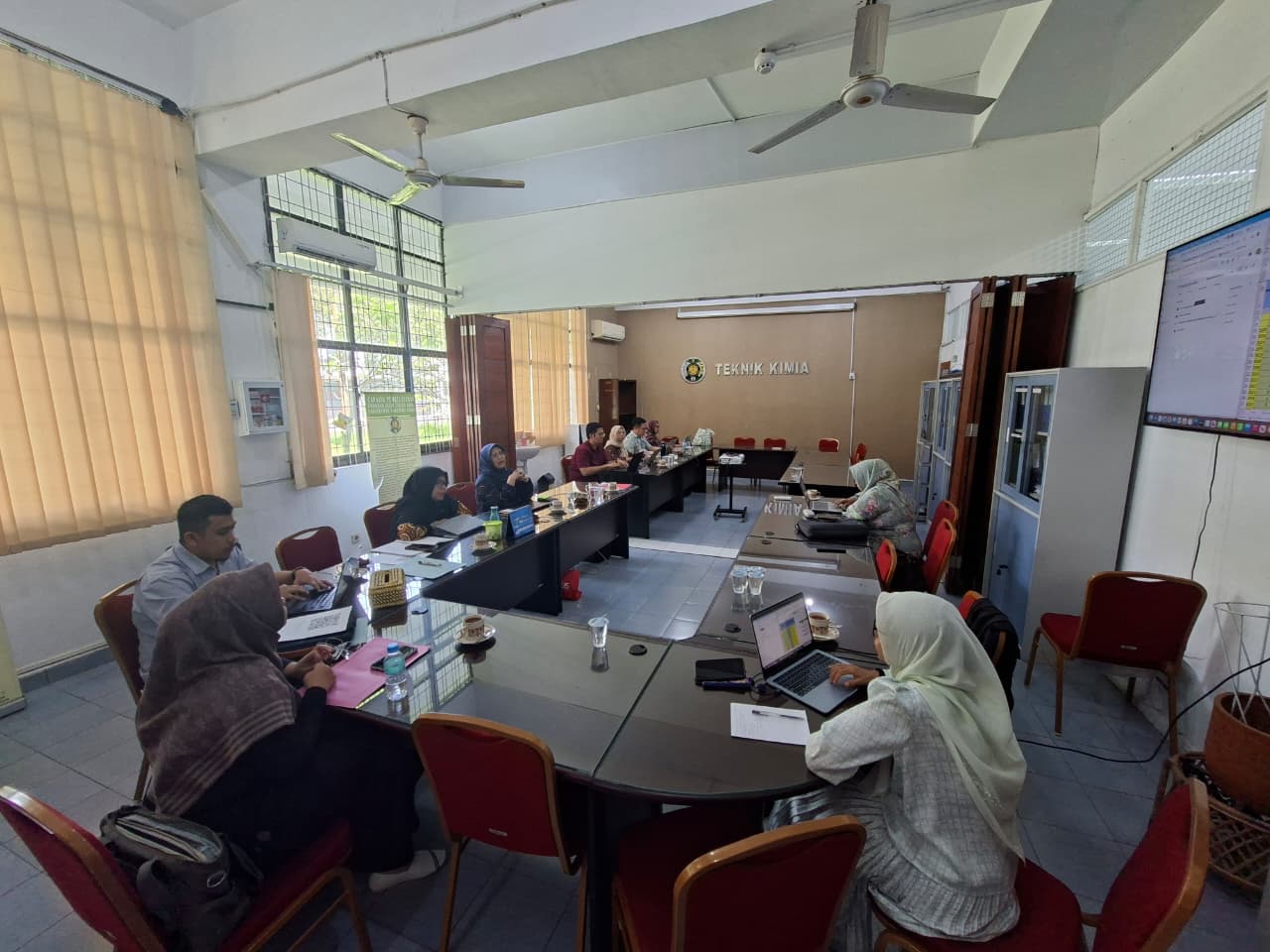
Also attending the program was Dani, representing the Indonesia Diaspora Network of the Americas (IDNA). In addition, Sugono and Syahnen participated as field instructors, assisting participants in identifying plant conditions and demonstrating proper coffee plant maintenance practices in the field.
The program began with an educational session on pests and diseases affecting coffee plants, including common symptoms and appropriate control measures. The session was designed to improve farmers' ability to identify plant health problems at an early stage, enabling timely intervention to minimize disease outbreaks and prevent declines in plantation productivity.
Following the presentations, the implementation team, field instructors, and participants conducted a direct assessment of coffee plants at Sihar Simbolon's plantation. Farmers learned how to identify signs of plant disorders, distinguish productive plants from unproductive ones, and determine which coffee stems required pruning. The mentoring session continued with practical demonstrations of pruning diseased leaves and damaged plant parts. Unproductive coffee stems were also removed to create space for healthier growth and improve overall plantation management. Through these hands-on activities, participants gained not only theoretical knowledge but also practical skills that they can independently apply on their own farms.
The community service team also introduced the proper application of Trichoderma for coffee plants. The demonstration involved creating circular holes around the root zone of each plant before applying the Trichoderma into the soil. This practical exercise enabled farmers to understand the correct placement, procedures, and application techniques.
The Head of the Community Service Team, Prof. Dr. Ir. Tavi Supriana, M.S., emphasized that the program was designed not only to expand farmers' knowledge but also to strengthen their capacity to independently manage coffee plant health.
"This mentoring program was designed to ensure that farmers not only gain knowledge about coffee pests and diseases but are also able to apply that knowledge directly in their plantations. Through plant assessment, pruning of diseased and unproductive branches, and the application of Trichoderma, we hope farmers will be better equipped to maintain healthier coffee plants, reduce the risk of disease, and sustain coffee productivity over the long term," said Prof. Tavi.
As part of its commitment to supporting sustainable plantation management, the community service team distributed 250 kilograms of Trichoderma to participating farmers. The assistance is expected to support ongoing efforts to improve plant health and gradually restore the condition of coffee plantations.
Sihar Simbolon, the coffee farmer and owner of the plantation where the practical session was held, stated that the program helped farmers better understand effective plant maintenance techniques. Pest and disease infestations, along with declining productivity of aging coffee plants, remain major challenges for coffee farmers in Sarimarihit Village. Therefore, the community service initiative focused on strengthening farmers' knowledge and practical skills through educational sessions, technical mentoring, and field demonstrations. The program is also expected to enhance farmers' capacity to sustainably maintain the productivity and quality of Samosir coffee.
This community service program was funded by the Institute for Research and Community Service of Universitas Sumatera Utara (LPPM USU) through the 2026 Community Service Program. The initiative also supports the Sustainable Development Goals (SDGs), particularly SDG 8 (Decent Work and Economic Growth) by enhancing the productivity and economic value of coffee farming, and SDG 17 (Partnerships for the Goals) through collaboration among the university, institutional partners, and local communities.