


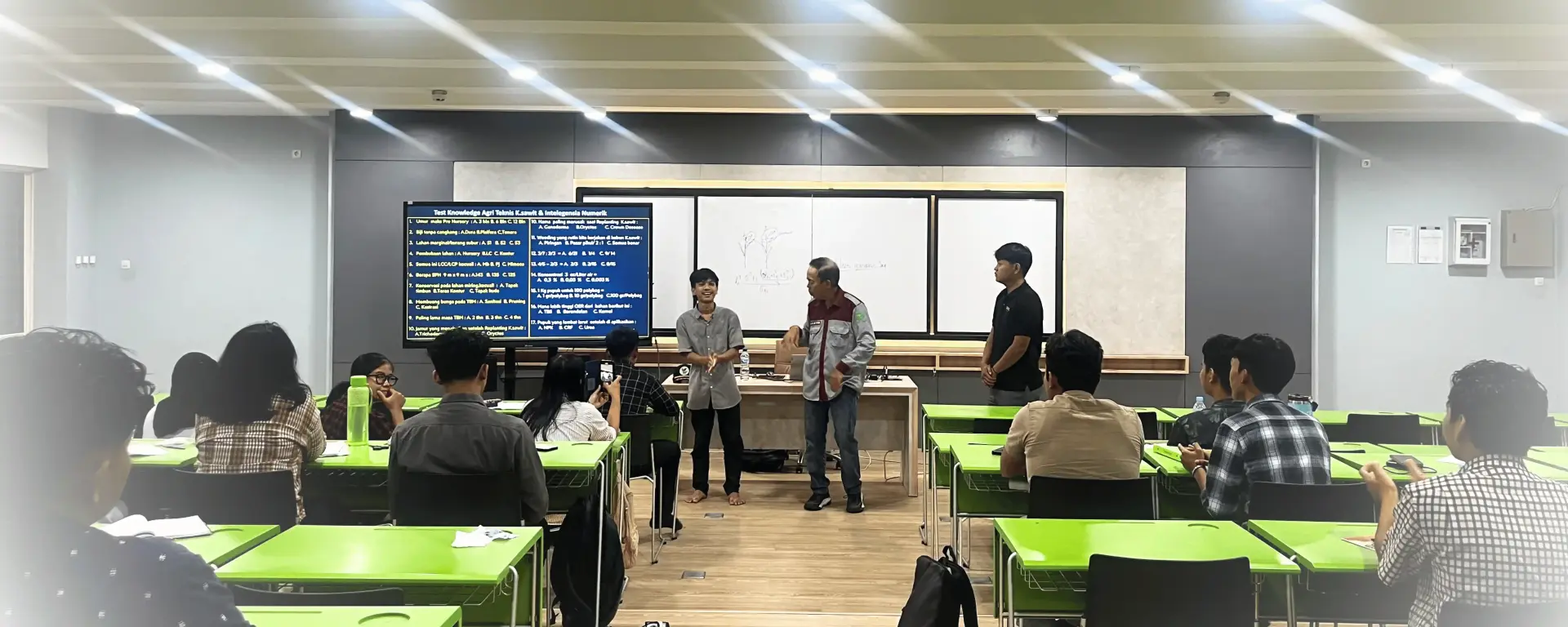
The Faculty of Agriculture, Universitas Sumatera Utara (FP USU), held an Alumni Teaching activity to celebrate the 70th Anniversary and 14th Lustrum of the Faculty of Agriculture USU on Tuesday (November 17, 2026), at Classroom 1, FP USU. The event featured Ir. Abdul Hamdan Nasution, an FP USU alumnus with experience as a planter in the rubber and oil palm plantation sectors, as the speaker for the Plantation Crops II course for students of the Undergraduate Program in Agrotechnology.
During the event, Ir. Abdul Hamdan Nasution shared his professional experience and insights into the plantation industry through a presentation entitled Tips for Successfully Passing Oil Palm Planter Recruitment Tests and the Realities of the Planter Profession. The presentation provided students with an overview of preparation for entering the workforce, the challenges of the planter profession, and career development opportunities in the oil palm plantation industry.
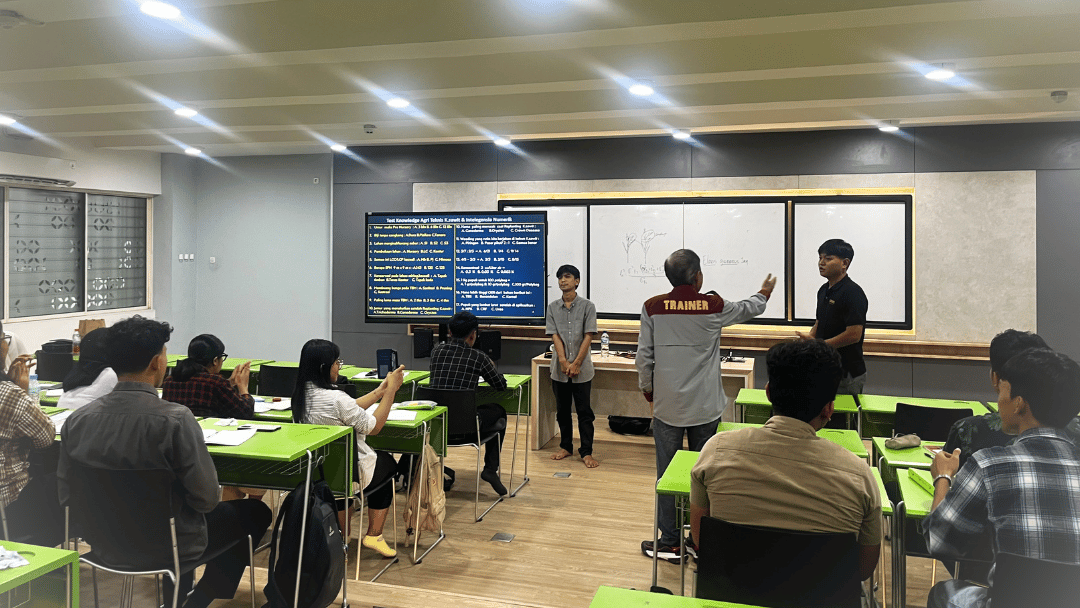
During the presentation, the speaker encouraged students to start preparing themselves for the workforce while still in college. He discussed various challenges faced by university graduates after completing their undergraduate education, while emphasizing the importance of building an appealing personal brand. Some of the steps he highlighted included understanding one's potential, thinking creatively and innovatively, and having the ability to become a pioneer in one's chosen field.
Furthermore, students were introduced to the selection stages for becoming a Field Assistant Trainee or oil palm plantation field assistant, starting from the application process, interviews, psychological tests, medical examinations (medical check-up), and training. To navigate this selection process, prospective planters need to possess basic competencies in oil palm plantation management, including technical agronomy knowledge, plantation management, and social problem-solving skills. Numerical skills and technical knowledge of agriculture are also important aspects that need to be developed.
The speaker also shared tips to help students successfully complete training programs, namely maintaining mental and physical readiness, practicing discipline, participating in classroom learning, undertaking On-the-Job Training, and preparing for the final examination (final test).
In the presentation on career planning, students also gained an overview of career progression in the oil palm plantation industry, from Field Assistant Trainee, Field Assistant, Head Assistant, Estate Manager, Senior Estate Manager, General Manager, Chief Operating Officer, to Chief Executive Officer. On this occasion, students were also reminded to continuously broaden their knowledge and develop a reading habit as part of their professional competency development.
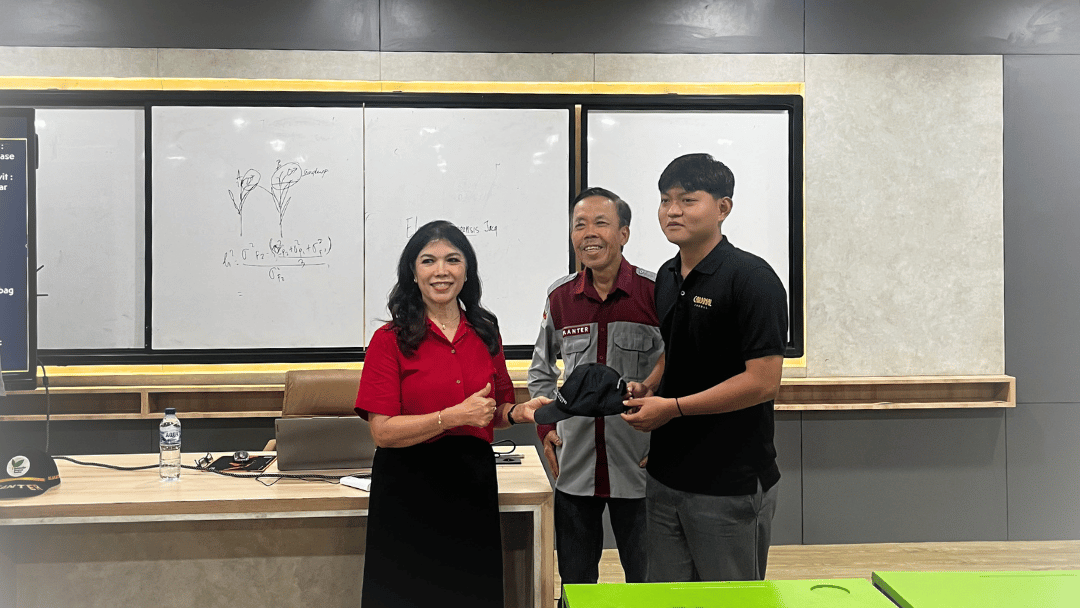
The activity was conducted interactively through discussion and question-and-answer sessions. Students' enthusiasm was evident from the numerous questions they addressed to the speaker. As a token of appreciation for their participation and active engagement, students who successfully answered the speaker's questions received hats as prizes.
The event was also attended by lecturers responsible for the Plantation Crops II course of the Undergraduate Program in Agrotechnology, FP USU, namely Prof. Dr. Ir. Charloq, M.P., and Ir. Irsal, M.P., as well as FP USU managers. The participants were students of the Undergraduate Program in Agrotechnology, FP USU.
Through this Alumni Teaching activity, the Faculty of Agriculture USU hopes that students will not only gain insights into the professional world but also become better prepared to face job market competition by equipping themselves with technical competencies, interpersonal skills, discipline, and thorough career planning. The involvement of alumni as practitioners serves as a means of strengthening the relationship between alumni and their alma mater while enriching students' learning experiences. This activity also supports the achievement of Sustainable Development Goals (SDGs) 4: Quality Education through strengthening practical experience-based learning and improving student competencies, as well as SDG 17: Partnerships for the Goals through collaboration between alumni and educational institutions.