


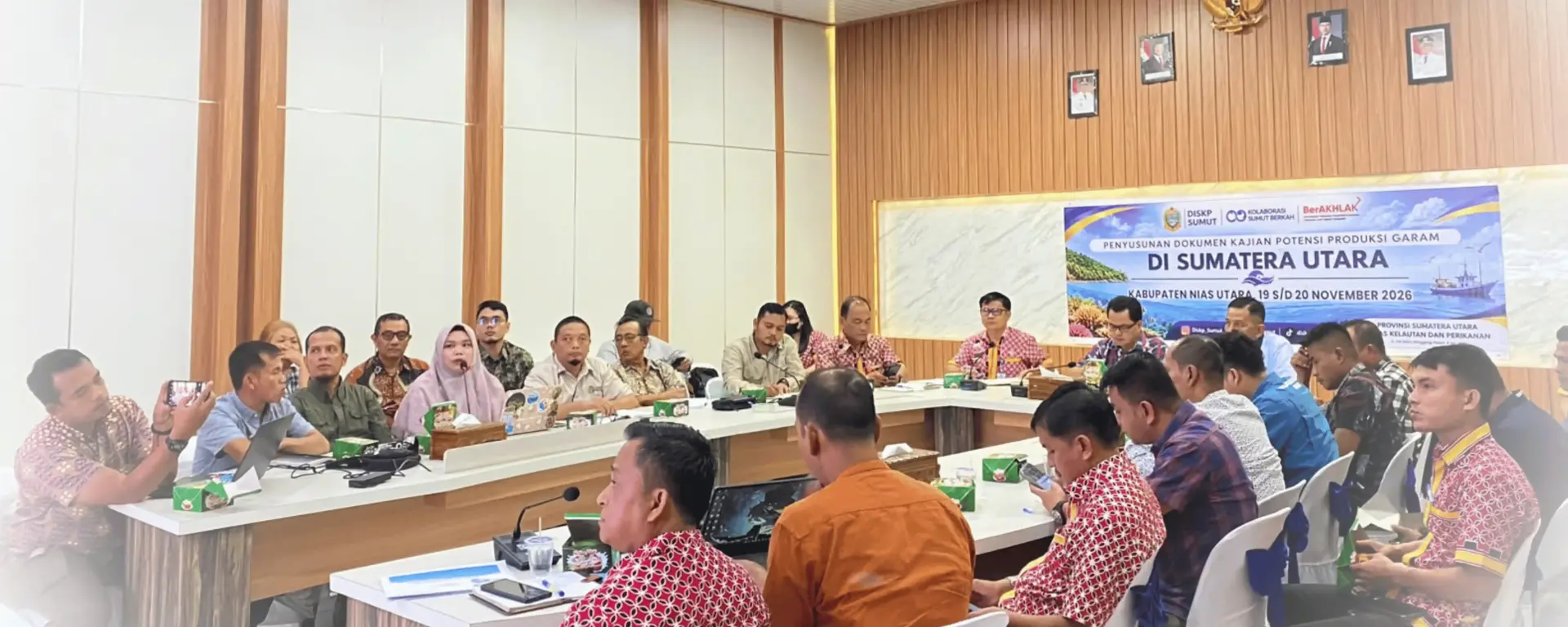
The Faculty of Agriculture, Universitas Sumatera Utara (USU), through the Study Program in Aquatic Resources Management, in collaboration with the Marine and Fisheries Agency of North Sumatra Province, conducted a Study on the Potential for Salt Production in North Nias Regency from November 18–21, 2026.
The activity was led by Vindy Rilani Manurung, S.Pi., M.P., as the team leader, together with the study team members Rusdi Leidonald, S.P., M.Sc., and Kristiawan Hadinata Ginting, S.E., M.Si. The implementation of the activity was also accompanied by the Marine, Coastal, and Small Islands Sector (KP3K) of the Marine and Fisheries Agency of North Sumatra Province.
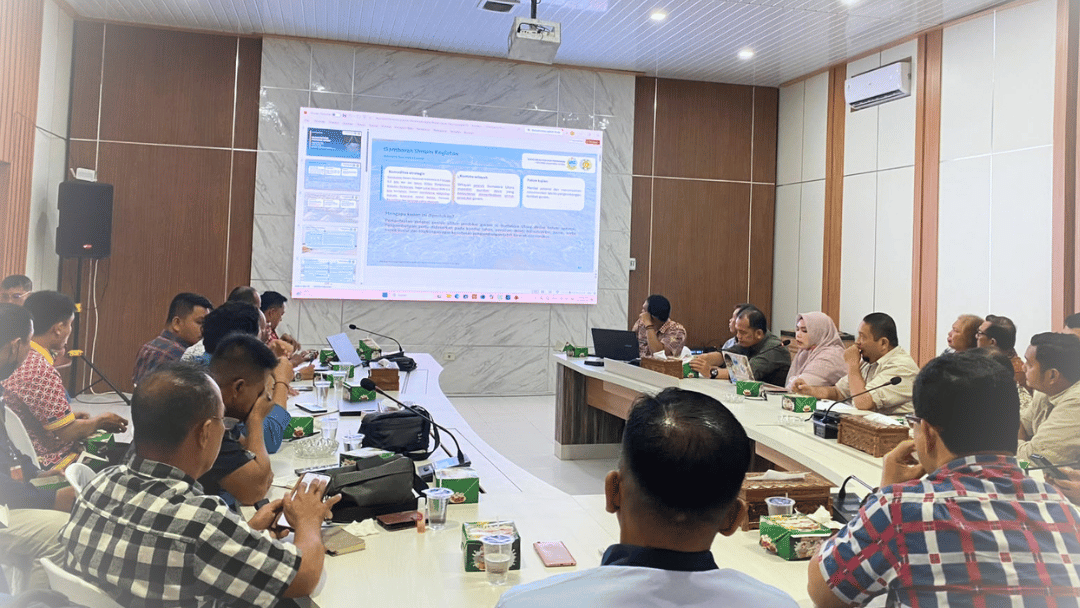
The series of activities began with a Focus Group Discussion (FGD) on November 19, 2026, involving several Regional Government Organizations (OPD) within the North Nias Regency Government. The FGD aimed to gather information, identify potential and problems, and obtain cross-sectoral input as a basis for preparing a study on the development of salt production in the region.
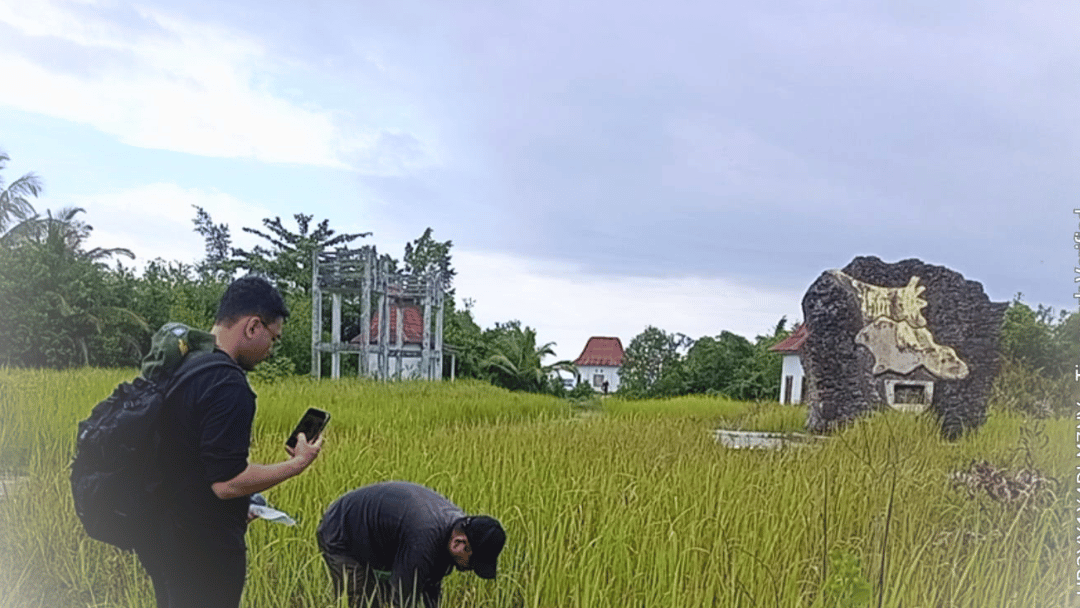
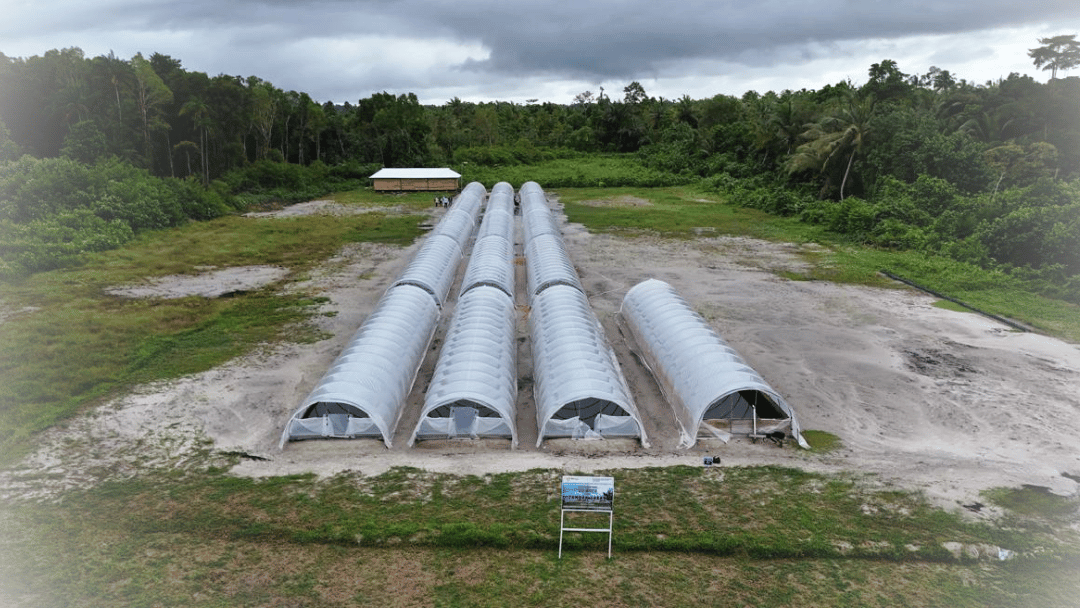
Furthermore, the study team conducted field surveys at three potential locations, namely Siheneasi Village, Hiligawolo Village, and Balefadorotuho Village. The surveys were carried out to identify the distribution and extent of land with potential for salt pond development.
The study also includes an analysis of biophysical limiting factors, including rainfall, evaporation rates, salinity, and topography. The results of this analysis will serve as the basis for recommending salt production potential that is suited to the characteristics of the coastal areas of North Sumatra.
In addition to technical and environmental aspects, the study also considers economic feasibility and socio-institutional conditions.
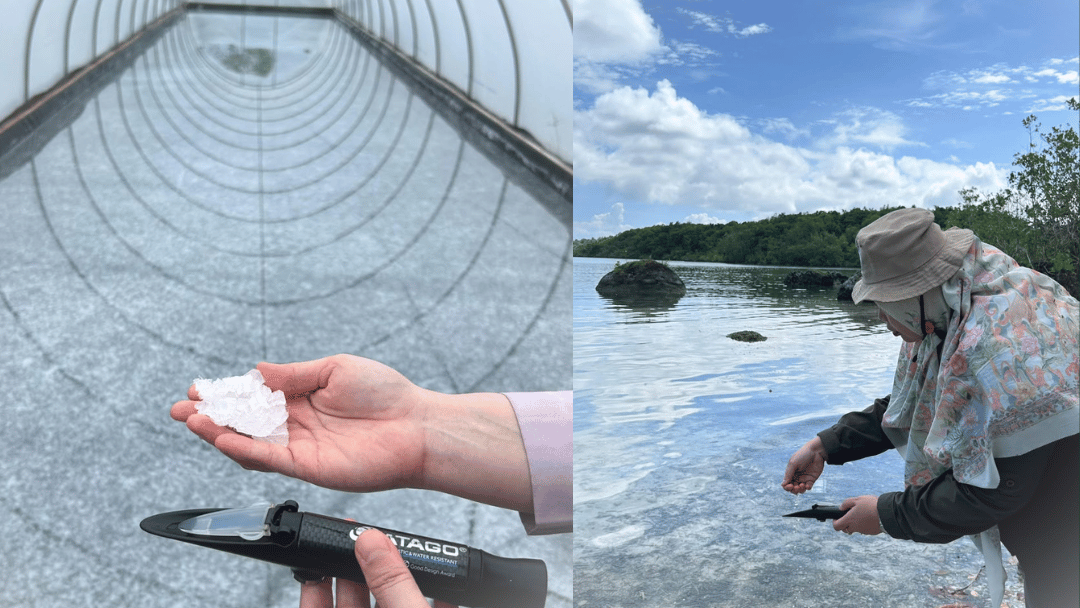
This activity is in line with the commitment to achieving the Sustainable Development Goals (SDGs), particularly SDG 14 (Life Below Water), through the sustainable utilization of coastal resources and the protection of aquatic ecosystems. The salt production study is expected to optimize the potential of coastal areas without disregarding environmental balance.
One of the main outputs of this activity is the Salt Pond Development Land Potential Map of North Nias Regency, which presents spatial information on the distribution, extent, and land suitability levels based on biophysical and climatological characteristics. The results of the study are expected to serve as a scientific basis for the local government in determining priority locations and formulating policies for sustainable salt production development.
Through the synergy between higher education institutions and local government, the Faculty of Agriculture USU, together with the Marine and Fisheries Agency of North Sumatra Province, is committed to encouraging the development of coastal resource potential as an effort to strengthen the regional economy and support sustainable marine and fisheries development.