


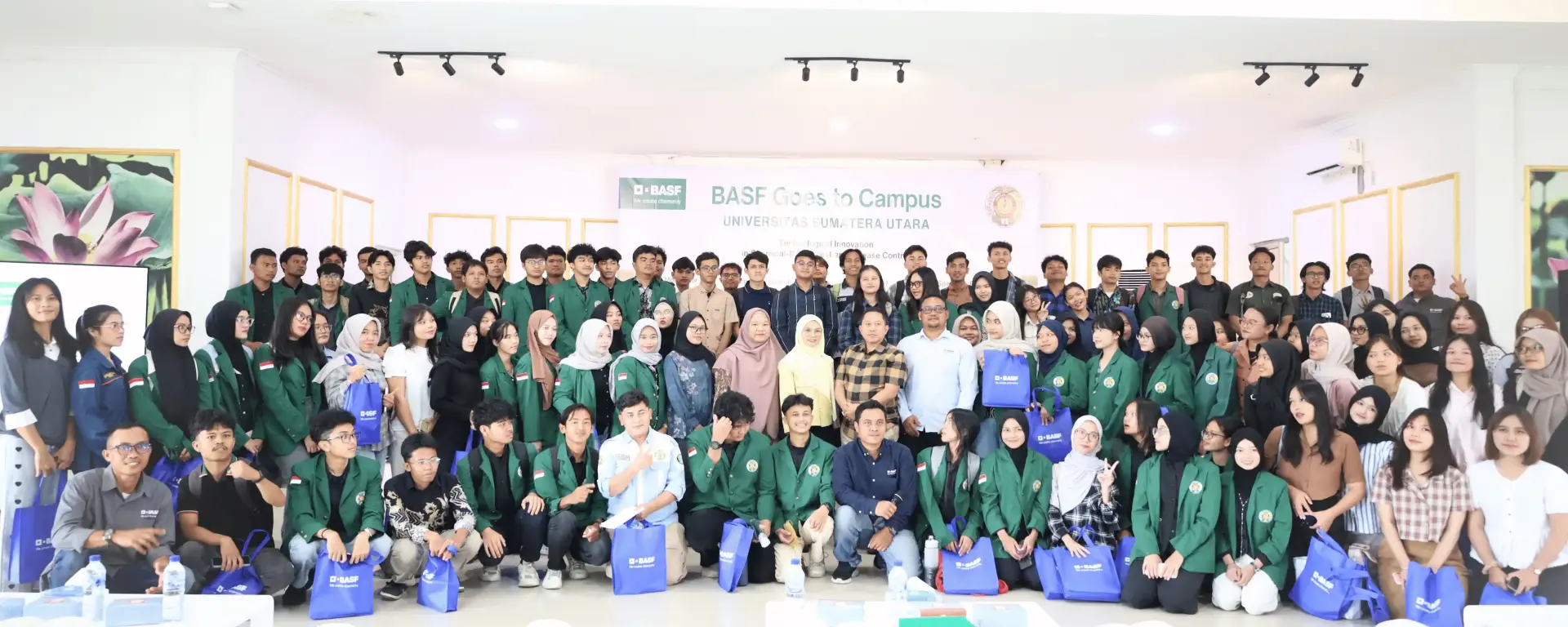
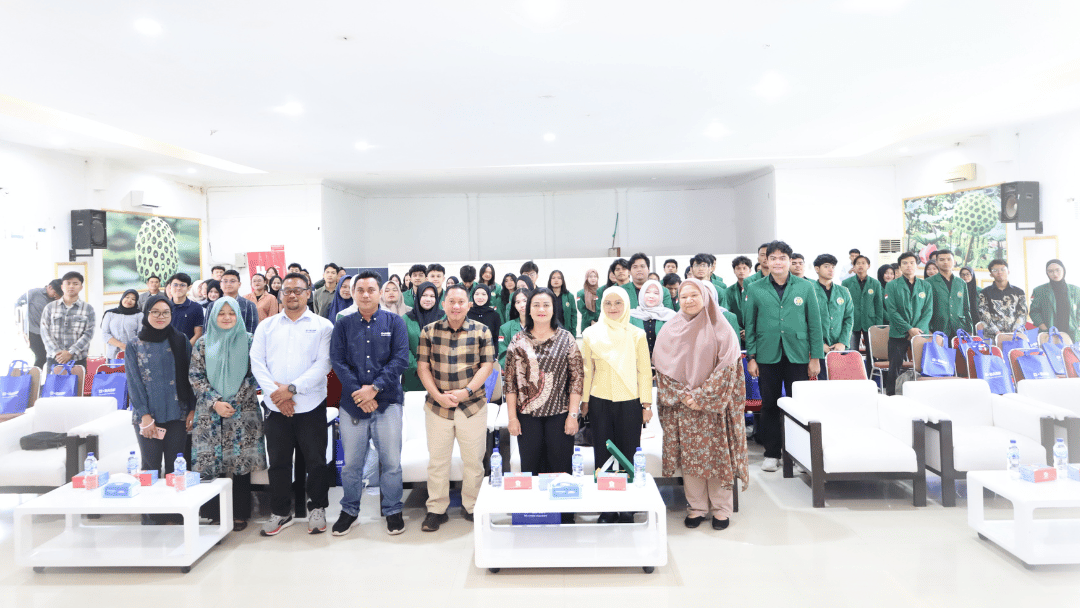
The Faculty of Agriculture, Universitas Sumatera Utara (FP USU), in collaboration with BASF, organized the BASF Goes to Campus event entitled “Technological Innovation in Chemical-Based Pest and Disease Control” on Thursday (November 5, 2026), at the Soeratman Hall, Faculty of Agriculture, USU. The event featured industry practitioners who shared insights into technological innovations in the field of plant protection, particularly chemical-based control of plant pests and diseases, while also introducing students to career needs and opportunities in the agrochemical industry.
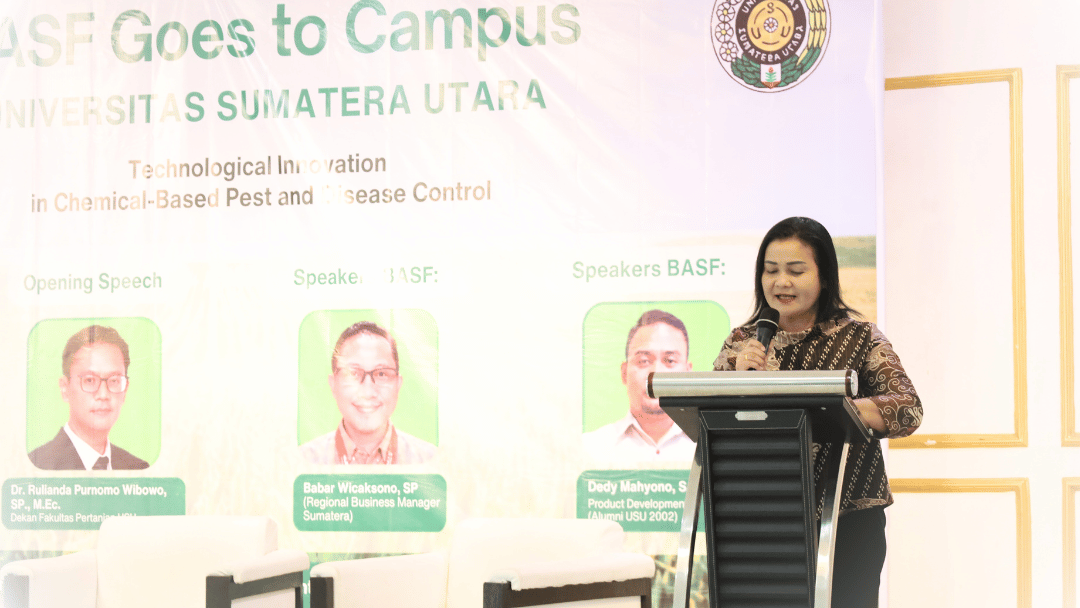
The event was attended by the Vice Dean for Research, Community Service, Cooperation, and Internationalization of FP USU, Dr. Ir. Posma Mangasi Pintaria Marbun, M.P.; the Manager of Research, Community Service, Cooperation, and Internationalization, Dian Pebriyani, S.P., M.P.; the Manager of Academic Affairs, Student Affairs, and Alumni, Dian Tria Fatmila, S.Pt., M.Si.; lecturers and students of FP USU; as well as speakers from BASF and their team. The seminar was moderated by Nursa’adah, S.P., M.Agr., a lecturer in the Undergraduate Program in Agrotechnology, FP USU.
In his opening remarks, Dr. Ir. Posma Mangasi Pintaria Marbun, M.P., stated that the agricultural sector plays a strategic role in addressing global food security challenges, including threats from plant pests and diseases that can affect agricultural productivity. According to him, the development of modern agriculture requires innovation and the utilization of technology to create more effective and sustainable plant protection systems.
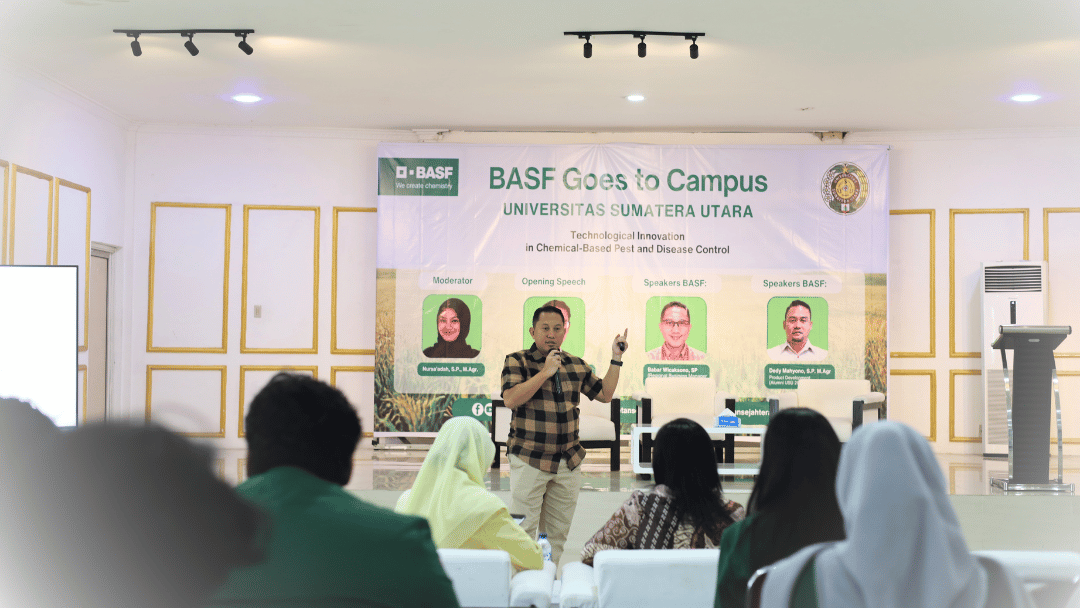
“Chemical-based pest and disease control is not merely about applying products, but also about scientific knowledge, precision, efficiency, and sustainability,” he stated.
He also expressed his appreciation for BASF's presence on campus, describing it as an opportunity for students to gain firsthand knowledge from industry practitioners. Through this activity, students are expected to broaden their insights, actively participate in discussions, and understand developments in agricultural technology and workforce requirements.
The first presentation was delivered by Babar Wicaksono, S.P., Regional Business Manager for Sumatra. In his presentation, he introduced BASF as a global chemical company by discussing its history and development in various countries, including its operations in Indonesia. In addition to introducing the company and the agrochemical industry, he also discussed developments in the agricultural industry and the competencies required to enter the workforce.
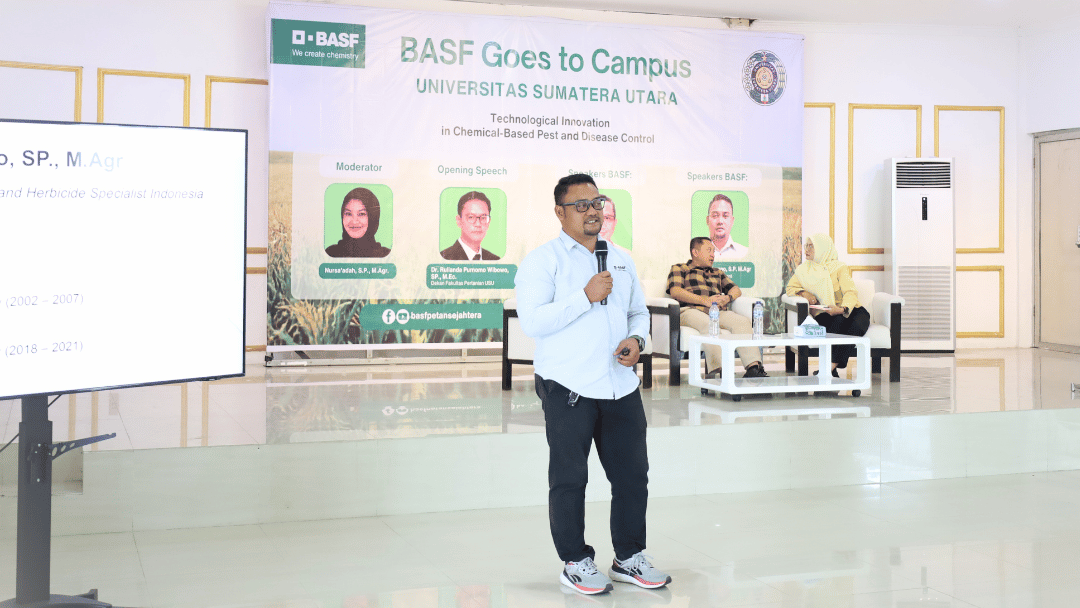
Babar emphasized that the agrochemical industry requires a combination of knowledge, technical and non-technical skills, as well as professional attitudes and values. Students are not only expected to master scientific knowledge but also need to develop communication, collaboration, problem-solving, and adaptability skills in response to technological developments.
He also highlighted the importance of synergy between universities and industry in bridging the competency gap between graduates and workforce requirements. The integration of STEM fields (Science, Technology, Engineering, and Mathematics) with interpersonal skills and professional values is one of the essential foundations for students in preparing for their careers.
The second presentation was delivered by Dedy Mahyono, S.P., M.Agr., Product Development and Herbicide Specialist in Indonesia and an alumnus of the Faculty of Agriculture, USU, from the 2002 cohort. He discussed technological innovations in chemical-based plant pest and disease control, including the importance of understanding the Mode of Action or the mechanism of action of active ingredients in controlling pests, diseases, and weeds.
In his presentation, Dedy explained various BASF innovations in weed and pest control, as well as the development of the F500 fungicide containing the active ingredient pyraclostrobin. He emphasized that technological innovations in plant protection play an important role in supporting agricultural success through more targeted and effective pest and disease control.
The presentation provided students with an overview of how the utilization of chemical technology in plant protection must be supported by scientific understanding of pest and disease characteristics, the mechanisms of action of active ingredients, and their proper application. Thus, innovation should not only focus on plant protection but also consider the effectiveness and sustainability of agricultural production systems.
Participants' enthusiasm was evident throughout the event. The discussion session was interactive, with many students asking questions to the speakers. To encourage greater participant engagement, BASF also held a quiz with prizes for students who actively asked questions. At the end of the event, participants took part in an interactive quiz using the Mentimeter platform, featuring questions related to the seminar materials. Participants who provided the best answers received prizes prepared by BASF.
Through the BASF Goes to Campus event, the Faculty of Agriculture, USU, hopes to establish stronger ties between academia and industry in supporting the development of knowledge, innovation, and human resource competencies in the agricultural sector. The presence of industry practitioners, including alumni who have established professional careers, also serves as an inspiration for students to prepare themselves for the challenges and opportunities in the workforce.
This activity aligns with the Sustainable Development Goals (SDGs), particularly Goal 2 (Zero Hunger) through strengthening plant protection innovations to support productivity and food security; SDG 4 (Quality Education) through practitioner-based learning and the enhancement of student competencies; SDG 9 (Industry, Innovation, and Infrastructure) through introducing technological developments and innovations in the agrochemical sector; and SDG 17 (Partnerships for the Goals) through collaboration between the Faculty of Agriculture, USU, and BASF in connecting the education sector with industry needs.