


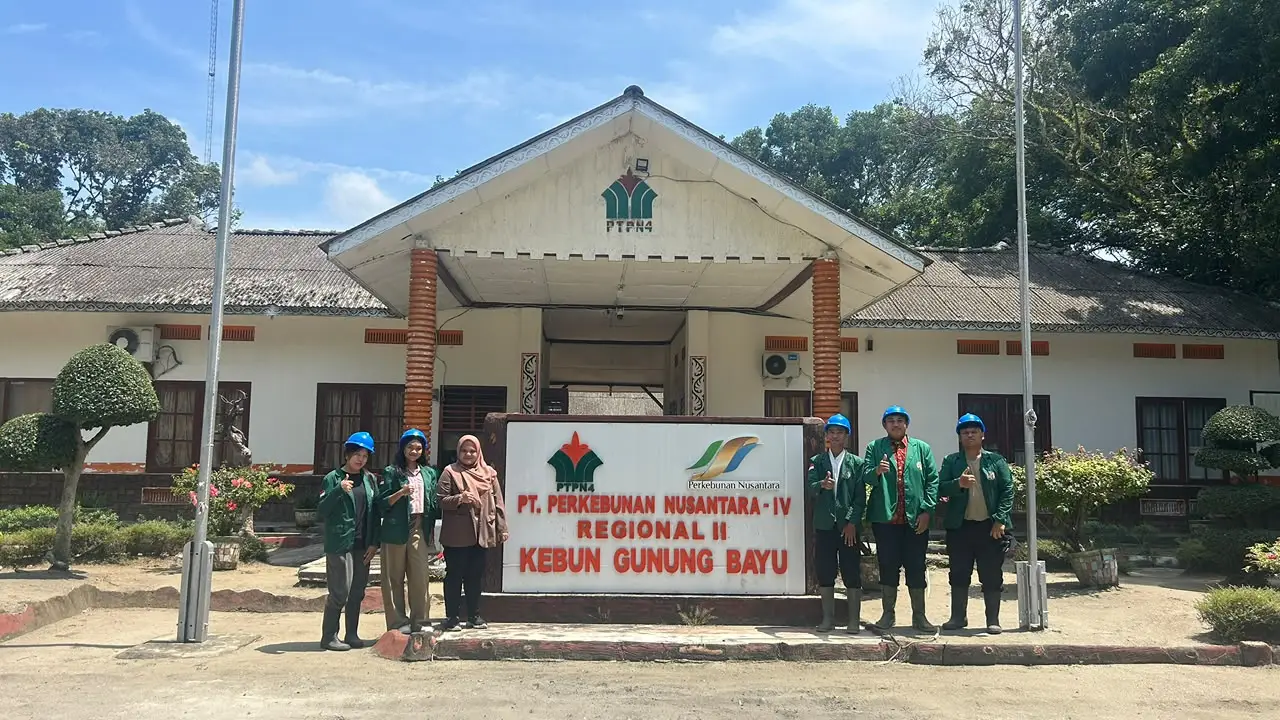
The Undergraduate Program in Agrotechnology of the Faculty of Agriculture, Universitas Sumatera Utara (USU) once again sent its students to carry out Field Work Practice (PKL) in the plantation industry. PKL is an academic activity that places students directly in a company, institution, or agency to gain real work experience. Through PKL, students not only learn from theory in the classroom but also directly experience the dynamics of the actual working environment. PKL provides several important benefits, namely improving students' competitiveness in the workforce, expanding professional networks, and building confidence in facing various tasks and responsibilities.
The PKL activity was carried out at PTPN IV Regional II, Gunung Bayu Plantation, Bosar Maligas District, Simalungun Regency, North Sumatra Province, under the guidance of the Field Work Practice Supervisor, Vira Irma Sari, S.P., M.Si. Direct supervision was conducted by the Field Work Practice Supervisor on July 24, 2026, to observe and evaluate the technical cultivation activities that had been carried out by the PKL students.
The students successfully learned and understood the technical maintenance of Immature Oil Palm (TBM) and Mature Oil Palm (TM) during their PKL. The students demonstrated good ability to observe and analyze various technical oil palm cultivation activities, such as fertilization, pest and disease control (spraying and pest removal), as well as oil palm harvesting activities. The students also conducted direct observations at a palm oil mill to broaden their understanding of the overall oil palm production process.
During their PKL, the students actively collaborated with various parties at the plantation, including the Human Resources team and plantation leaders such as managers and assistants. The students demonstrated good communication skills and were able to work effectively together in completing various assigned tasks. In addition, the students established good relationships with the local community around their place of residence and were able to adapt to the conditions of the plantation environment. The PKL team at Gunung Bayu Plantation also demonstrated strong teamwork through fair and proportional task distribution among students, as reflected in the well-organized and complete administration, report materials, and activity documentation.
Overall, the students who were members of this PKL group, namely Irfan Aulia Hamdani Siregar, Glory Yolanda Christina, Jones Evindonta Kaban, Marcellius Dwi Putra Nainggolan, and Chelsea Tiara Evangelion Purba, demonstrated satisfactory performance throughout the PKL. They showed good potential in the maintenance of TBM and TM oil palm.
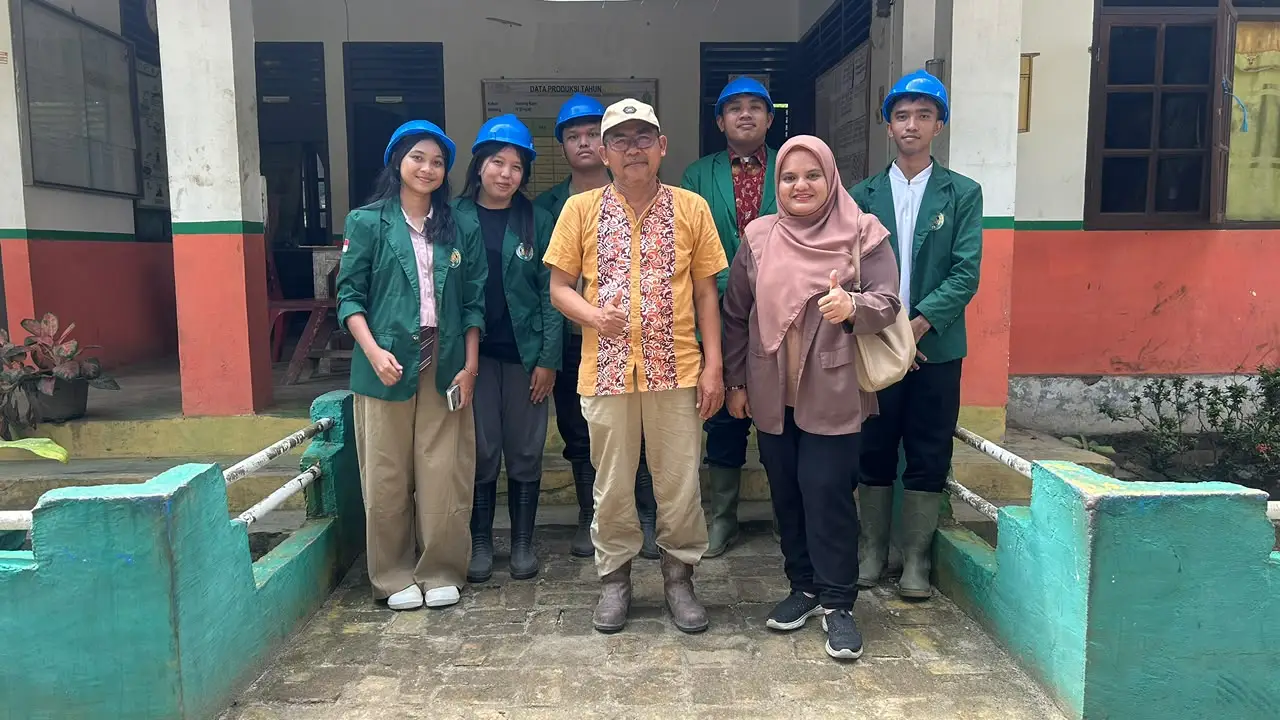
This PKL activity is a concrete manifestation of the cooperation between the Faculty of Agriculture, Universitas Sumatera Utara, and PTPN IV Regional II, Gunung Bayu Plantation, as an effort to equip students with direct work experience in the oil palm plantation industry while also supporting the achievement of the Sustainable Development Goals (SDGs). Several SDGs that are aligned with this PKL activity are:
SDG 4: Quality Education — PKL serves as a platform for experiential learning that connects knowledge gained in higher education with real-world practices in industry, thereby improving the quality and relevance of higher education.
SDG 8: Decent Work and Economic Growth — through PKL, students gain work skills that are relevant to industry needs while also contributing to increased work productivity in the plantation sector where they are placed.
SDG 17: Partnerships for the Goals — this PKL activity is a concrete form of partnership between higher education and industry, namely between the Faculty of Agriculture USU and PTPN IV Regional II, Gunung Bayu Plantation, in jointly supporting the achievement of sustainable development goals.
Thus, the implementation of PKL not only has an impact on improving students' individual competencies but also makes a concrete contribution to sustainable development efforts in the agricultural and plantation sectors.