


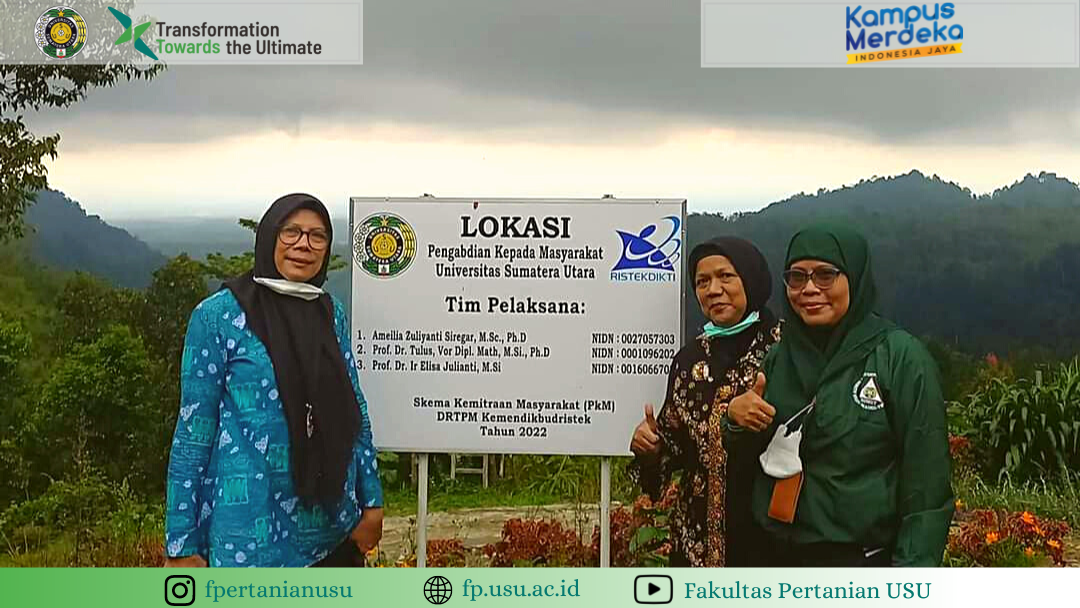
Coffee is one of the plantation commodities with high economic value compared to other plantation crops. Coffee plants grow at elevations of 500–700 meters above sea level, with annual rainfall between 1,500–2,500 mm, a dry period of 1–3 months, and an average temperature of 15–22°C, on land classes S1 or S2.
Farmers in Dusun Perteguhan, Desa Telagah, Kabupaten Langkat, still have limited knowledge, both in cultivation and Integrated Pest Management (IPM). Examples found in the field include irregular fertilization, infrequent pruning of trees, excessive use of chemical fertilizers, suboptimal production, manual post-harvest activities, and coffee husks being piled up without processing, which causes further issues.
These problems stem from the traditional land management of coffee, lack of assistance in using standard coffee roasting equipment, and very low coffee prices.
In response, through the Faculty of Agriculture’s Community Service Program, organized by the LPPM Universitas Sumatera Utara, Faculty member Dr. Ameilia Zuliyanti Siregar, S.Si., M.Sc., Ph.D., along with Prof. Dr. Tulus, Vor Dipl. Math, M.Si., Ph.D., and Prof. Dr. Ir. Elisa Julianti, M.Si., carried out community service in Dusun Perteguhan, Desa Telagah, Kabupaten Langkat.
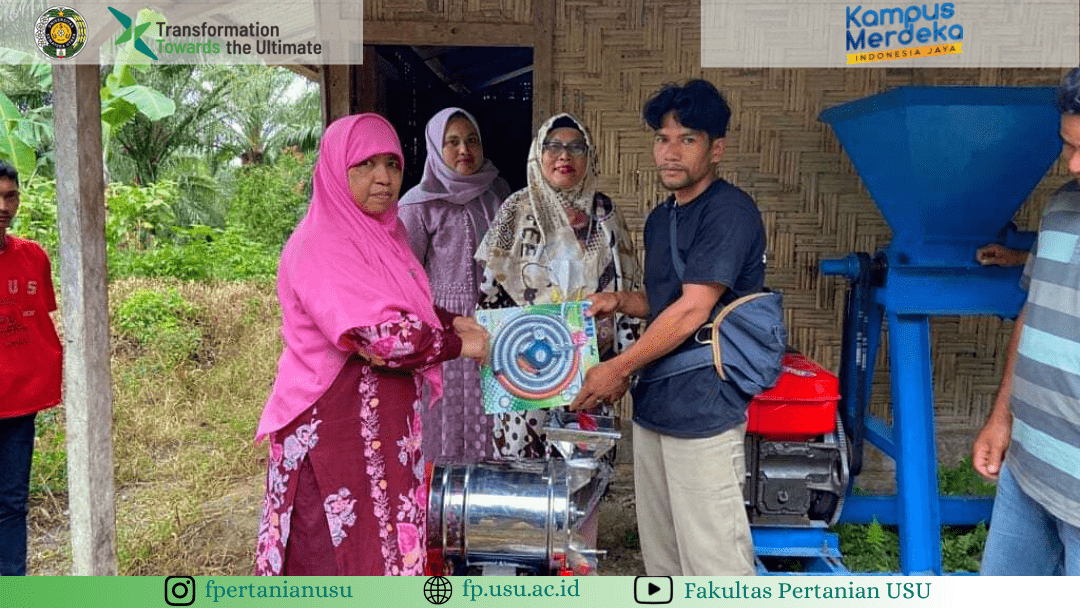
The activities carried out in this community service program include land preparation, material and tool preparation, high-quality coffee seedling production, the design of productive fertilizer tools, making YST traps, producing plant-based pesticides, field observations, and pest inventory. The community partners (the Bahagia Farmers Group in Desa Telagah, Sei Bingei District, Langkat Regency, North Sumatra) contributed by providing land, coffee seedlings, labor, ideas, and time. The next steps involve communicating with and mentoring farmers on integrated pest management, checking for detected pests and insects, monitoring IPM control, and socializing the use of unused coffee waste in Desa Telagah.
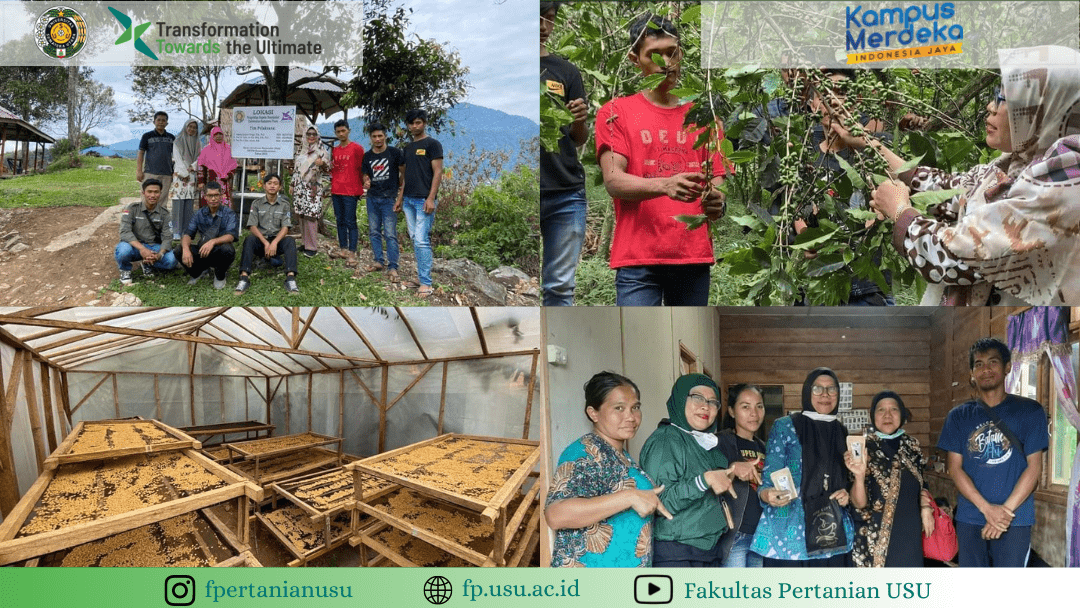
The activity was well received by the community in Dusun Perteguhan, Desa Telagah, Kabupaten Langkat. Through this community service, it is hoped that the problems affecting the quantity and quality of coffee plants, such as the limited knowledge of partners in pest and disease management, can be identified. The knowledge of farmers in managing pests and plant diseases using physical methods (such as using paranet) and chemical methods (plant-based pesticides) to control coffee plant pests has increased. In addition, coffee waste, which was previously unused, can now be processed and utilized by the management of the Farmers Group in Desa Telagah, Sei Bingei District, Langkat Regency, North Sumatra.