


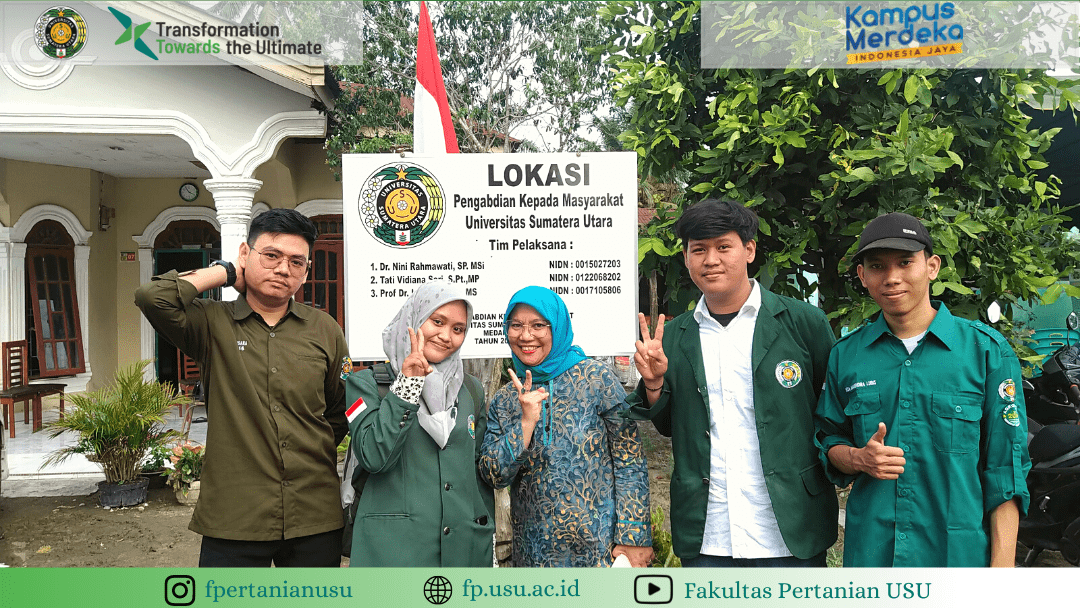
This time, the Faculty of Agriculture, together with Dr. Nini Rahmawati, SP., M.Si., Mrs. Tati Vidiana Sari, S.Pt., M.P., and Prof. Dr. Ir. Rosmayati, M.S., as faculty members of the Faculty of Agriculture, carried out a community service program in Desa Sei Beluru, Asahan Regency.
The Mushroom Farmers Group (KTJ) Mentari Mandiri, which is the community service partner in this program, is a farmers group engaged in oyster mushroom cultivation located in Desa Sei Beluru, Dusun 3, Meranti District, Asahan Regency. This farmers group was established in 2021 with 10 active mushroom farmers. The oyster mushrooms are sold in the local market as fresh mushrooms and various processed mushroom products.
The problem faced by the oyster mushroom farmers is the large amount of waste produced from the mushroom cultivation process, specifically the mushroom baglog, which produces 1–2 tons of waste per harvest. Mushroom baglog waste can cause environmental pollution around the disposal area and become a breeding ground for pests and diseases, which could attack cultivated mushrooms, agricultural plants, livestock, and humans.
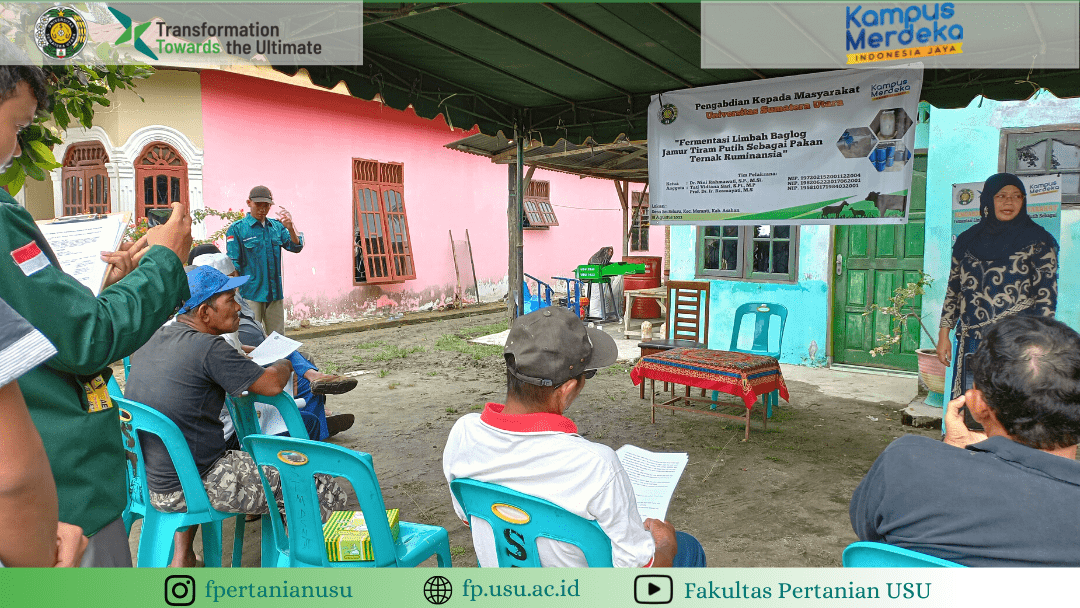
However, the members of the mushroom farmers group have limited knowledge and skills regarding methods for processing mushroom baglog into beneficial and high-value products, as well as the lack of infrastructure and facilities to support mushroom baglog waste processing.
Therefore, it is necessary to implement farming practices based on reuse, reduce, and recycle (3R), which is an effort to promote healthy plant growth and increase their resistance to plant pests and diseases (OPT) from planting to post-harvest activities.

The series of activities conducted included training in making compost from mushroom baglog waste and agricultural waste using compost shredding machines and bioactivators. This was followed by training in making ruminant feed using fermentation technology with shredding machines and bioactivators.
This activity was well received by the Mushroom Farmers Group (KTJ) Mentari Mandiri in Desa Sei Beluru, Asahan Regency. Through this community service program, the partner group now understands and is capable of making compost from mushroom baglog waste using shredding machines and bioactivators, and is also able to produce ruminant feed using shredding machines and a fermentation process with bioactivators.
It is hoped that this activity will be well received, provide many benefits, and be applied in the partners' businesses so that the income of oyster mushroom farmers in Desa Sei Beluru, Asahan Regency, can increase and have a positive impact on the environmental sustainability of the village.