


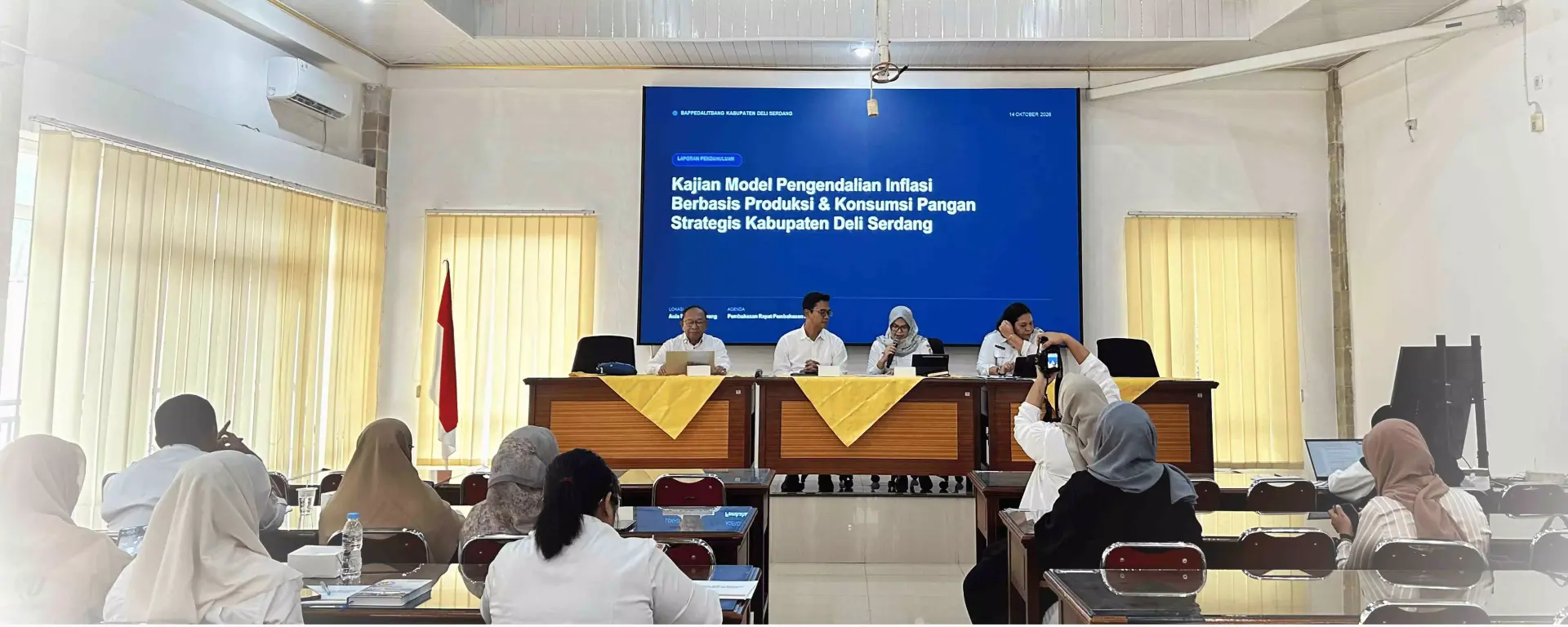
Deli Serdang, October 14, 2026 — The Faculty of Agriculture, Universitas Sumatera Utara (FP USU), participated in the Study on a Strategic Food Inflation Control Model Based on Production and Consumption in Deli Serdang Regency, held at the Hall of the Regional Development Planning, Research, and Development Agency (Bappedalitbang) of Deli Serdang Regency on Wednesday, October 14, 2026.
The activity aimed to examine a food inflation control model that integrates production, consumption, supply availability, prices, and the distribution of strategic commodities. The study is expected to serve as a basis for local governments to formulate anticipatory measures to maintain food price stability and meet community needs.
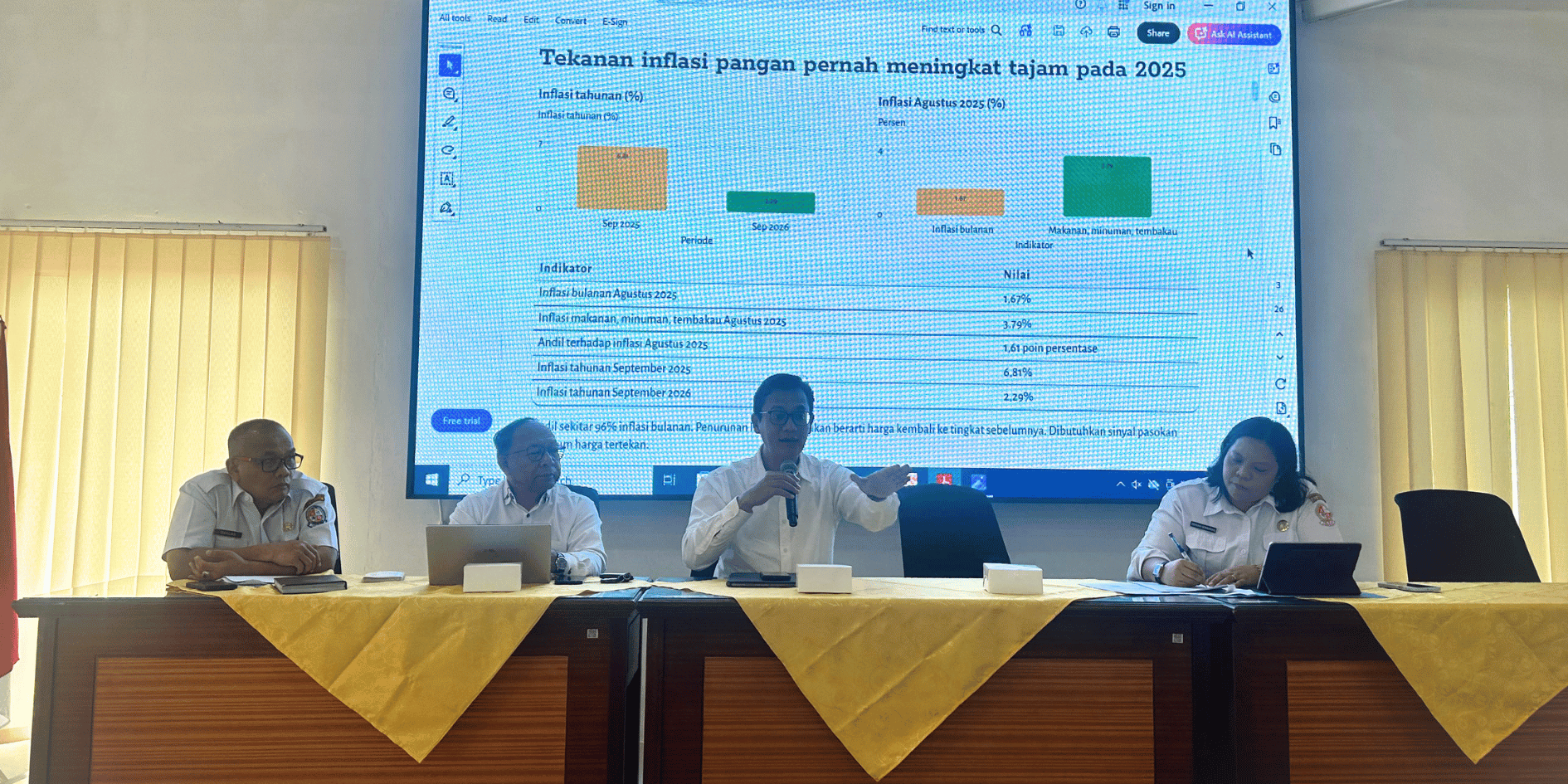
The Dean of the Faculty of Agriculture USU, Dr. Rulianda Purnomo Wibowo, S.P., M.Ec., attended the activity to share insights and research findings on data-driven food inflation control. Also present was Ir. Thomson Sebayang, M.T., a lecturer in the Undergraduate Program in Agribusiness, FP USU, together with representatives from Bappedalitbang Deli Serdang Regency, Statistics Indonesia (BPS), Perum BULOG, and relevant regional government agencies, particularly those responsible for marine affairs and food security, livestock, and horticulture.
The discussion positioned Deli Serdang Regency as a region with a strategic role in the regional food system. In addition to producing various agricultural commodities, Deli Serdang has substantial consumption needs and forms part of the food distribution network across the Medan–Binjai–Deli Serdang–Karo region.
The study focused on eight strategic food commodities: rice, red chili peppers, bird's eye chili peppers, shallots, garlic, broiler chicken meat, chicken eggs, and cooking oil. Analyzing these commodities is necessary to understand the relationship between local production capacity, community consumption needs, stock availability, and distribution efficiency, all of which can influence price movements.
One important aspect discussed was the need for an Early Warning System (EWS) to identify potential price pressures before they result in widespread price increases. The system is planned to use indicators such as supply gaps, price anomalies, price volatility, projected price pressures, and distribution disruptions. Monitoring results will be used to classify risk levels so that local governments can determine appropriate responses based on the conditions of each commodity.
Through cross-agency discussions, the study also encourages the integrated use of production, consumption, price, stock, and distribution data. The availability of interconnected data is expected to help local governments identify potential supply shortages, determine response priorities, and formulate more targeted policies. The study is planned to be carried out in stages over a period of 60 days.
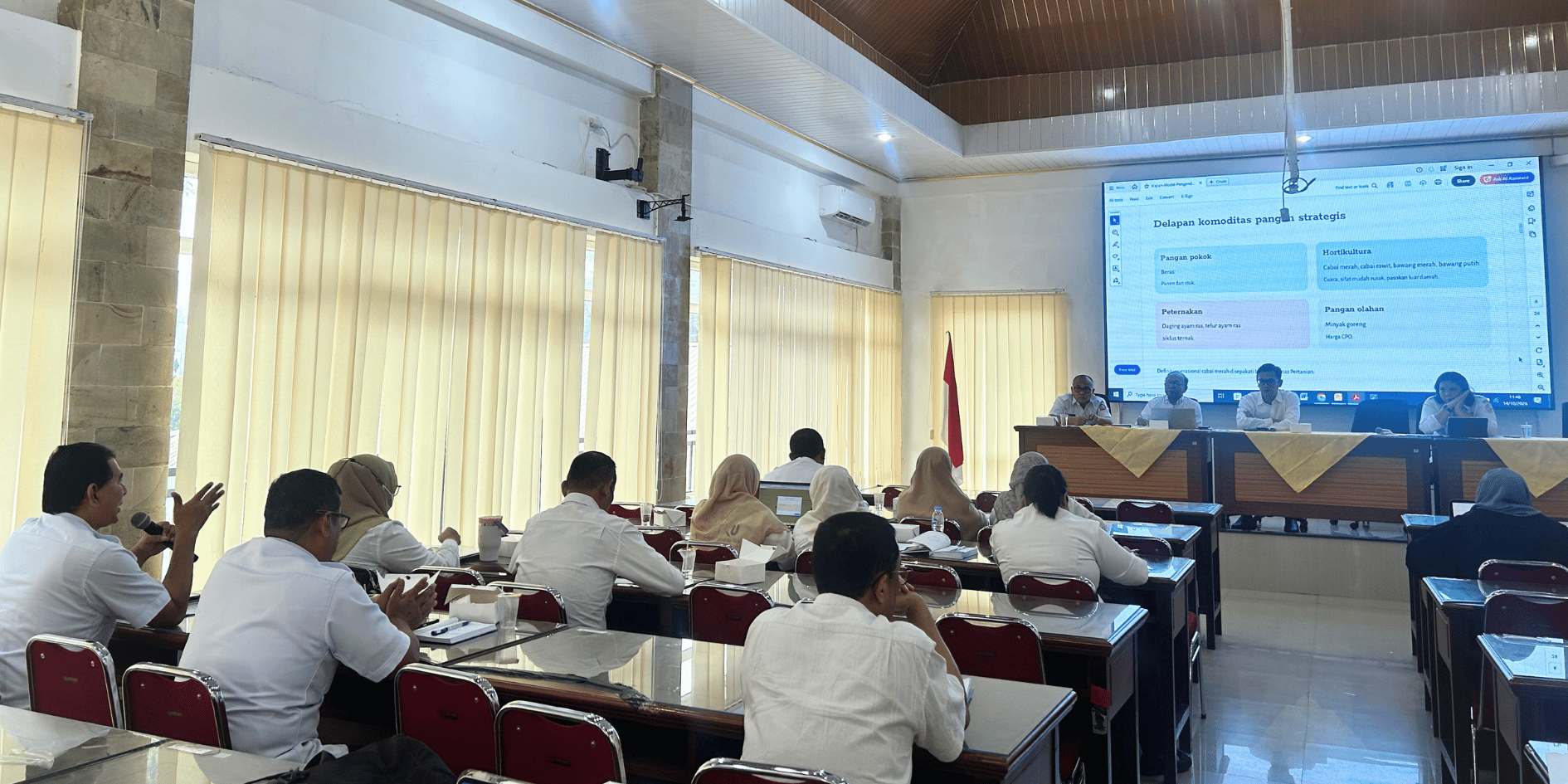
FP USU's involvement in this activity forms part of efforts to strengthen collaboration between higher education institutions and local governments in applying scientific knowledge to address food-related challenges. Through data-driven approaches and agricultural analysis, the study's findings are expected to support more measurable policy planning and enhance regional preparedness in responding to food price fluctuations.
This activity aligns with the Sustainable Development Goals (SDGs), particularly SDG 2 (Zero Hunger) through efforts to maintain food availability and access; SDG 12 (Responsible Consumption and Production) through more efficient production and distribution management; and SDG 1 (No Poverty) through efforts to protect people's purchasing power for essential goods. Thus, the study is expected to serve as a foundation for strengthening food security and economic stability in Deli Serdang Regency.