


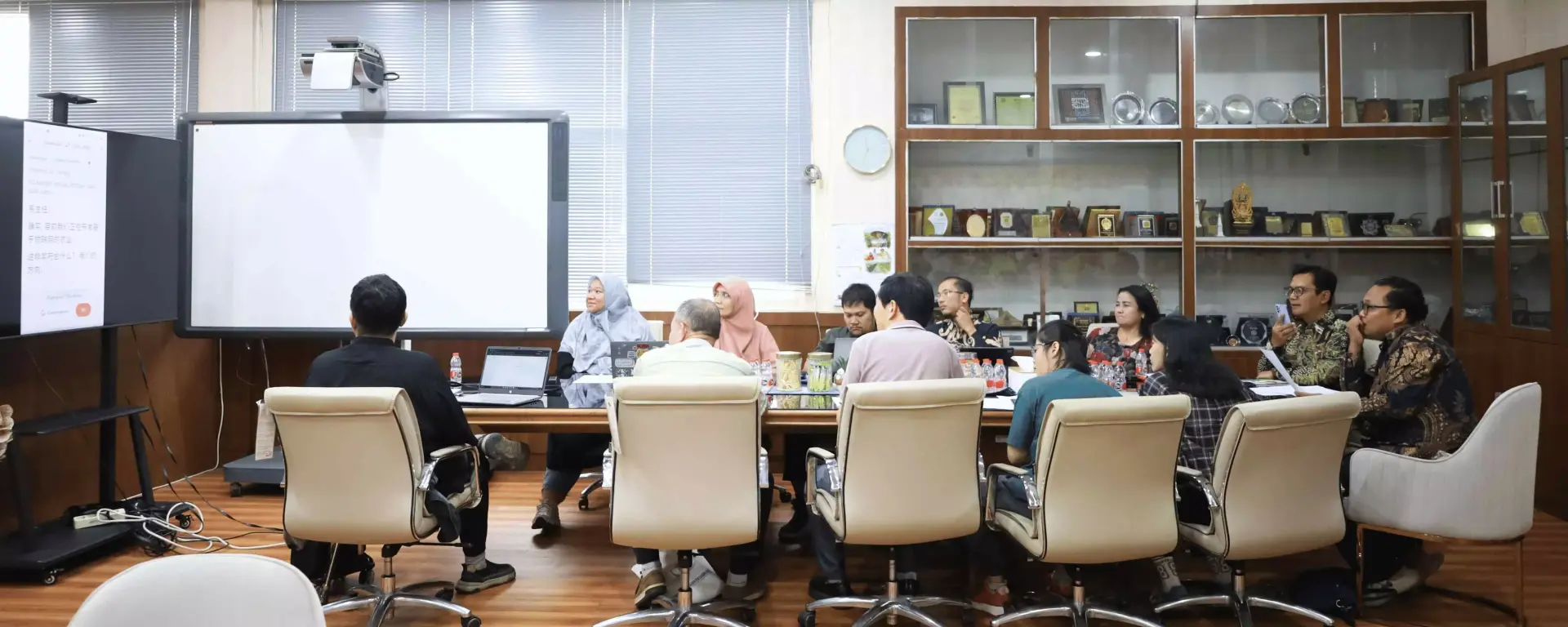
Medan, October 15, 2026 – The Faculty of Agriculture, Universitas Sumatera Utara (FP USU), is exploring opportunities for cooperation with Medan Agro-Photovoltaic Project Company Dongfeng Indonesia in developing soybean cultivation through the utilization of solar energy. The discussion took place in the Dean's Meeting Room of FP USU, focusing on the application of technology to increase soybean productivity in tropical regions.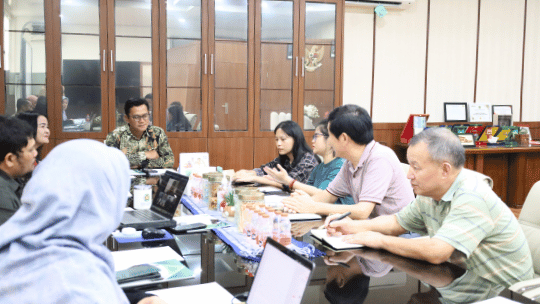
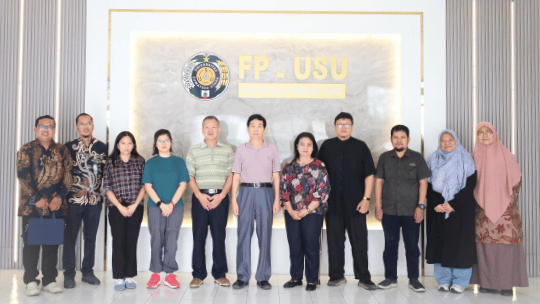
The discussion was attended by the Dean of FP USU, Dr. Rulianda Purnomo Wibowo, S.P., M.Ec.; Vice Dean for Research, Community Service, Cooperation, and Internationalization, Dr. Ir. Posma Mangasi Pintaria Marbun, M.P.; Head of the Undergraduate Program in Agrotechnology, Prof. Dr. Diana Sofia Hanafiah, S.P., M.P.; Head of the Undergraduate Program in Animal Science, Ir. Achmad Sadeli, S.Pt., M.Sc., IPM., ASEAN.Eng.; Head of the Undergraduate Program in Aquatic Resources Management, Dr. Ahmad Muhtadi, S.Pi., M.Si.; Head of the Undergraduate Program in Agricultural and Biosystems Engineering, Dr. Lukman Adlin Harahap, S.TP., M.Si.; and Manager of Research, Community Service, Cooperation, and Internationalization, Dian Pebriyani, S.P., M.P.
Meanwhile, Dongfeng Indonesia was represented by Wang, who is responsible for the Project Department; Li, who is responsible for the technical aspects of the Project Department; and Livia and Winny, staff members of the Project Department.
Dongfeng Indonesia representative Wang explained the plan to implement solar panel technology integrated with a drip irrigation system and computer-based management. Before expanding the technology on a larger scale, both parties will assess its application through initial trials.
“We want to start with a few small-scale trials. If the results are good, the development can be expanded. For that, we need the support of the Faculty of Agriculture,” he said.
The Dean of FP USU, Dr. Rulianda Purnomo Wibowo, S.P., M.Ec., welcomed the initiative. According to him, research is needed to determine cultivation methods suitable for Indonesia's environmental conditions while ensuring the economic feasibility of the technology being implemented.
“The first challenge is to find the right agricultural practices and ensure that this technology is economically feasible to implement in Indonesia,” he stated. He also explained that FP USU has greenhouse facilities and experimental plots that can be utilized to support preliminary research.
As a follow-up, both parties agreed to form a team and appoint contact persons to prepare a joint research plan. This collaboration is expected to produce soybean cultivation innovations that are productive, adaptable to tropical conditions, and sustainable.
This initiative aligns with the Sustainable Development Goals (SDGs), particularly SDG 2 (Zero Hunger) through efforts to increase agricultural productivity and strengthen food security; SDG 7 (Affordable and Clean Energy) through the utilization of solar energy; SDG 9 (Industry, Innovation and Infrastructure) through the development of agricultural technology; and SDG 17 (Partnerships for the Goals) through collaboration between higher education institutions and industry.