


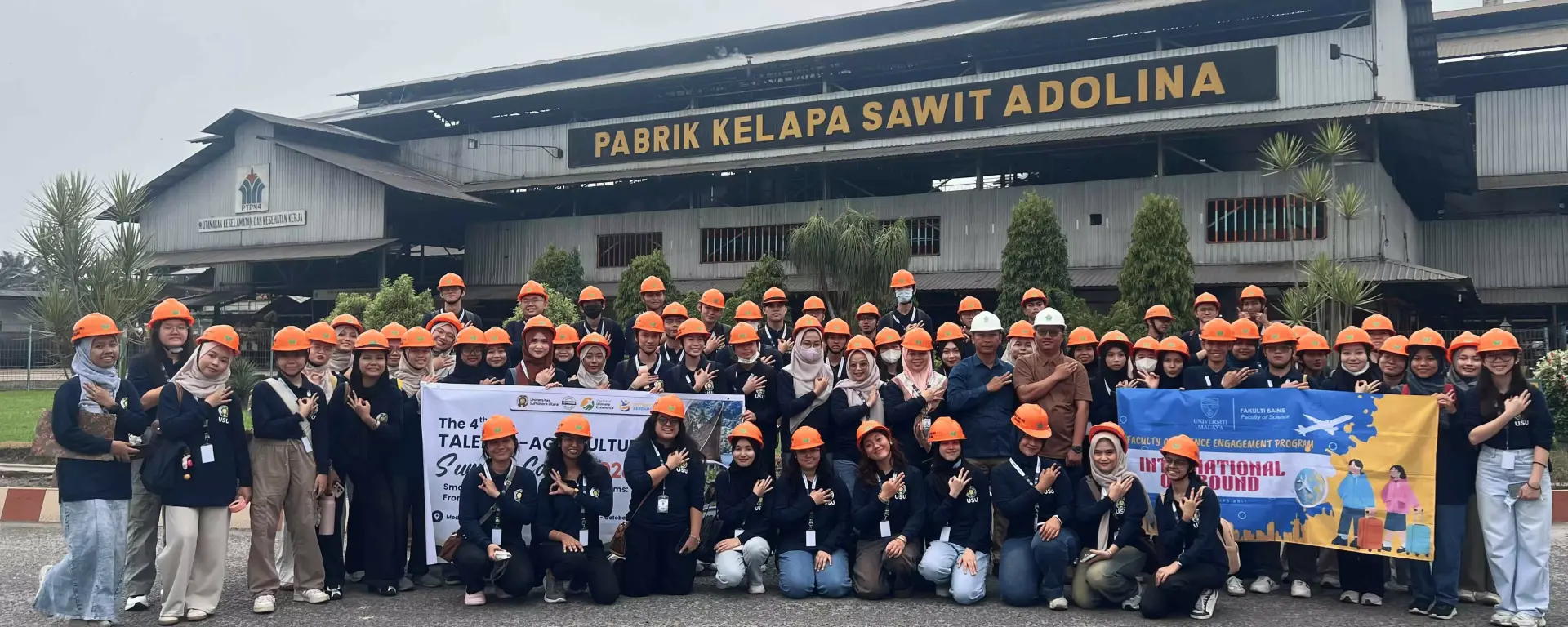
International students participating in the 4th TALENTA-Agricultural Summer Course 2026 conducted a field visit to PTPN IV Regional II Adolina Unit as part of the learning activities organized by the Faculty of Agriculture, Universitas Sumatera Utara. The visit provided participants with an opportunity to gain firsthand insights into oil palm plantation management. Through field observations, students broadened their understanding of agricultural practices implemented in the plantation industry and learned how agricultural knowledge is applied in the company's operations.
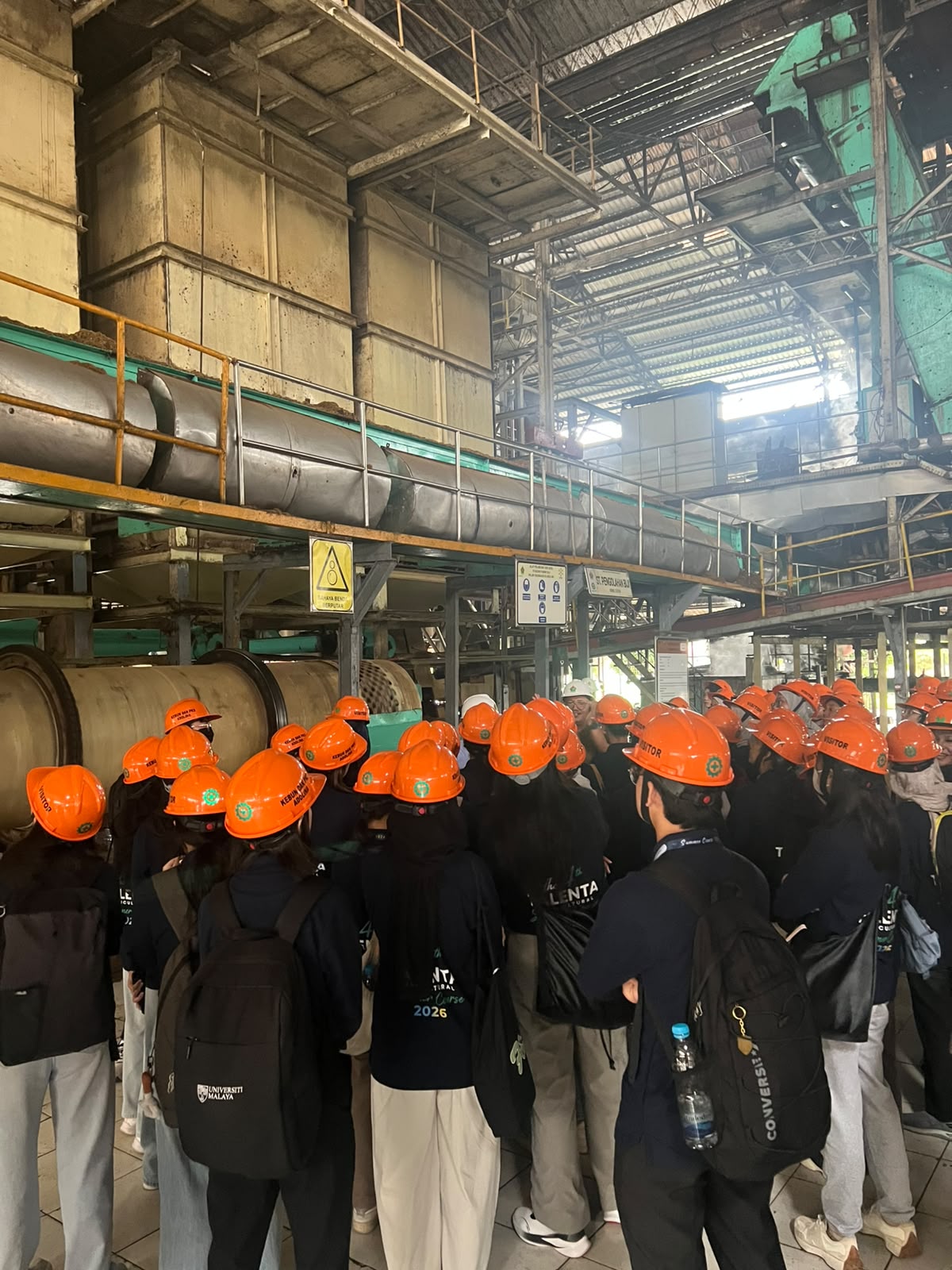
During the visit, students observed oil palm plantation activities and learned about the processing operations carried out at the unit. This experience provided an overview of the relationship between cultivation activities, plantation product management, and the application of technology to support productivity. Participants also gained contextual insights into production stages and resource management in the plantation industry. Direct interaction with the working environment allowed students to see how academic knowledge is applied to support operational activities and the development of the agricultural sector.
This field trip enriched students' learning experiences through direct observation outside the classroom. Participants were able to connect the knowledge gained during the summer course with agricultural practices in the field while understanding their application in an industrial context. The experience also provided opportunities for students to compare academic perspectives with actual conditions in the plantation sector. Thus, learning focused not only on theoretical understanding but also on broadening perspectives, developing observation skills, and understanding the dynamics of Indonesia's agricultural industry.
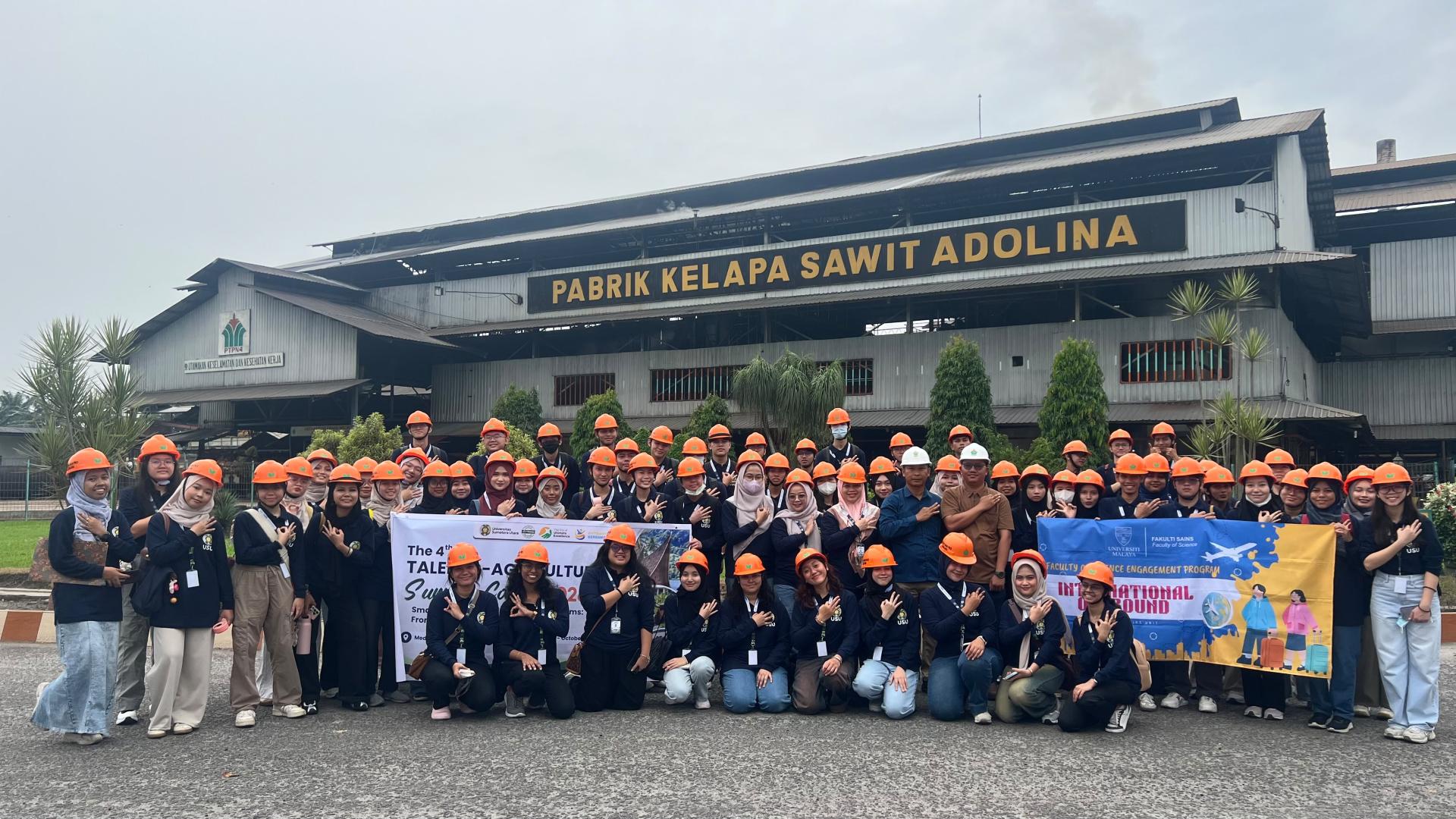
The implementation of this activity was part of the Faculty of Agriculture USU's efforts to provide learning experiences relevant to developments in the agricultural sector and workforce needs. Through visits to industrial environments, students are expected to gain broader perspectives on plantation management and opportunities for future agricultural development. The activity also supports knowledge exchange within the international academic community through a learning experience that connects higher education institutions with industry.
This activity also contributes to the achievement of the Sustainable Development Goals (SDGs), including SDG 2 – Zero Hunger through strengthening knowledge of agricultural production systems; SDG 4 – Quality Education through experiential field-based learning; SDG 8 – Decent Work and Economic Growth through introducing participants to workplace practices and activities in the plantation industry; and SDG 17 – Partnerships for the Goals through strengthening relationships between higher education institutions, industry, and international academic networks.