


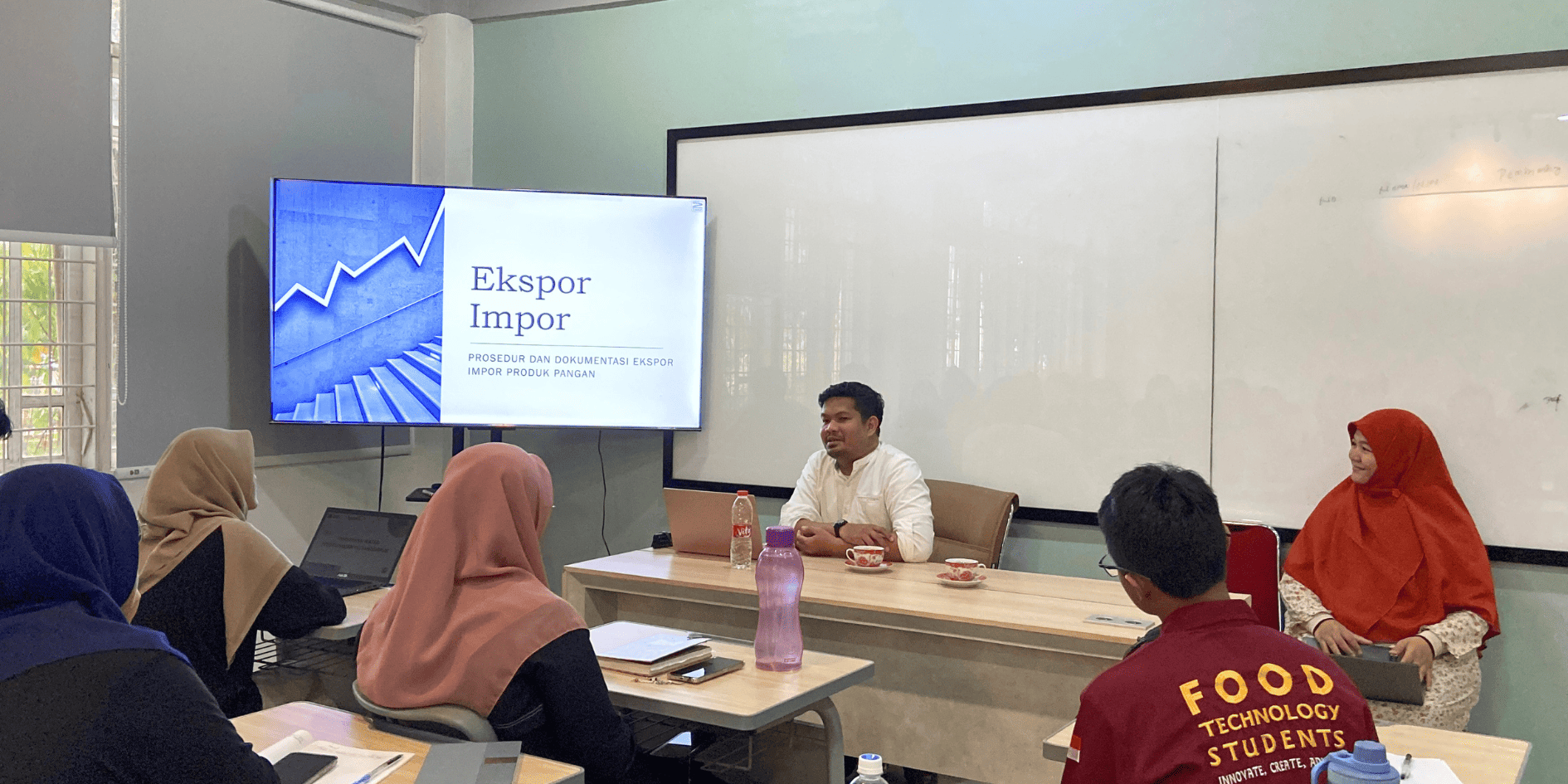
Medan, September 16, 2026 — The Undergraduate Program in Food Technology, Faculty of Agriculture, USU, organized a Teaching Practitioner session for the International Trade course on the topic “Export and Import” on Tuesday (September 16, 2026). The activity, which took place from 10:00 a.m. to 12:00 p.m. WIB, featured Awang Laksmana, S.T.P., an alumnus of the Undergraduate Program in Food Technology of the Faculty of Agriculture USU and an export-import practitioner affiliated with KADIN Medan.
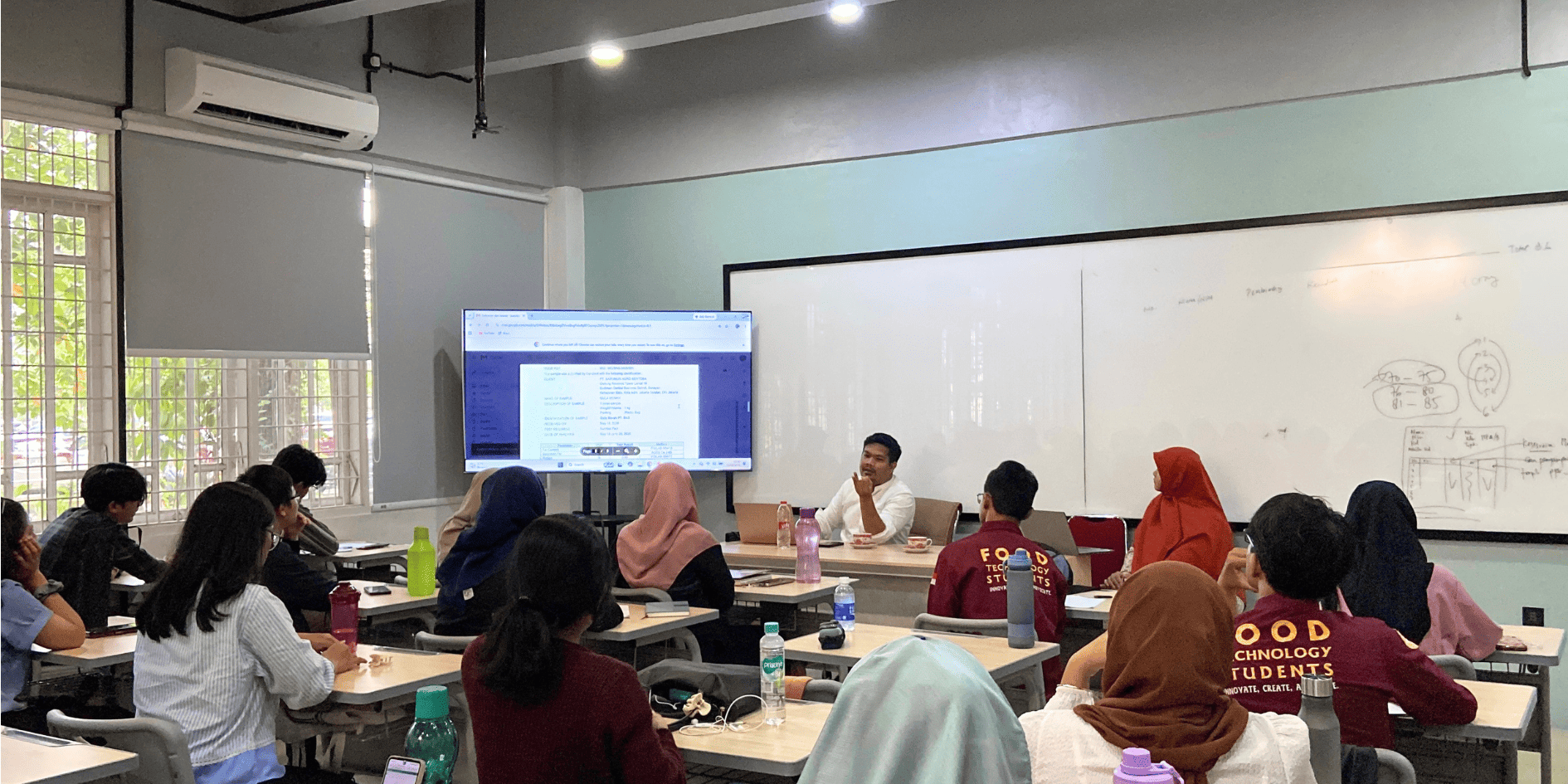
The activity was attended by seventh-semester students of the Undergraduate Program in Food Technology as part of learning activities that provided a closer understanding of international trade practices. Through the session, students gained insights into export and import procedures and their application in the international trade industry.
The presence of a practitioner who is also an alumnus of the Faculty of Agriculture USU provided students with an opportunity to understand that food technology competencies have broad areas for development, including in the trade of food products in the global market. Students were introduced to various opportunities, processes, and challenges that need to be understood in export and import activities.
In addition to strengthening academic understanding, this activity also encouraged students to explore entrepreneurial opportunities in the food sector. Knowledge of products, quality, food safety, and international trade can serve as a foundation for students to develop businesses and contribute to opening access for Indonesian food products to global markets.
This Teaching Practitioner activity also served as a form of strengthening relationships among higher education institutions, alumni, and the business sector. The collaboration is expected to broaden students' insights while building networks that support the development of competencies and professional experience from their time as students.
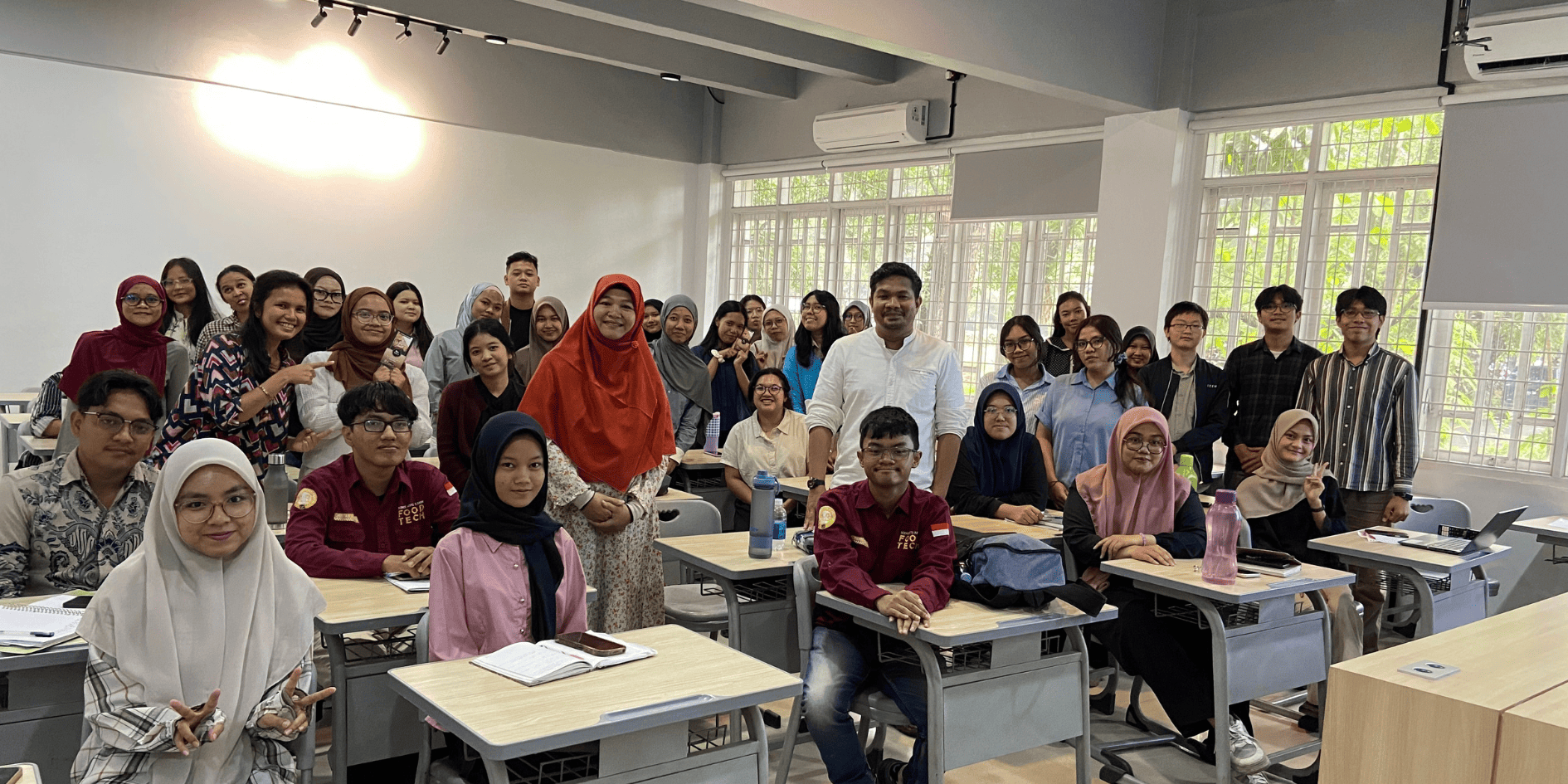
Through this activity, students are expected not only to gain knowledge from the classroom but also to actively seek experience through internships, activities outside the study program, building relationships, and developing the confidence to explore career and entrepreneurship opportunities in the food sector.
This activity contributes to the achievement of the Sustainable Development Goals (SDGs), particularly SDG 1 (No Poverty) through strengthening entrepreneurial and economic opportunities, SDG 2 (Zero Hunger) through the development of the food sector, SDG 4 (Quality Education) through practice-based learning, and SDG 17 (Partnerships for the Goals) through collaboration among higher education institutions, alumni, and the business sector.
From food science to the global market, from students to entrepreneurs.