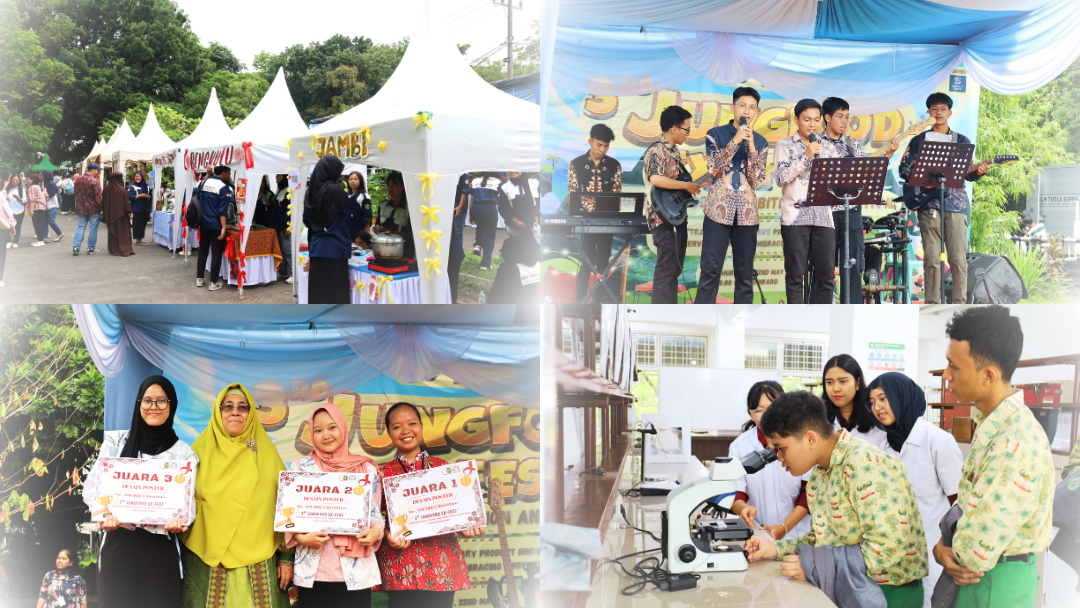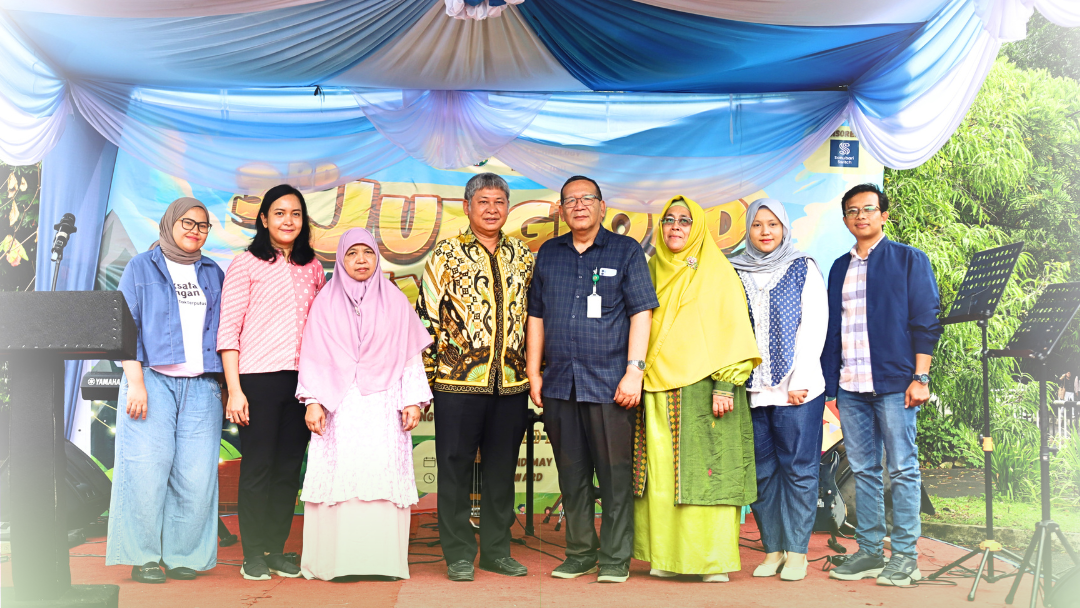
The Undergraduate Program in Food Technology, together with its students and the Food Technology Student Association (IMTP), organized the 3rd Jungle of Food Exhibition and Festival (Jungfood Ex-Fest 3rd) on May 22, 2025, at the Piner Parking Lot, Faculty of Agriculture, Universitas Sumatera Utara. This annual culinary event showcases a wide variety of foods and beverages curated by the Food Technology Program.
Themed “Traditional Culinary Product Innovation: Preserving Heritage, Embracing Innovation,” the event featured two expert speakers: Ms. Karina Nursyafira Alihta from Aksata Pangan with the topic “Regional Food Innovation for Food Security and Justice as a Step to Reduce Food Waste,” and Mr. Edi Syahputra Harahap, S.TP., M.Si., lecturer in Food Technology, who spoke on “North Sumatra Traditional Foods: Identity, Local Wisdom, and Innovation Potential.”
The event opened with a speech from the event chair, Christoper Ruben Sinuraya, expressing hope that the festival would not only be an annual agenda but also a vital platform to spark new ideas through interdisciplinary collaboration and to deepen understanding of sustainable food innovation.
Opening remarks followed from IMTP Secretary General Muhammad Rayhan Aulia Nasution, faculty representative Ir. Terip Karo-karo, MS, Head of Study Program Mimi Nurminah, STP., M.Si., and Vice Dean II of the Faculty of Agriculture, Ir. Revandy Iskandar Muda Damanik, M.Si., M.Sc., Ph.D. Also in attendance were Vice Dean III, Prof. Dr. Ir. Elisa Julianti, M.Si., faculty members, high school students from various schools, and current university students who enlivened the event.
Ir. Terip Karo-karo expressed pride in the students’ and committee’s contributions to the event and food innovation but noted there was still room for improvement. He hoped for more unique and diverse innovations, stating that true innovation should be creative and distinct—not just common fried snacks.
Head of Study Program Mimi Nurminah emphasized the event as a space for leadership regeneration and student learning, especially in developing entrepreneurial skills now emphasized by the government. She hoped student products would be as popular as the previous year and that the event would continue across leadership changes. Alumni involvement was also deemed crucial in maintaining strong ties and supporting accreditation and Key Performance Indicator (KPI) achievements.
Ir. Revandy hoped the activities—competitions, bazaar, and lab visits—would enhance student creativity and entrepreneurship. He also expressed the wish for a larger turnout than the previous year and for the event to contribute to both faculty and university KPIs.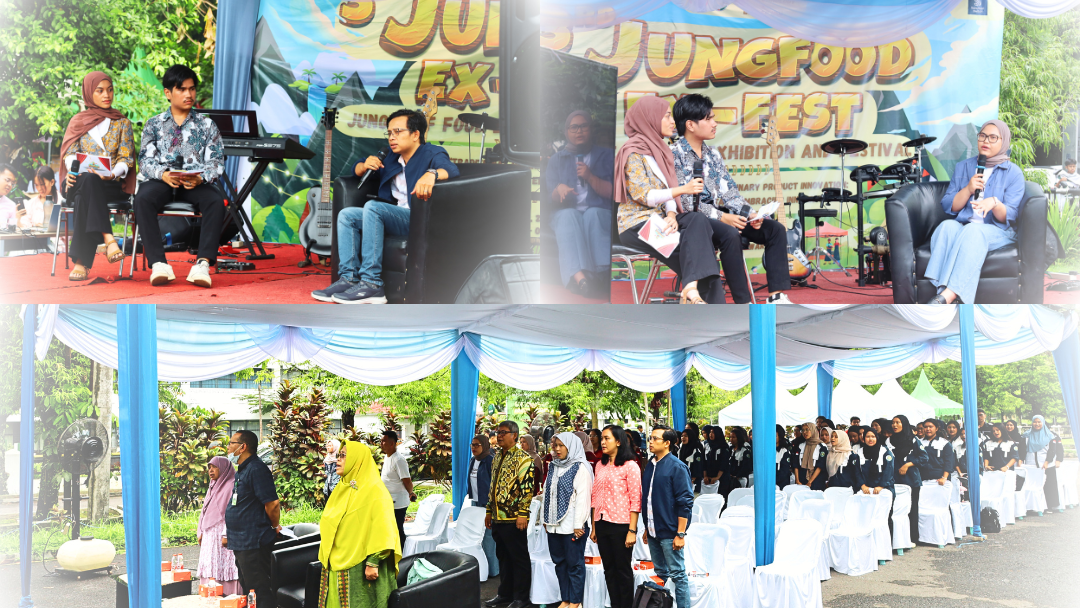
In her presentation, Ms. Karina highlighted Indonesia as the fifth-largest food waste producer globally and the top in Asia. Despite concerns about food security, food waste remains high. Bappenas data shows each individual generates 115–184 kg of food waste annually, totaling 23–48 million tons nationwide—posing serious environmental, economic, and social justice threats.
Mr. Edi stressed the responsibility of students and academics to explore the potential of traditional snacks, which are being overlooked due to trends favoring modern products like ramen or yoshinoya. He called for collaboration between students, lecturers, and the government to research and develop traditional foods and publish findings in scientific journals. Traditional foods generally have higher nutritional value than modern processed ones.
The event included traditional dance performances, exhibitions of culinary innovations from various ethnic groups and regions, MSME bazaars, talk shows, music performances, poster design competitions, recipe papers, creative videos, poetry readings, and lab visits. The event was well-received by visiting high school students, who also toured three Food Technology laboratories as part of their academic orientation. Overall, the event garnered positive feedback from attendees and effectively conveyed its intended messages.
It is hoped that this event becomes an annual tradition that promotes creative and sustainable food innovation through collaboration between students, faculty, and government. In addition to fostering entrepreneurship and strengthening alumni ties, the festival supports KPI achievement while raising awareness of food waste management and traditional food preservation for stronger food security and broader social and environmental impact.