


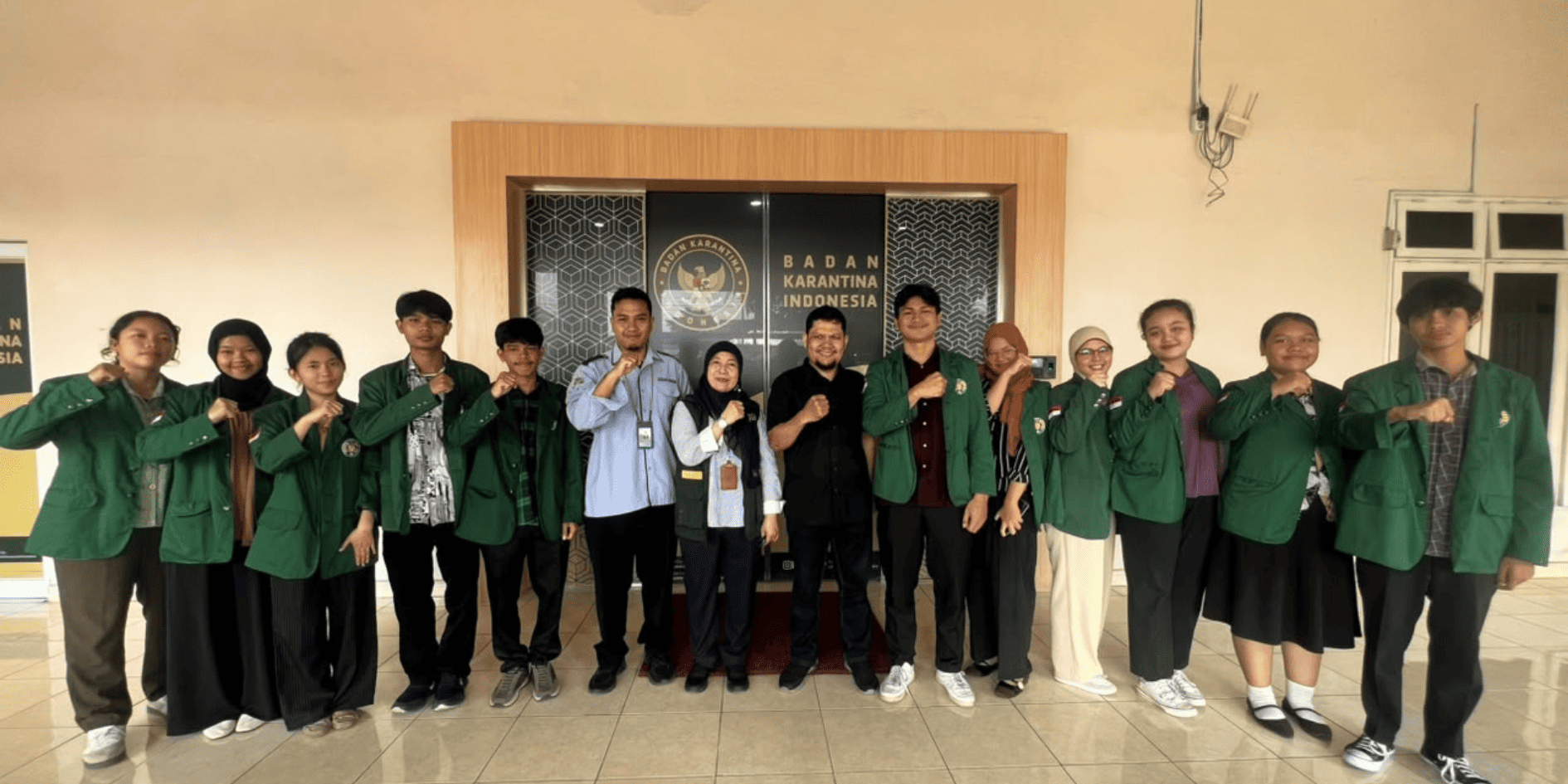
Medan, September 17, 2026 – The Undergraduate Program in Aquatic Resources Management (MSP), Faculty of Agriculture, Universitas Sumatera Utara (USU), conducted the handover of 12 students to participate in the Aquatic Resources Field Practice (PLSP) at the North Sumatra Center for Animal, Fish, and Plant Quarantine (BBKHIT North Sumatra).
The students were directly handed over by the Head of the Undergraduate Program in Aquatic Resources Management (MSP) USU, Dr. Ahmad Muhtadi, S.Pi., M.Si., accompanied by supervising lecturer Harya Bimasuci, M.Sc. The MSP USU delegation was received by the Head of the Administration Division of BBKHIT North Sumatra, Fardianto Eko Saputro, and was attended by the Head of the Fish Quarantine Working Team.
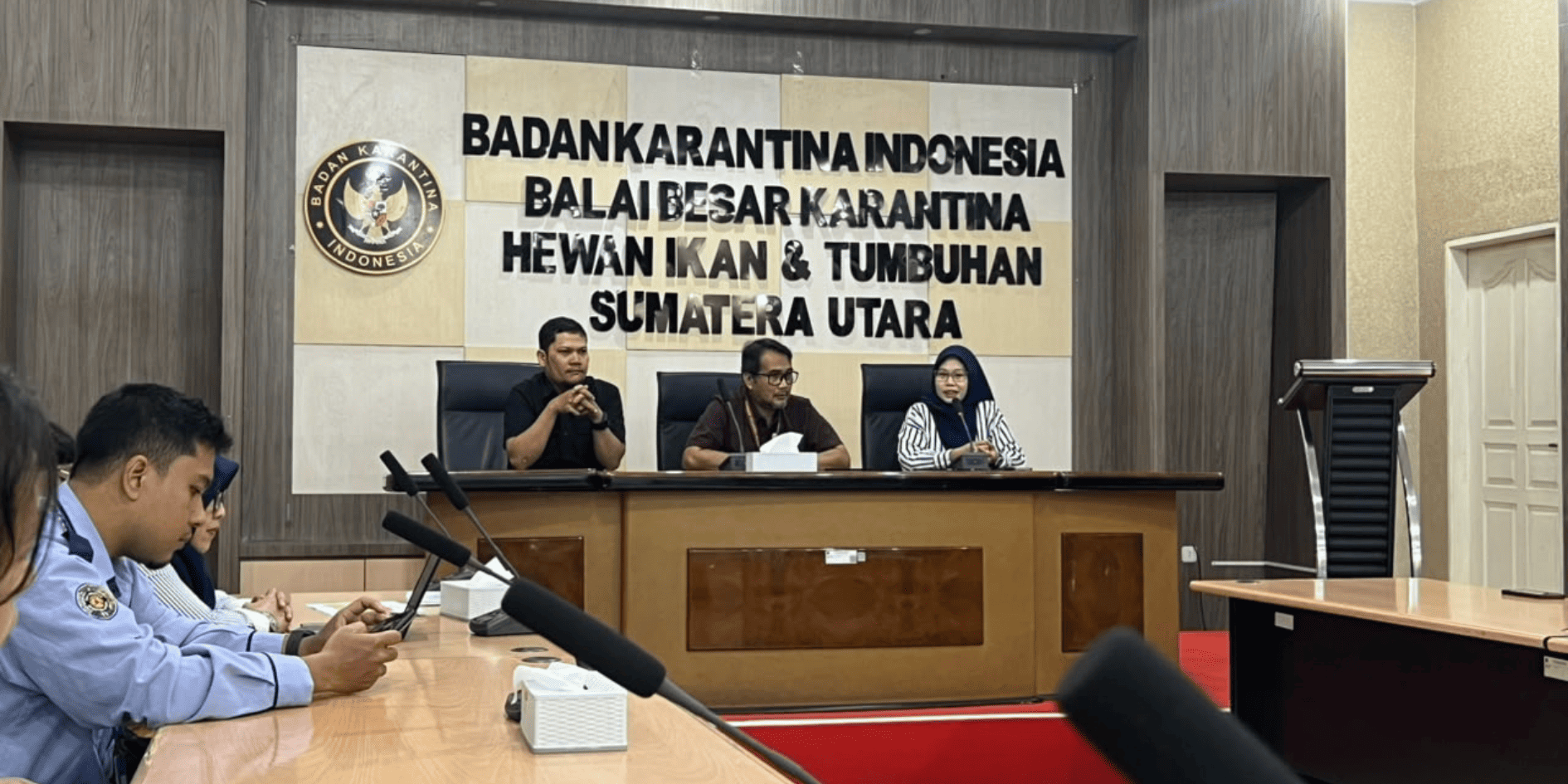
This activity is part of the learning process for MSP USU students, providing them with opportunities to gain real-world work experience, particularly in fish quarantine, fish health, biosecurity, supervision of fishery commodity traffic, and protection of aquatic biological resources.
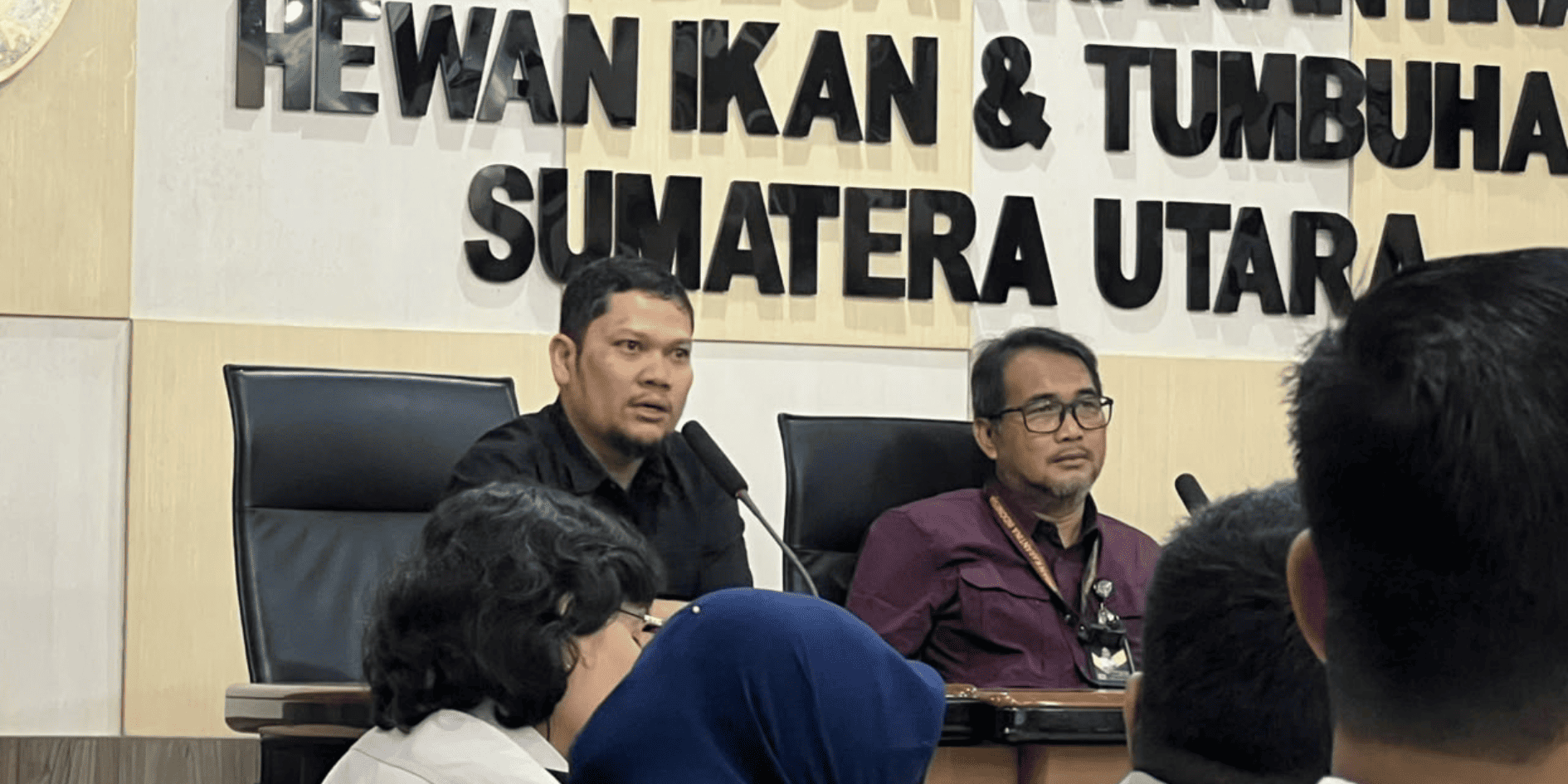
The Head of the Undergraduate Program in Aquatic Resources Management (MSP) USU, Dr. Ahmad Muhtadi, stated that PLSP is not only a means for students to apply the knowledge they have gained during their studies but also an opportunity to develop professional competencies through direct interaction with practitioners.
“We hope that the 12 students participating in PLSP can make the most of this opportunity to learn directly from practitioners. Students are expected not only to improve their technical competencies but also to develop discipline, ethics, communication skills, teamwork, and responsibility as prospective professionals in the field of aquatic resources and fisheries,” said Dr. Ahmad Muhtadi.
BBKHIT North Sumatra welcomed the presence of MSP USU students. Through the PLSP activity, students are expected to gain direct knowledge of the duties and functions of quarantine, particularly in efforts to prevent the entry, exit, and spread of fish pests and diseases, as well as to support the supervision of fishery commodity traffic.
During the PLSP, students will have the opportunity to observe and participate in various activities under the guidance of field supervisors. This experience is expected to strengthen the connection between theories learned in the classroom and their application in the workplace, while also providing insights into work standards and services at government agencies.
The implementation of PLSP at BBKHIT North Sumatra is also part of MSP USU's efforts to strengthen networks and collaboration with external partners. Partnerships with government agencies are important in supporting experiential learning and ensuring that graduate competencies remain relevant to developments and needs in the aquatic resources and fisheries sectors.
The activity is also related to the achievement of the Sustainable Development Goals (SDGs), particularly SDG 4 – Quality Education, through field-based experiential learning; SDG 14 – Life Below Water, through strengthening competencies in protecting fish health and aquatic biological resources; and SDG 17 – Partnerships for the Goals, through strengthening collaboration between higher education institutions and government agencies.
Through this PLSP, the Undergraduate Program in Aquatic Resources Management (MSP) USU hopes that students will return to campus with new experiences, insights, and skills that can strengthen their competencies as prospective graduates of Aquatic Resources Management and enable them to contribute to the sustainable management of aquatic resources and fisheries.