


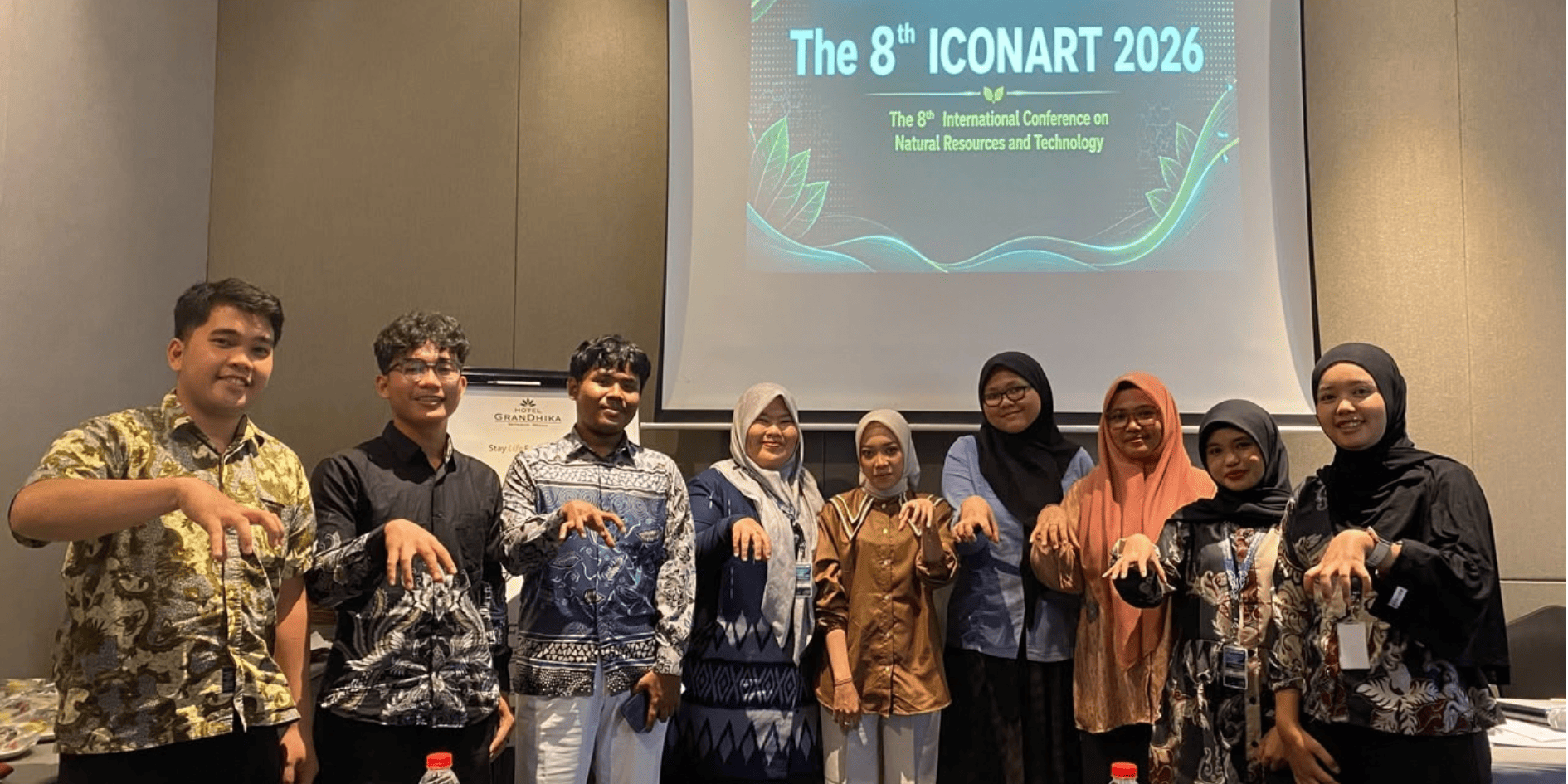
Medan, September 23, 2026 – A lecturer of the Undergraduate Program in Aquatic Resources Management (MSP), Faculty of Agriculture, Universitas Sumatera Utara (USU), presented research findings on fish biodiversity in the Belawan Watershed, North Sumatra, at the 8th International Conference on Natural Resources and Technology (ICOnART) 2026, held on September 23, 2026.
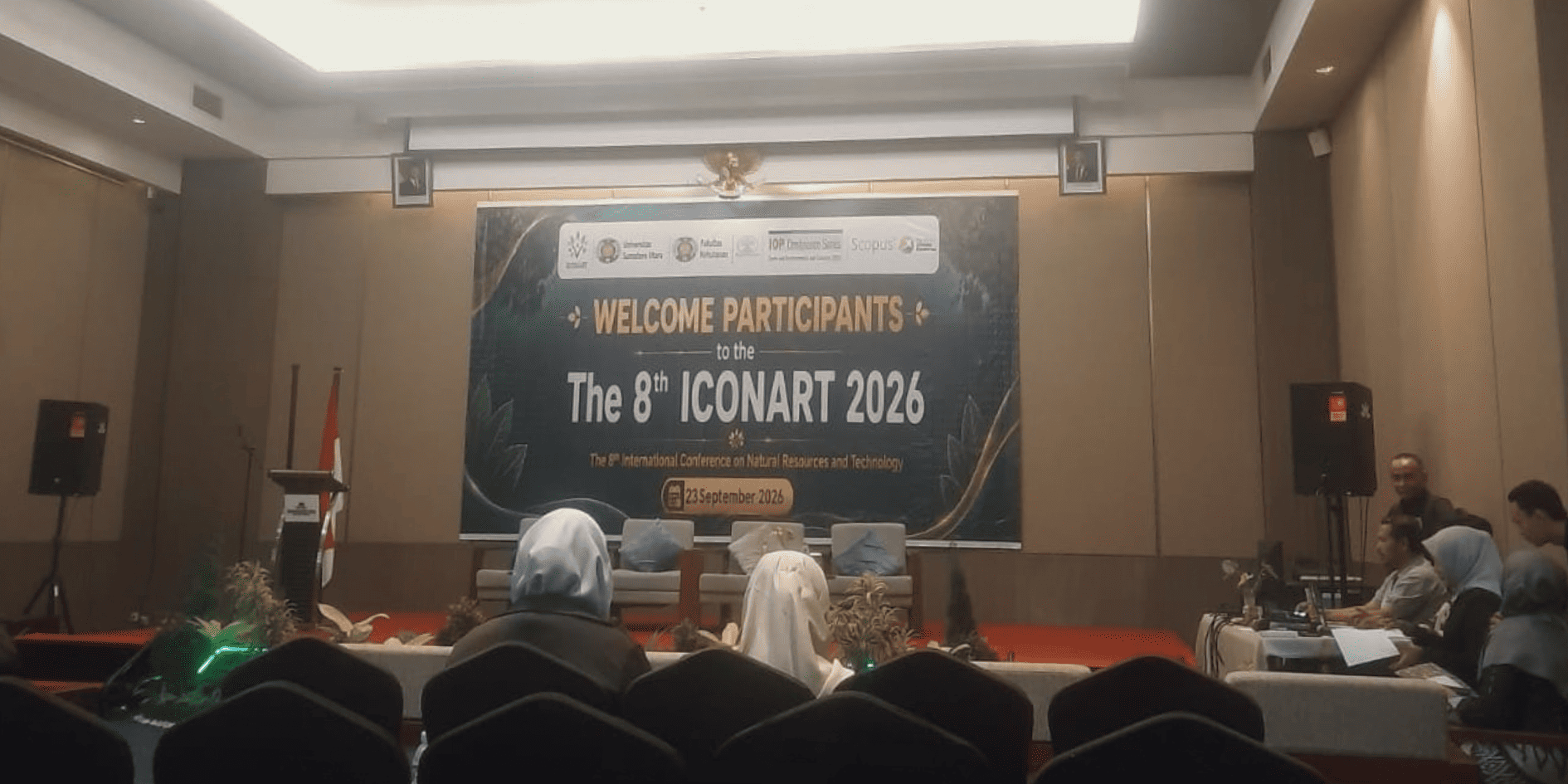
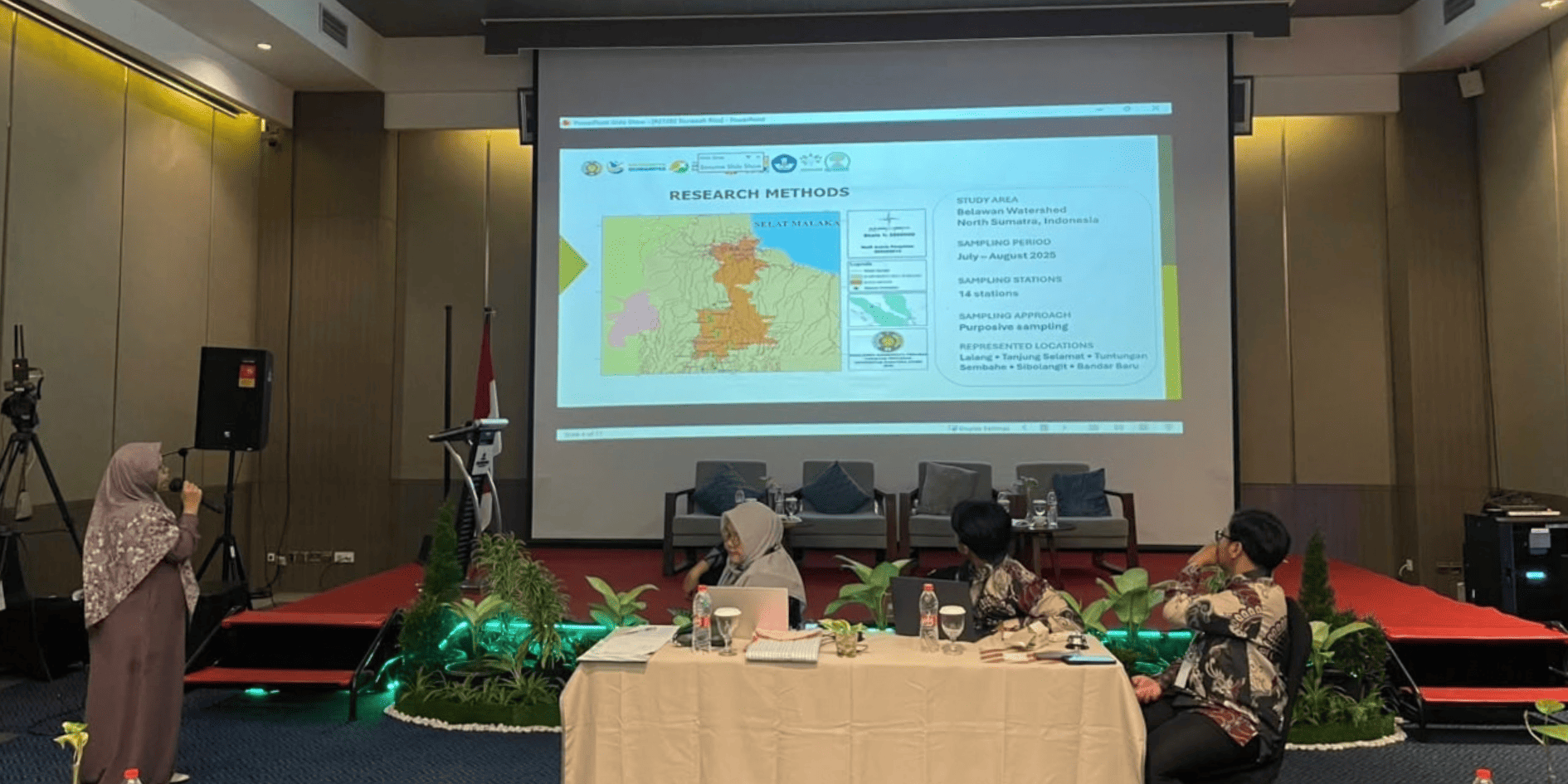
The paper entitled “Fish Biodiversity in the Belawan Watershed, North Sumatra Province, Indonesia” was presented by Nurasiah Riza, M.Si., together with researchers Rusdi Leidonald and Ahmad Muhtadi. The research was one of the outputs of research conducted by MSP USU student Nelfi Astria Panjaitan, who was also listed as one of the paper's authors.
In addition to participating through the presentation of research findings, Julia Syahriani Hasibuan, M.Sc., a lecturer at MSP USU, also had the opportunity to serve as one of the moderators in a session at The 8th ICOnART 2026. This involvement demonstrates the active participation of the MSP USU academic community in international scientific forums, not only as presenters but also in supporting the implementation and scientific discussions at the conference.
The research was conducted from July to August 2025 at 14 observation stations distributed across the Belawan River and its tributaries, covering the areas of Lalang, Tanjung Selamat, Tuntungan, Sembahe, Sibolangit, and Bandar Baru. Fish sampling used several fishing methods, namely nets, fish traps, fishing rods, and electrofishing.
The research recorded 12 fish species belonging to 8 families and 5 orders. The Cyprinidae family had the highest species richness, with four species found during the research. Several recorded fish species included Hemibagrus nemurus, Rasbora sumatrana, Oxyeleotris marmorata, Channa striata, Hampala macrolepidota, Mystacoleucus marginatus, Rasbora lateristriata, as well as two species of Glyptothorax.
One notable finding was the dominance of Rasbora lateristriata, with 30 individuals, followed by Poecilia sp. with 25 individuals and Hampala macrolepidota with 21 individuals. In contrast, Hemibagrus nemurus had the lowest abundance, with only one individual. These results indicate variations in fish community composition associated with habitat characteristics and environmental conditions in different parts of the Belawan Watershed.
Analysis of community structure showed that the fish diversity index varied among observation stations, with low to moderate diversity conditions. Community evenness also varied, while species dominance was found at two observation stations. This pattern indicates differences in fish community structure along the watershed associated with local habitat characteristics and environmental conditions.
In terms of the aquatic environment, the measurement results showed that the overall condition of the Belawan Watershed still supports fish life. Dissolved oxygen (DO) concentrations, for example, ranged from 6.2–9.3 mg/L, while pH ranged from 6.6–9.7. The research also found heterogeneity in current velocity, water depth, and water transparency, which could potentially affect the distribution and composition of fish communities.
This study is important because the Belawan Watershed faces pressure from urban development, industrial activities, land-use changes, and other human activities. The paper emphasized that information on fish biodiversity at the watershed scale remains limited, so the results of this research can serve as baseline information for the conservation and sustainable management of freshwater fish resources in the Belawan Watershed.
The participation of MSP USU lecturers and students in ICOnART 2026 also demonstrates the strengthening of integration between education, research, and scientific publication within the MSP Study Program. Student research is not only directed toward fulfilling academic requirements but is also developed together with lecturers into scientific works that can be disseminated through international scientific forums.
Research on fish biodiversity in the Belawan Watershed is also relevant to the achievement of the Sustainable Development Goals (SDGs), particularly SDG 6 – Clean Water and Sanitation, through the provision of scientific information on the condition of freshwater ecosystems, and SDG 15 – Life on Land, particularly the protection and sustainable utilization of freshwater ecosystems and their biodiversity.
Through research, publication, and active participation in international scientific forums such as ICOnART, MSP of the Faculty of Agriculture USU continues to promote ecosystem- and watershed-based research as a scientific foundation for biodiversity conservation, ecosystem health monitoring, and sustainable management of aquatic resources.