


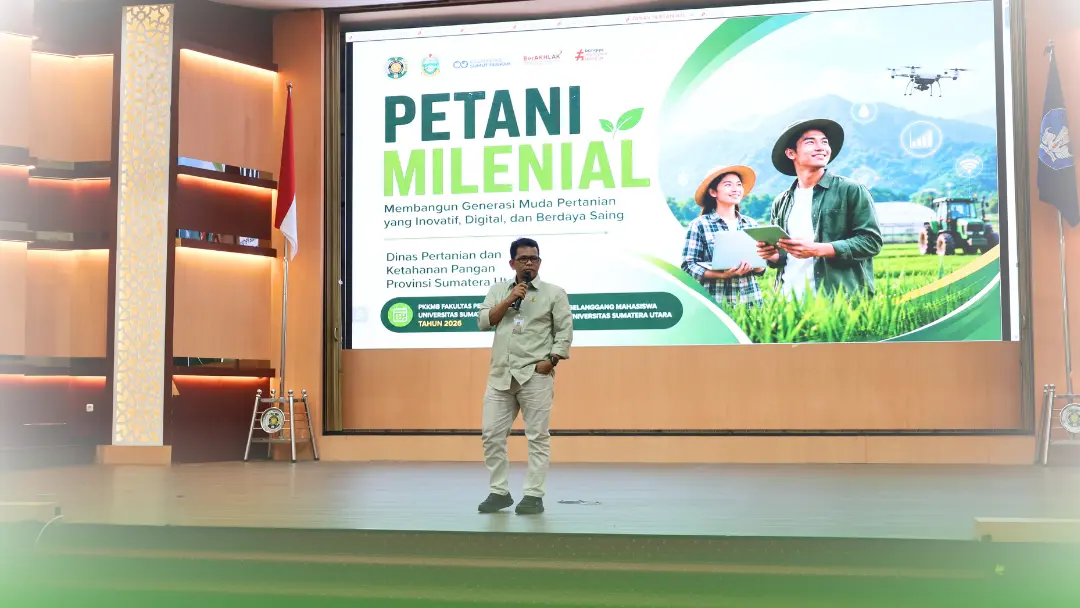
Medan, August 13, 2026 — The North Sumatra Provincial Agriculture and Food Security Agency encouraged the younger generation to take a greater role in agricultural development through the utilization of technology, innovation, data, and entrepreneurship. The message was delivered as part of the 2026 Campus Life Introduction Program for New Students (PKKMB) at the Faculty of Agriculture, Universitas Sumatera Utara (FP USU).
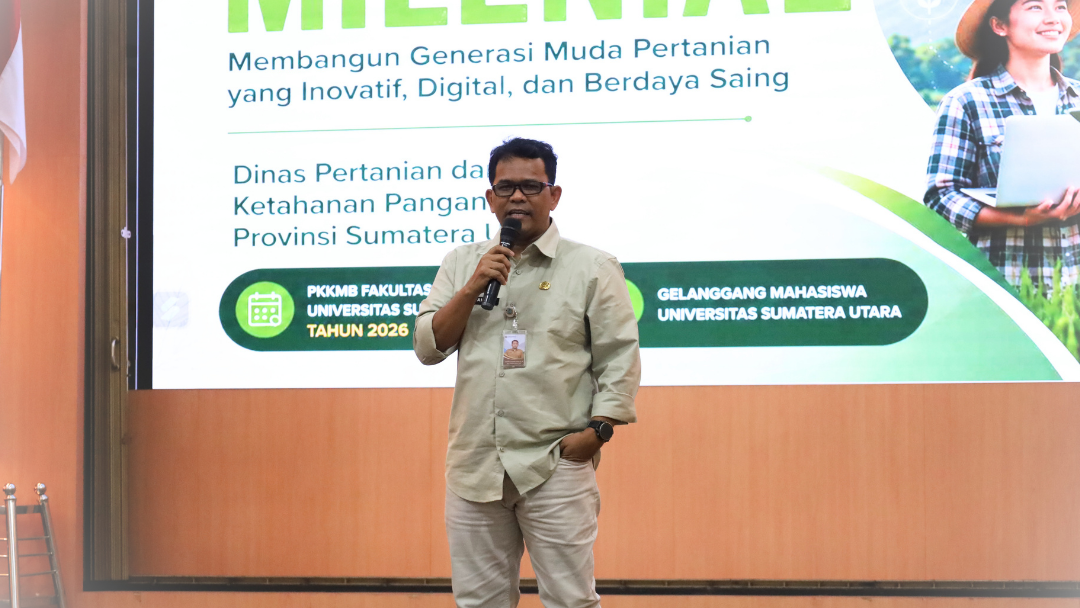
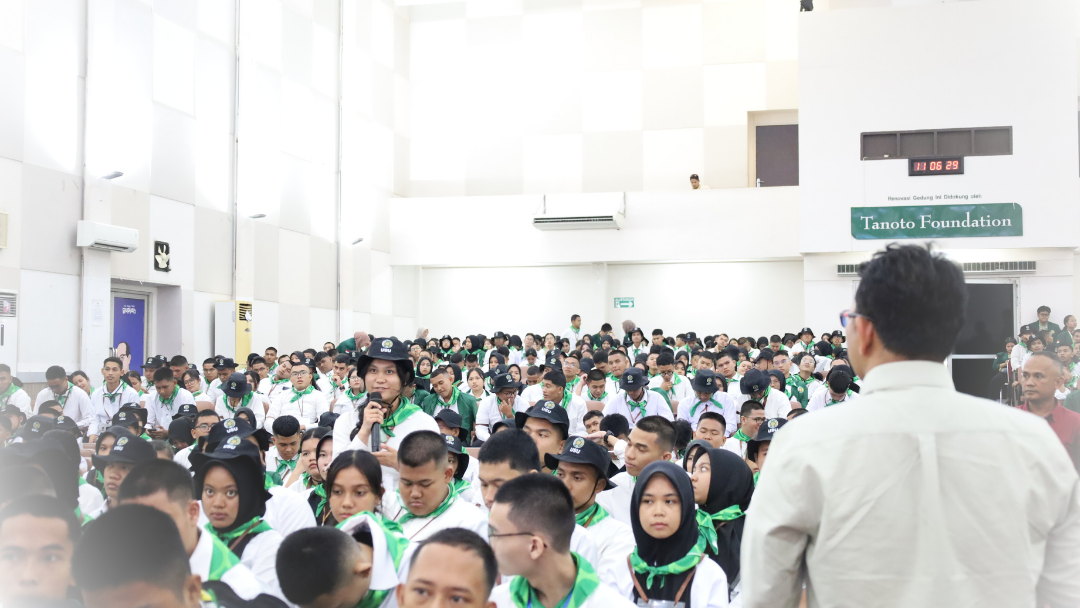
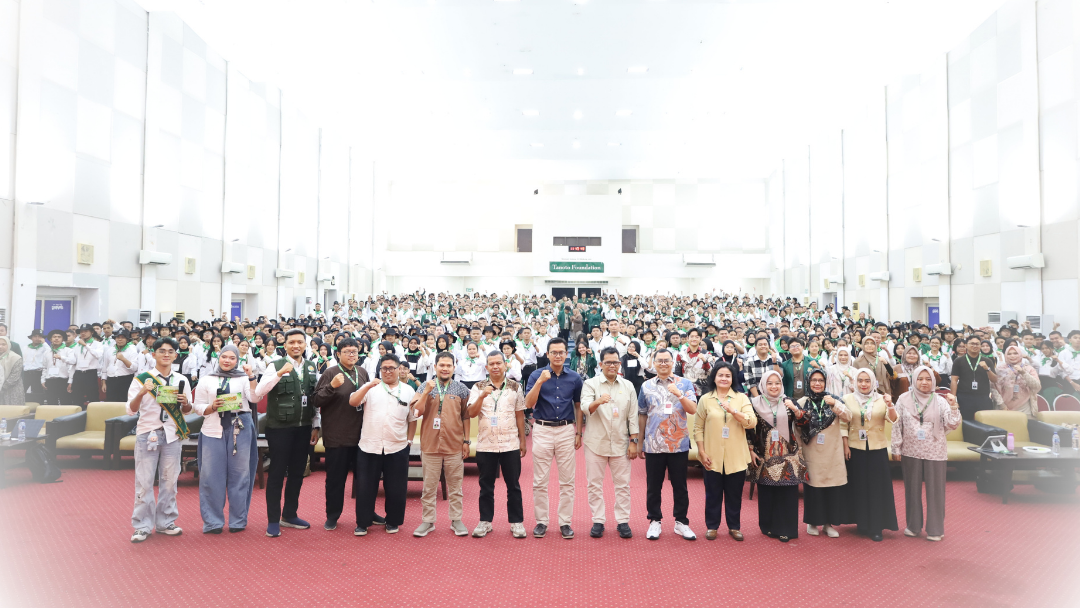
On the second day of PKKMB, Thursday (August 13, 2026), Secretary of the North Sumatra Provincial Agriculture and Food Security Agency, Yusfahri Perangin-angin, S.P., M.P., served as a speaker to provide orientation to new students of FP USU. The activity was held at the USU Student Center and attended by all 2026 new students of FP USU.
The activity was also attended by the Dean of FP USU, Vice Deans I, II, and III, as well as Heads and Secretaries of Study Programs within FP USU.
Under the theme “Millennial Farmers: Building an Innovative, Digital, and Competitive Young Generation in Agriculture,” Yusfahri encouraged students to view agriculture as a sector offering significant opportunities while requiring human resources capable of adapting to changing times.
In his presentation, Yusfahri explained that agriculture is one of the backbones of North Sumatra’s economy. With an area of 72,981 km² and a population of approximately 15.9 million in 2025, the agricultural sector plays a strategic role in employment and the regional economy.
The agricultural sector employs approximately 2.15 million workers, or 27.87% of the total workforce, and contributes approximately 25.88% to North Sumatra’s Gross Regional Domestic Product (GRDP). North Sumatra also has significant land potential, including approximately 319,559 hectares of established rice fields and 2.16 million hectares of plantation land.
This substantial potential requires a new generation capable of managing the agricultural sector adaptively and innovatively. One of the challenges that needs to be addressed is farmer regeneration and the improvement of agricultural human resource capacity.
“The future of Indonesian agriculture does not only require more farmers, but farmers who are more educated, innovative, digital, and courageous enough to build businesses,” said Yusfahri.
In his presentation, Yusfahri explained that millennial farmers are not simply young people engaged in farming. They must be capable of becoming productive, digital, innovative, business-oriented, and competitive agricultural actors.
According to him, the farmers of the future represent a combination of agriculture, technology, business, and data. This transformation moves beyond simply cultivating land toward managing data and creating value.
“Technology does not replace farmers; it strengthens their capabilities. Digitalization does not replace farmers; it makes farmers stronger,” he explained.
Yusfahri also introduced various technologies that can support agricultural transformation, including sensors and the Internet of Things (IoT), satellite imagery, weather data, GPS, field monitoring, artificial intelligence (AI), data analytics, agricultural drones, smart irrigation, smart farming, and precision agriculture.
The utilization of these technologies can improve production efficiency while creating new opportunities in marketing, digital financing, supply chains, and logistics.
Yusfahri also encouraged new students of FP USU to explore the wide range of opportunities available in agriculture. According to him, agriculture encompasses various fields, from production and technology to business, research, and policy.
These opportunities include on-farm activities such as modern farming, smart farming, breeding, and cultivation; off-farm activities such as processing, packaging, logistics, and cold chains; agribusiness, including agricultural startups, marketplaces, digital marketing, and consulting; research and technology, including AI, IoT, drones, and biotechnology; as well as government and policy, including civil service, policymaking, agricultural extension, and development planning.
Therefore, students were encouraged not to focus solely on becoming job seekers after graduation but also to create new opportunities and value for the agricultural sector.
“Do not just become job seekers. Become value creators in the agricultural sector. Learn, innovate, and become entrepreneurs,” Yusfahri encouraged.
The involvement of the North Sumatra Provincial Agriculture and Food Security Agency in the PKKMB FP USU served as an example of collaboration between higher education and local government in supporting human resource development in agriculture.
Through the activity, students gained direct insights from an agricultural sector stakeholder regarding the conditions, potential, challenges, and development opportunities in North Sumatra’s agricultural sector. This collaboration also strengthened the connection between academic learning and real-world needs and developments in the field.
The synergy between FP USU and the North Sumatra Provincial Agriculture and Food Security Agency aligns with SDG 17: Partnerships for the Goals, which emphasizes the importance of partnerships in advancing sustainable development.
The presentation was interactive, with new students demonstrating strong enthusiasm. This was reflected in the numerous questions raised about technological developments, business opportunities, farmer regeneration, and the future of agriculture.
Through the session, students are expected to gain a broader perspective on agriculture and prepare themselves to become human resources capable of addressing the challenges of future agriculture.
The activity supports several Sustainable Development Goals (SDGs), including SDG 2: Zero Hunger, through strengthening agriculture and food security; SDG 4: Quality Education, through enhancing students’ knowledge and capacity; SDG 8: Decent Work and Economic Growth, through promoting entrepreneurship and value creation in agriculture; SDG 9: Industry, Innovation and Infrastructure, through the utilization of technology and innovation; and SDG 17: Partnerships for the Goals, through strengthening collaboration between FP USU and the North Sumatra Provincial Agriculture and Food Security Agency.
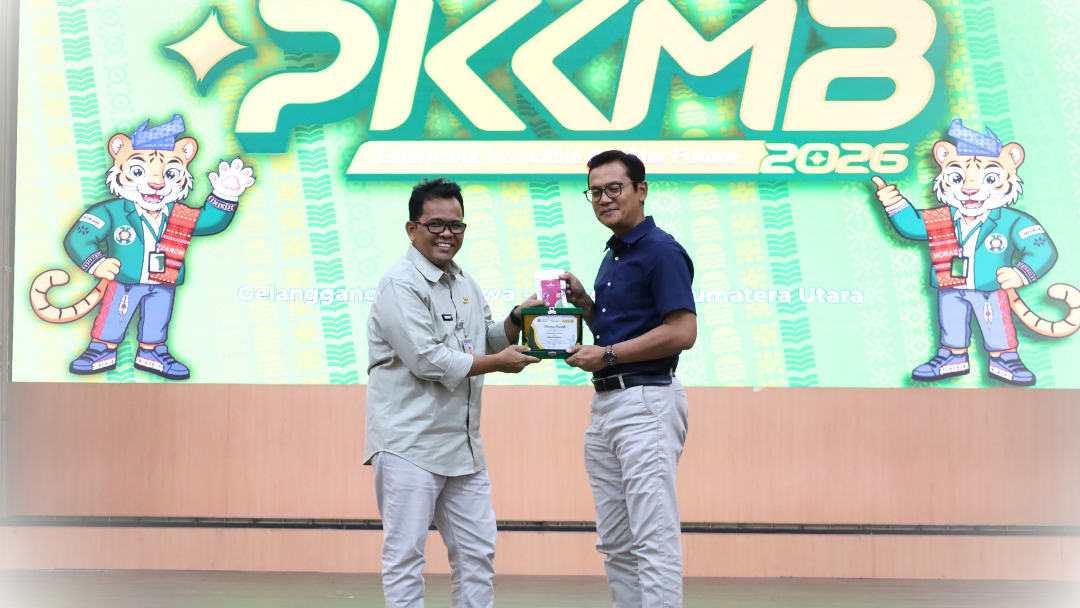
At the end of the session, FP USU presented a commemorative plaque to Yusfahri Perangin-angin as an expression of appreciation for his contribution in providing insights and motivation to the new students. The activity concluded with a group photo.
Through PKKMB, the collaboration between FP USU and the North Sumatra Provincial Agriculture and Food Security Agency is expected to continue contributing to the preparation of an educated, innovative, technology-adaptive, business-oriented, and competitive young generation in agriculture, while supporting sustainable agriculture, food sovereignty, and national prosperity.