


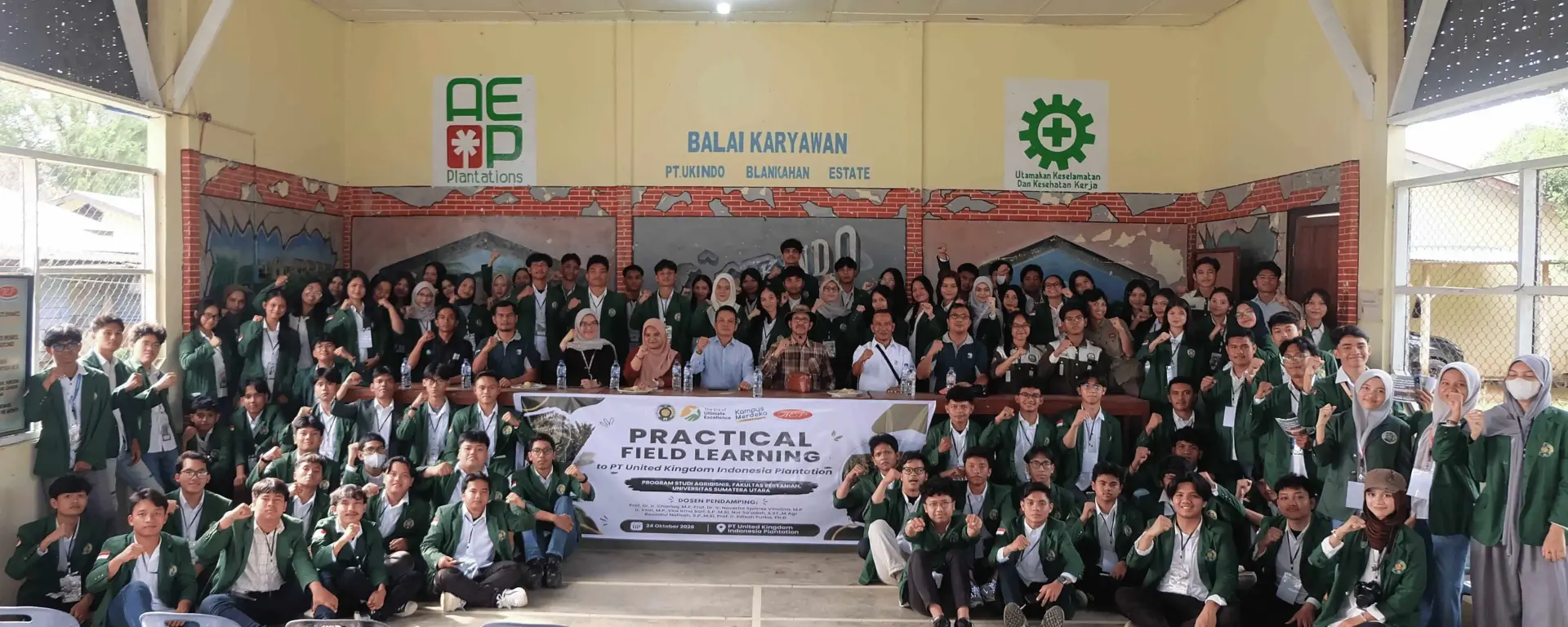
Langkat, 24 October 2026 — The Agribusiness Study Program, Faculty of Agriculture, Universitas Sumatera Utara (FP USU), conducted a field visit to PT United Kingdom Indonesia (UKINDO), an oil palm plantation company affiliated with the Anglo-Eastern Plantations Group, in Kuala District, Langkat Regency, on Saturday, 24 October 2026. This activity was part of the learning process for the Plantation Crops 1 (Oil Palm and Rubber) course, which aimed to strengthen students' understanding through direct observation and hands-on practice in plantation and oil palm processing industry environments.
During lectures, students studied various concepts related to nursery activities, planting, plant maintenance, harvesting, and oil palm product processing through lecturers' explanations, photographs, and educational videos. Through this visit, students had the opportunity to directly observe the implementation of cultivation techniques and plantation operations, while also understanding the relationship between field-level plant management and the processing of fresh fruit bunches (FFB) into palm oil.
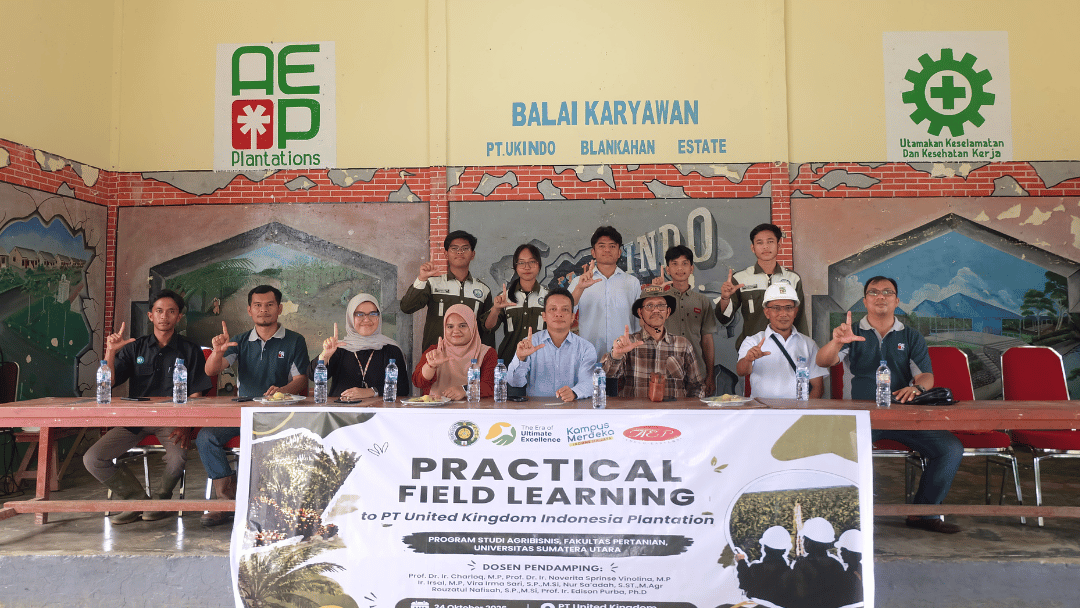
The Agribusiness students of FP USU received a warm welcome from the management and staff of PT UKINDO. The visit was accompanied by Tri Hardo Saragih, Plantation Manager; M. Polin Situmorang, Chief Assistant; Sardes Purba, Muhammad Khaisar, Novransius Malau, and Abdul Latif, Assistants; as well as Muhammad Ishak, Mill Manager; Rahmad Nur Risky, Amir Iwan Sitompul, and Devi Veronika Simbolon, Mill Assistants, together with other PT UKINDO staff members. The accompanying lecturers from FP USU were Ir. Irsal, M.P., Vira Irma Sari, S.P., M.Si., and Rouzatul Nafisah, S.P., M.Si.
From Nursery Activities to Planting: Hands-On Practice Enriches Students' Learning Experience
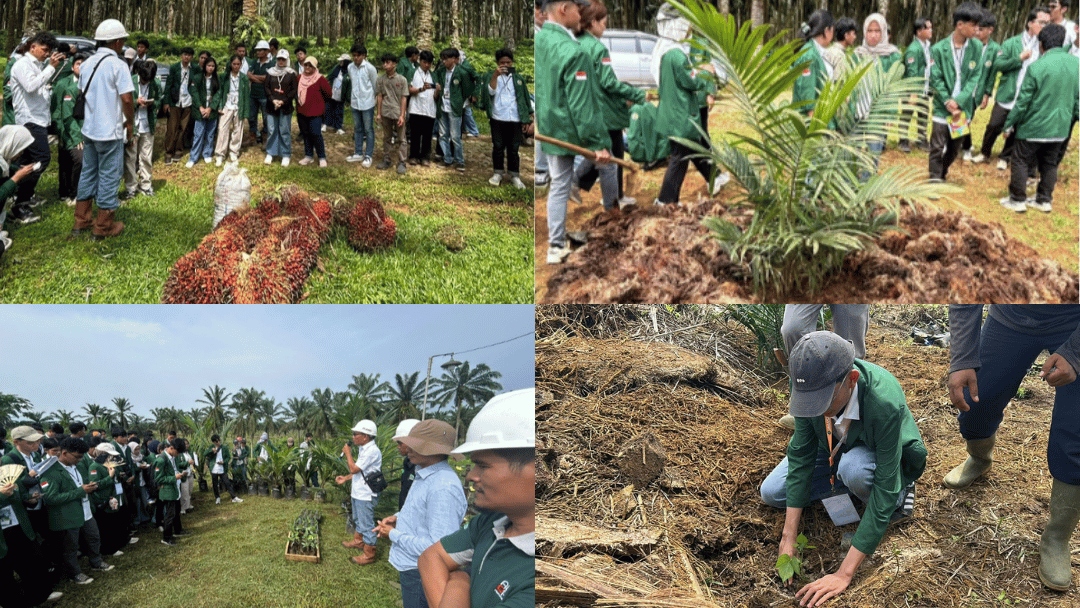
The visit began with an introduction to oil palm nursery activities, covering the pre-nursery and main nursery stages. Students received explanations about sprout planting, watering, fertilization, seedling care, and the selection process to ensure that seedlings planted in the field meet the quality standards established by the company.
One activity that particularly attracted students' attention was the direct observation of various examples of abnormal seedlings that did not meet the selection criteria. Students were able to identify the characteristics of seedlings with irregular growth and understand why they had to be excluded from the selection process. This experience provided a different learning opportunity compared to studying only pictures or videos in the classroom, as students could observe the actual appearance and condition of the seedlings and engage in direct discussions with plantation practitioners.
Another valuable experience was the opportunity to practice planting oil palm seedlings directly in the field. PT UKINDO had prepared the planting holes, allowing students to practice the seedling planting stages under the guidance of the company's accompanying team. This activity was a special experience because hands-on planting practice had not always been facilitated during previous field visits for the Plantation Crops 1 course.
This facilitation demonstrated PT UKINDO's commitment to supporting the students' learning process. FP USU appreciates the company's preparations, particularly the provision of various abnormal seedling samples for the selection activity and the opportunity to practice planting in the field. Both activities provided valuable practical experiences that deepened students' understanding of seedling quality standards and oil palm cultivation techniques. Appreciation was also extended for the attention and dedication shown by PT UKINDO's management and staff in preparing and guiding the activities in a structured manner.
Understanding Plant Maintenance, Harvesting, and Oil Palm Processing
After learning about nursery activities and planting, students continued their observations of the maintenance of immature plants (TBM) and mature plants (TM). The material presented included herbicide application techniques for weed control and fertilization as part of efforts to maintain plant growth and productivity. Explanations from the practitioners helped students understand that successful cultivation is determined not only by seedling quality but also by the accuracy and consistency of plant maintenance according to field conditions.
During the harvesting session, students observed a demonstration of proper harvesting techniques, an introduction to harvesting tools, and an explanation of how to calculate the harvest density figure (AKP) as one of the bases for estimating potential harvest yields. The Chief Assistant also explained how to arrange fresh fruit bunches and properly cut FFB stalks. Through this demonstration, students gained an overview of the importance of accurate harvesting techniques, crop handling, and harvest management in maintaining fruit quality and supporting plantation operational efficiency.
The activity then continued with a visit to the oil palm mill. At this location, students observed the stages of FFB processing at various stations, starting from fruit sterilization using rail-mounted cages, the separation of empty fruit bunches from the fruit, the processing of fruit into palm oil, and the handling of mill waste. Explanations of these processes helped students understand the relationship between harvest quality, production process efficiency, oil yield, and the management of industrial by-products and waste.
The experience from the plantation to the mill provided a more comprehensive understanding of the oil palm production system. Students were able to see how every stage, from seedling selection and plant maintenance to determining the harvesting time and processing FFB, plays an important role in supporting plantation productivity and business efficiency. This knowledge serves as a relevant academic foundation for Agribusiness students in understanding both the technical aspects and business management of the plantation sector.
Strengthening Student Competencies and Contributing to the SDGs
This field visit provided tangible benefits in enhancing students' knowledge, skills, and experience. For students in Classes AGB 3 and AGB 4 of the 2025 cohort, this activity also marked their first field trip since enrolling in the Agribusiness Study Program. The opportunity to interact with practitioners, observe operational activities, and participate in hands-on field practice is expected to build students' confidence and prepare them to face future challenges in the plantation and oil palm processing industries.
This activity also contributes to the achievement of the Sustainable Development Goals (SDGs), particularly SDG 4: Quality Education, through experiential learning that connects academic theory with industrial practice. The introduction to cultivation techniques, plantation management, and product processing is also relevant to SDG 9: Industry, Innovation and Infrastructure, particularly in broadening students' understanding of industrial production systems and technology. Furthermore, observations of mill processing and waste handling contribute to students' understanding of SDG 12: Responsible Consumption and Production, which emphasizes the importance of resource efficiency and responsible waste management.
FP USU expressed its appreciation and gratitude to PT UKINDO, part of the Anglo-Eastern Plantations Group, for the warm welcome, guidance, and learning facilities provided. The company's well-planned cultivation practice preparations, provision of various seedling samples for the selection activity, and opportunity for students to plant oil palm seedlings directly in the field represented valuable support for improving the quality of student learning.
Going forward, FP USU and PT UKINDO are committed to continuing their collaboration and strengthening their partnership through educational activities, field visits, and other forms of cooperation to improve the quality of student learning, particularly in developing a comprehensive understanding of oil palm cultivation, maintenance, harvesting, and processing. This synergy between higher education institutions and industry is expected to produce Agribusiness graduates with academic competencies, practical skills, and the readiness to contribute to the development of a productive and sustainable oil palm plantation industry.