


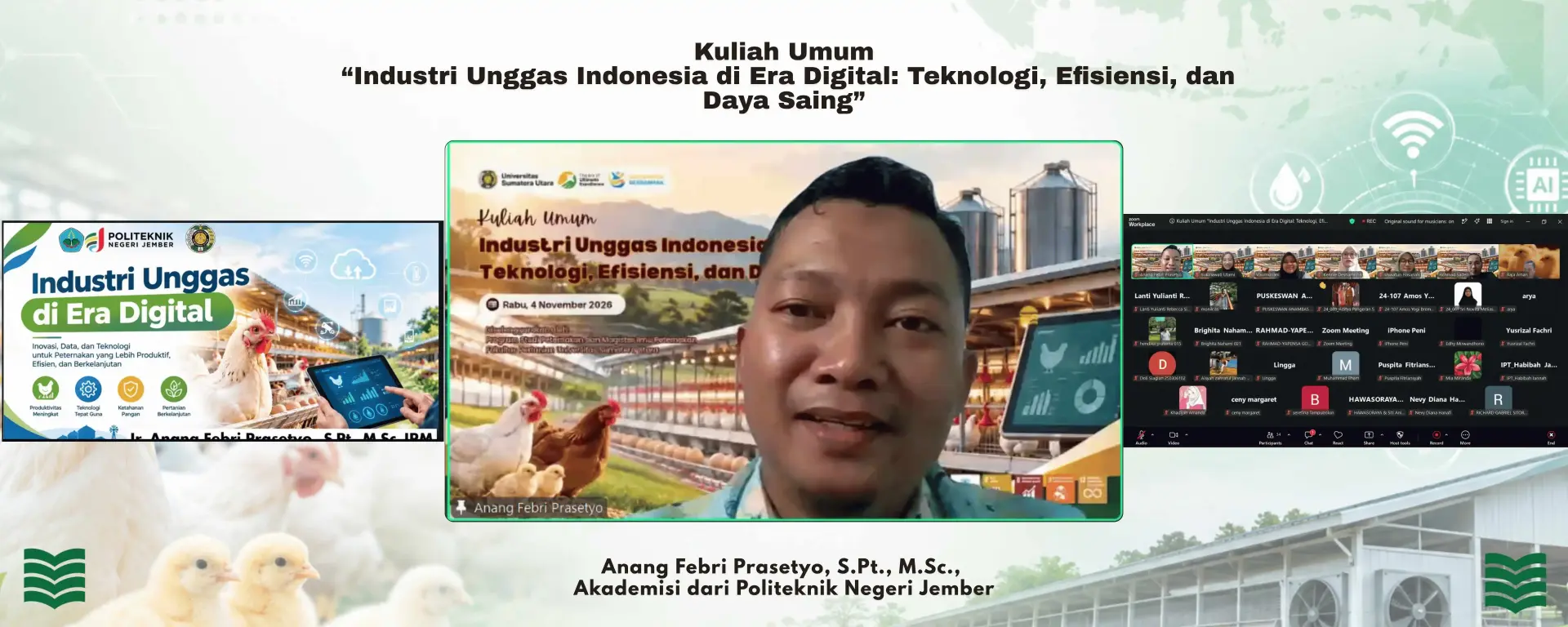
MEDAN – Digital transformation has become one of the strategic factors in increasing the productivity and competitiveness of Indonesia's poultry industry. In response to these developments, the Undergraduate Program in Animal Husbandry, Faculty of Agriculture, Universitas Sumatera Utara (USU), held a public lecture entitled “Indonesia's Poultry Industry in the Digital Era: Technology, Efficiency, and Competitiveness” on Wednesday, November 4, 2026, online via Zoom Meeting.
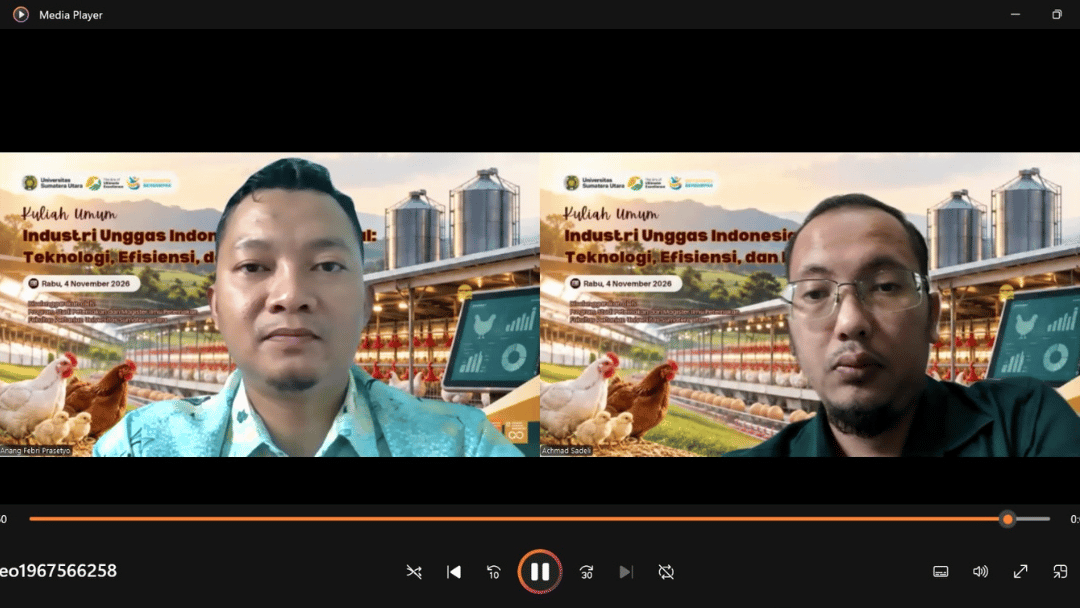
The event featured Anang Febri Prasetyo, S.Pt., M.Sc., an academic from Politeknik Negeri Jember, as the speaker. Through his presentation, students were invited to understand technological developments and innovations in the poultry industry, while also identifying opportunities and challenges in their application to modern livestock business management.
In his presentation, the speaker emphasized that the key to competition in the poultry industry lies in achieving production efficiency and consistent product quality through supply chain integration from upstream to downstream sectors. The use of technology, including advances in genetic breeding, is an important factor in improving livestock performance, productivity, and business sustainability.
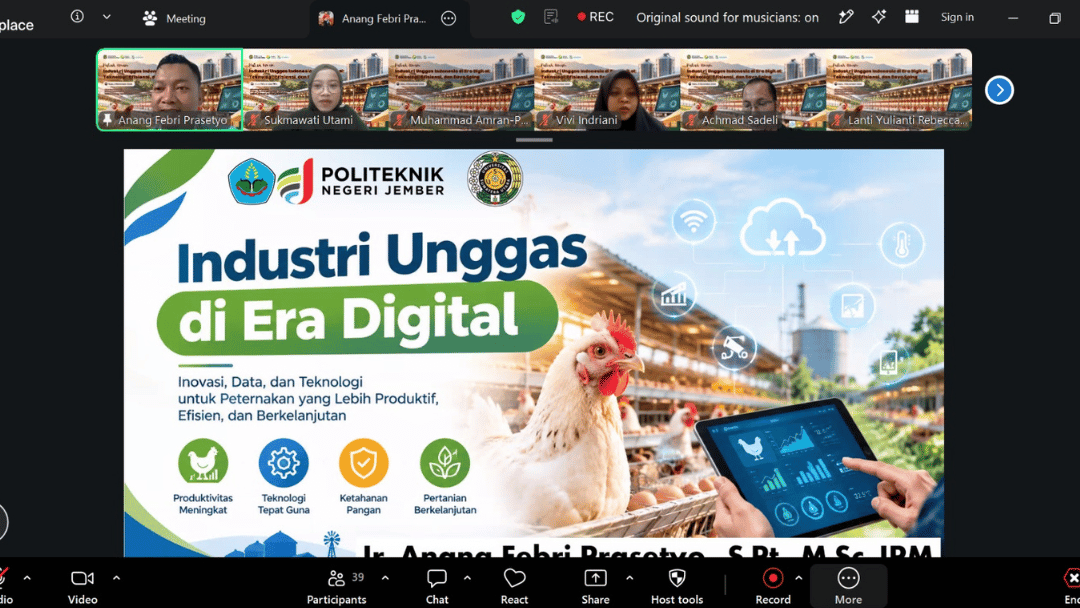
One of the main topics discussed was the implementation of Smart Poultry Farming through the integration of Internet of Things (IoT), Artificial Intelligence (AI), Big Data, and automation systems. These technologies enable the monitoring of poultry house environmental conditions, such as temperature, humidity, ammonia levels, and air quality, while also helping manage livestock growth, feed consumption, feed efficiency (Feed Conversion Ratio/FCR), and mortality rates in a more measurable manner.
Technological transformation is also evident in the modernization of housing systems through the implementation of Closed House systems. Compared to Open House systems, these systems have higher housing capacities and greater production performance potential, although they require initial investment, technological support, and a stable electricity supply.
In addition to production aspects, digitalization has also transformed marketing practices and the management of poultry product supply chains. The use of Digital Marketing creates opportunities to expand market access, while Blockchain technology supports product traceability and distribution transparency from producers to consumers.
The discussion addressed various current issues faced by livestock business operators. Several topics discussed included the compatibility of sensor technology with environmental conditions and regional characteristics, strategies for independent farmers to face industry competition, business licensing and financial management, and supply chain challenges in increasing the marketing margins of livestock products.
In response to these questions, the speaker explained that technology selection must be adjusted to environmental conditions, regional characteristics, and business scale, as there is no single technological specification that can be optimally applied to all livestock farming units. Meanwhile, for independent farmers, the ability to read market trends, determine harvesting times, build business relationships, and ensure marketing access are important factors in maintaining business competitiveness.
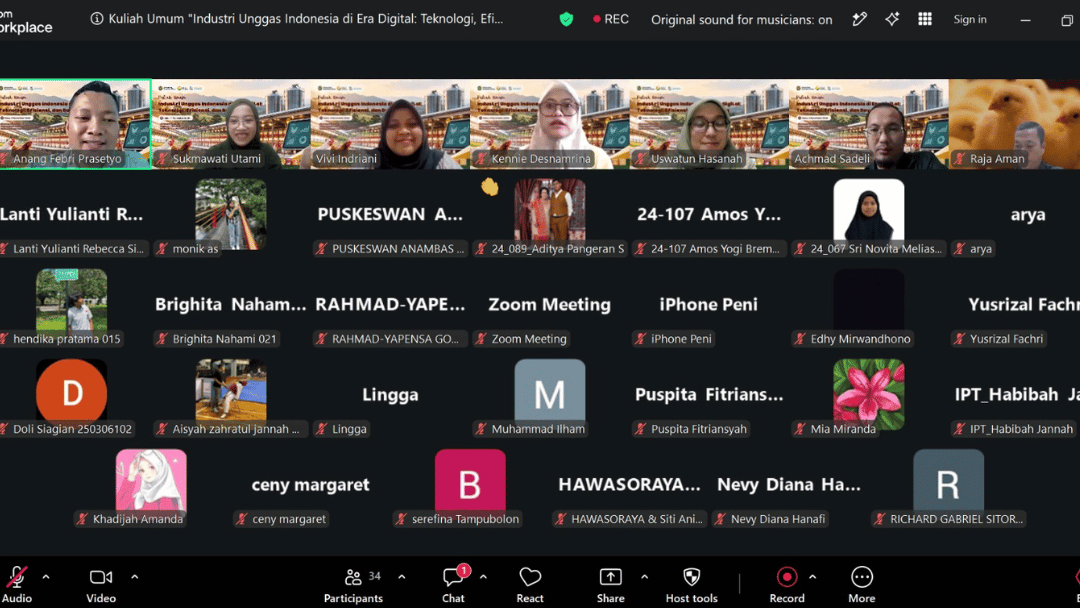
The event was attended by students of the Undergraduate and Master's Programs in Animal Husbandry, as well as lecturers from the Faculty of Agriculture, USU. In addition to enriching students' insights into developments in the poultry industry, this public lecture served as a platform for exchanging academic knowledge and experiences between USU and Politeknik Negeri Jember, while also opening up opportunities for collaboration in education, research, and Community Service.
The implementation of this activity also supports the achievement of the Sustainable Development Goals (SDGs), particularly SDG 4 (Quality Education) through the enhancement of students' knowledge and competencies; SDG 8 (Decent Work and Economic Growth) through increased understanding of efficiency and competitiveness in livestock businesses; and SDG 9 (Industry, Innovation, and Infrastructure) through the introduction of technological innovations and digital transformation in poultry production systems.
Through this activity, the Faculty of Agriculture, USU, continues to promote the strengthening of an academic atmosphere that is adaptive to developments in science and industry needs. Academic collaboration and technological mastery are expected to prepare innovative and competent animal husbandry graduates who can contribute to the development of a productive and competitive Indonesian livestock industry.