


 Menyelamatkan Kerbau Perah di Sumatera Utara.webp)
The Animal Science Study Program of the Faculty of Agriculture, Universitas Sumatera Utara (USU), in collaboration with LATERAL of the Faculty of Agriculture, held a Focus Group Discussion (FGD) titled “Saving Dairy Buffalo in North Sumatra” on Friday, July 18, 2025. The event was conducted in a hybrid format at the DH Penny Room, Faculty of Agriculture USU, and was attended by various stakeholders, including dairy buffalo farmers; representatives from the Agricultural Service/Livestock Division Heads of Deli Serdang and Serdang Bedagai Regencies; the Livestock Department of North Sumatra Province; the Siborong-Borong Center for Superior Livestock Breeding (BPTU); the Sei Putih Center for Small Ruminant Assembly and Testing; lecturers and researchers concerned with buffalo livestock issues; members of the Regional People’s Representative Council (DPRD); and national journalists.
The event began with opening remarks from the Head of the Undergraduate Program in Animal Science, Faculty of Agriculture USU, Dr. Ir. Ma’ruf Tafsin, M.Si., IPM., and the Head of LATERAL, Dr. Saruhum Rambe, S.Sos., M.Si. The discussion was moderated by Dr. Abdullah Akhyar Nasution, S.Sos., M.Si., and included presentations on the current condition of dairy buffalo in North Sumatra, identifying challenges and potential for development.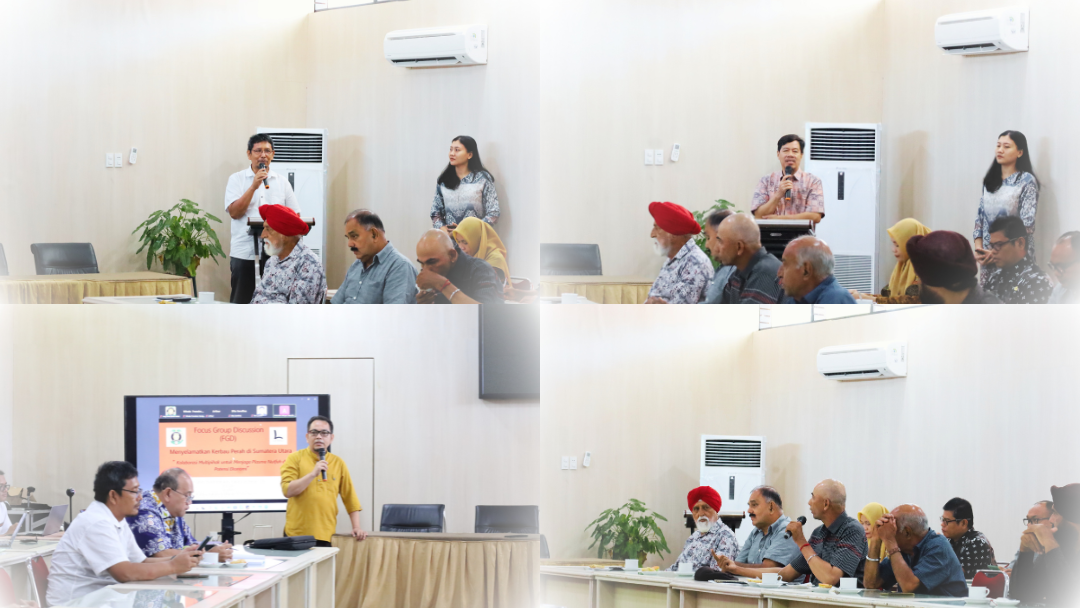
This FGD was initiated in response to the critical situation of the dairy buffalo population in North Sumatra, which currently numbers only about 350 animals, spread across eight family farms in Deli Serdang and Serdang Bedagai Regencies. This figure is far below the viable population threshold of 500 heads, as determined by the FAO, thus endangering the sustainability of their genetic pool and economic potential.
The main issues raised in the discussion included population fragmentation and the low density of buffalo, which is only 0.42 heads per square kilometer. Additionally, buffalo farming management systems remain traditional and are not yet supported by adequate genetic recordkeeping. Economic constraints and limited access to technology also pose significant challenges. Moreover, the use of buffalo milk as a nutritional source to combat stunting remains suboptimal.
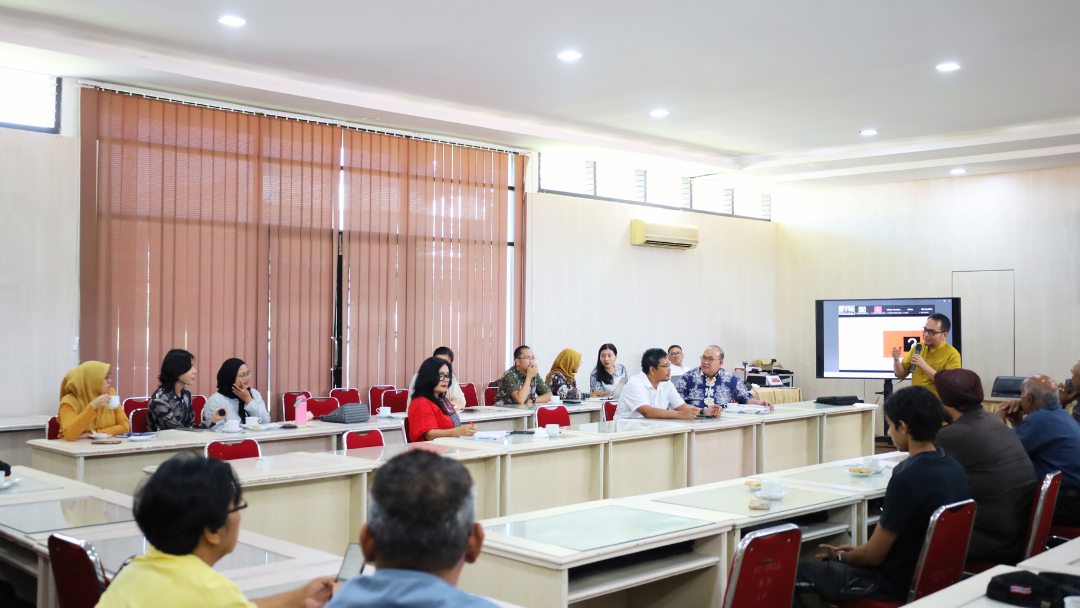
Through this FGD, participants discussed the current condition of dairy buffalo farming, the challenges faced by farmers, and formulated concrete solutions based on multi-stakeholder collaboration. Some of the proposed action plans included the mass implementation of artificial insemination (AI), the establishment of breeding centers, integrative milk processing, and product certification.
During the FGD, a farmer from Tanjungmorawa, Rajeh Lalpur, expressed several challenges faced by farmers, such as the lack of superior breeding stock and limited forage due to land constraints. He also voiced hope for government support to allow buffalo grazing in plantation areas. “We are currently not allowed to graze buffalo in company-owned estates, even though grazing significantly increases milk production,” he said. Rajeh also highlighted the lack of progress in milk processing and product diversification.
Dr. Saruhum Rambe, M.Si., Director of LATERAL, emphasized that saving the dairy buffalo from extinction in North Sumatra requires collaboration among various parties. He underscored the importance of working together with farmers, conducting joint studies and research with academics from Universitas Sumatera Utara (USU), and gaining support from the government, private sector, and media.
This activity was initiated by LATERAL in collaboration with the Animal Science Study Program, Faculty of Agriculture USU, led by PIC Fuad Harahap, M.Pt (Lecturer of the Animal Science Program, Faculty of Agriculture USU). The initiative is expected to become the first step in saving the dairy buffalo as both a genetic resource and a potential local economic asset. The outcomes of the FGD will be compiled into a policy brief and submitted to policymakers as a basis for strategic decision-making moving forward.