


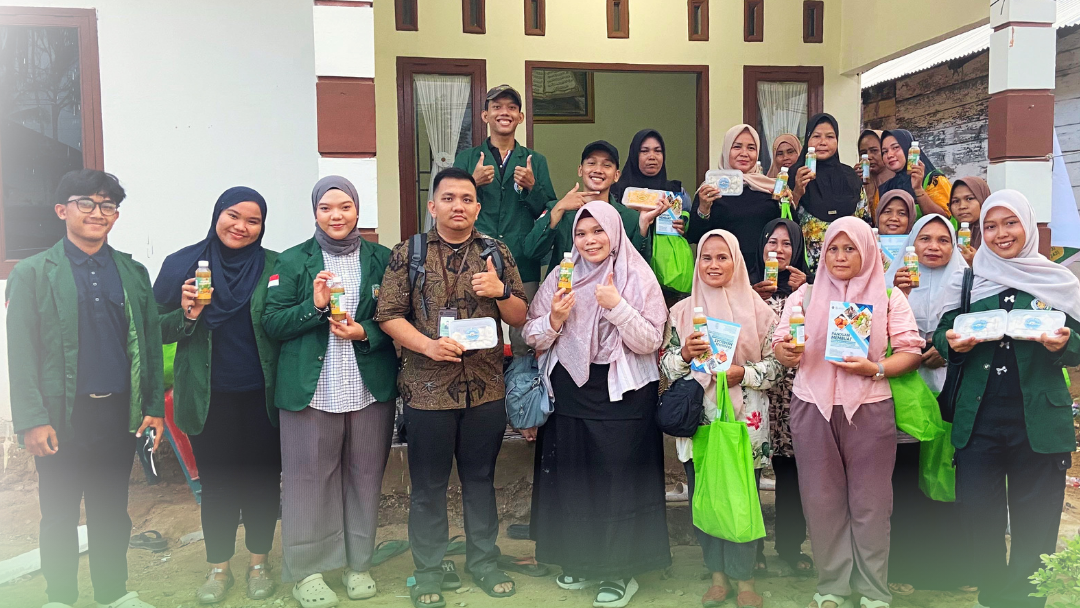
Central Tapanuli – The Community Service Team from the Faculty of Agriculture, Universitas Sumatera Utara (USU) carried out a Disaster Mitigation Community Service Program in Lopian Village, Central Tapanuli Regency, on July 30–31, 2026. The program, titled "Innovation in Fish Product Processing and Fish Waste Bioconversion to Promote the Creative Economy in Lopian Village, Central Tapanuli Regency," aimed to enhance the community's capacity to maximize the potential of local fisheries resources through innovative fish processing techniques and value-added waste utilization.
The program was led by Vindy Rilani Manurung, S.Pi., M.P., together with team members Atmadinata Aviantara, S.Pi., M.Tr.Pi., Dr. Ahmad Muhtadi, S.Pi., M.Si., Amanatul Fadhilah, S.Pi., M.Si., and Muhammad Amran, S.Pt., M.Pt. Six students also participated in the program, reflecting collaborative engagement between lecturers and students in supporting community empowerment initiatives.
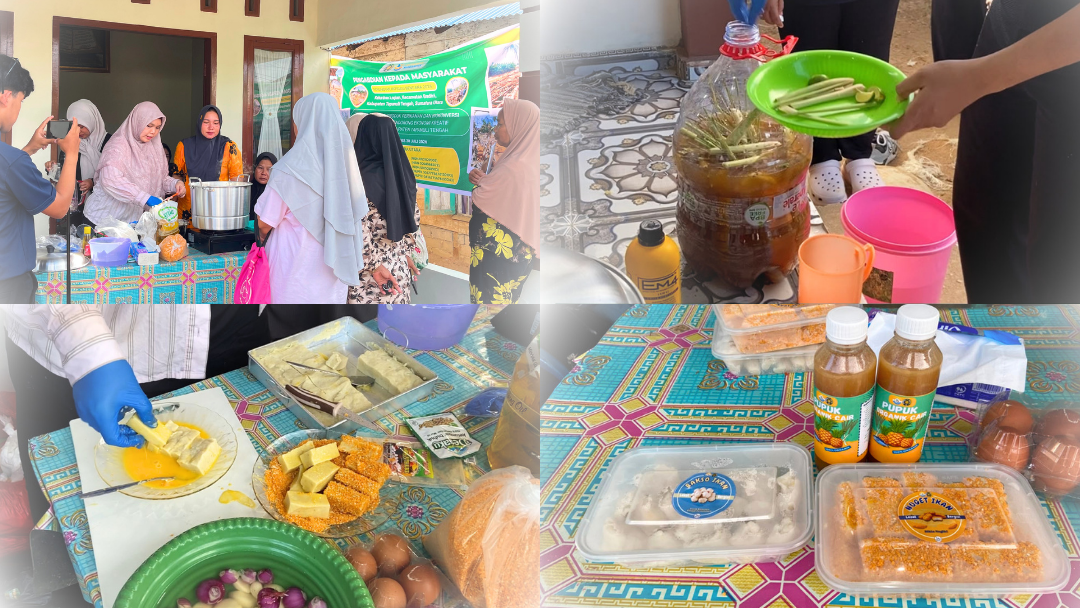
Throughout the program, community members received mentoring and hands-on training in processing fish into value-added products, including fish meatballs and fish nuggets. Participants were also introduced to bioconversion technology that transforms fish waste into Liquid Organic Fertilizer (LOF), an environmentally friendly solution that converts processing waste into an economically valuable product rather than a disposal problem.
Through this initiative, the community service team not only introduced appropriate technology but also fostered entrepreneurship, promoted the principles of the circular economy, and encouraged sustainable fisheries resource management. The knowledge and practical skills provided are expected to enable community members to develop fisheries-based businesses, increase household incomes, and create competitive local products.
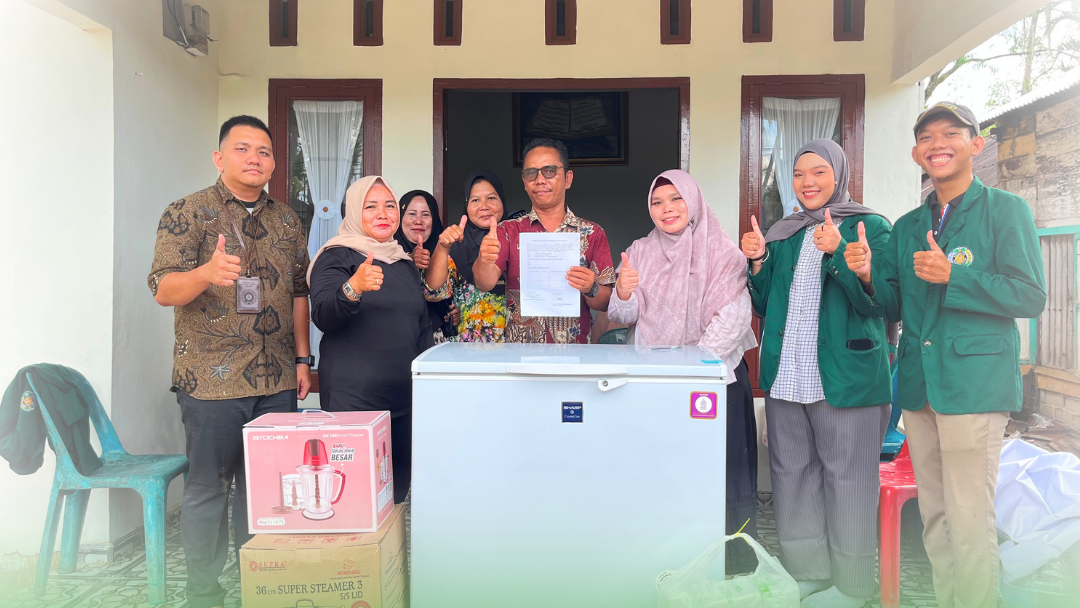
The Head of the Community Service Team, Vindy Rilani Manurung, S.Pi., M.P., emphasized that maximizing the potential of regional fisheries depends not only on fish harvests but also on the community's ability to process and utilize every available resource efficiently. According to her, innovation in product processing and the transformation of waste into value-added products represent concrete steps toward sustainable community economic development.
This community service initiative also supports the Sustainable Development Goals (SDGs), particularly SDG 8 (Decent Work and Economic Growth) by increasing the added value of fisheries products and strengthening local livelihoods, SDG 12 (Responsible Consumption and Production) through the productive utilization of fish waste, and SDG 14 (Life Below Water) by promoting the more efficient and sustainable use of marine and fisheries resources.