


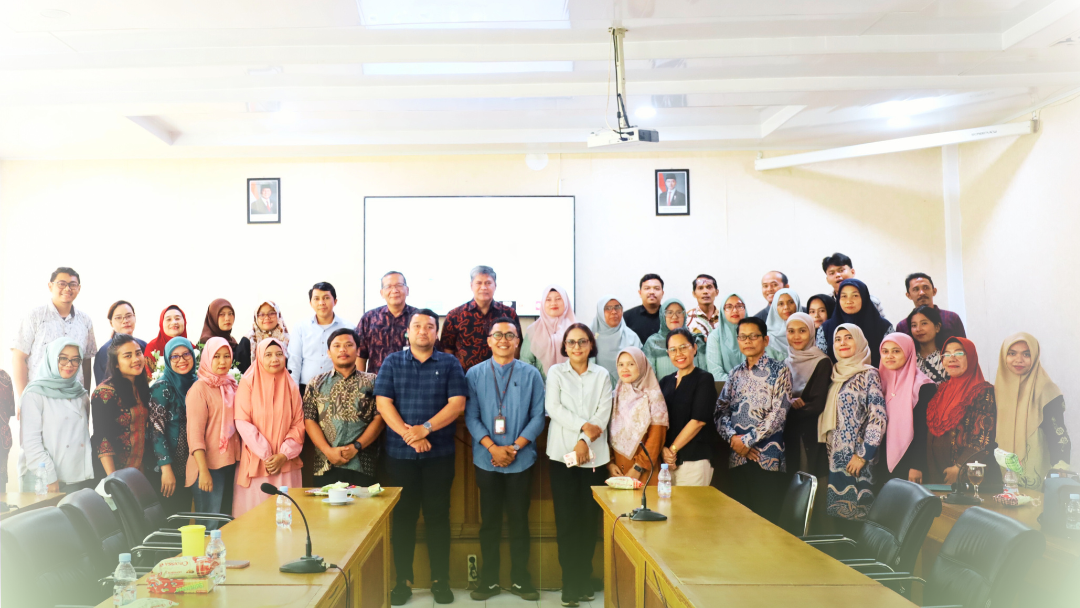
The Faculty of Agriculture, Universitas Sumatera Utara (USU) organized a socialization event titled “Integrity Zone Free from Corruption (ZI-WBK)” on Friday, August 1, 2025. The event took place in the Meeting Room, 2nd Floor, Main Building of the Faculty of Agriculture and featured keynote speaker Prof. Dr. Nurman Achmad, S.Sos., M.Soc.Sc., Chair of the USU Bureaucratic Reform Team and Vice Dean II of the Faculty of Social and Political Sciences USU.
The event was officially opened by Ir. Revandy Iskandar Muda Damanik, M.Si., M.Sc., Ph.D., Vice Dean II of the Faculty of Agriculture USU, and attended by the Head of Administration, Dean’s Expert Staff, and all educational staff of the faculty. The discussion, moderated by Dina Lestari, S.T.—Finance Manager and SIMRKA Operator—focused on “Bureaucratic Reform and ZI-WBK in Services.”_.png)
In his remarks, Ir. Revandy emphasized the importance of a shared commitment to fostering a culture of integrity in the workplace.
“Building an Integrity Zone is part of our commitment to creating a clean, accountable, and service-oriented government. A culture of integrity is built not only from regulations but from collective commitment and changes in work culture across all organizational levels,” he stated.
Meanwhile, Prof. Nurman explained that the Integrity Zone is a designation given to government agencies committed to realizing a Corruption-Free Area (WBK) and a Clean and Serving Bureaucratic Area (WBBM).
“The development of the Integrity Zone is carried out through six areas of change: Change Management, Governance Structuring, Human Resources Management System Structuring, Strengthening Accountability, Strengthening Supervision, and Improving the Quality of Public Services,” he explained.
Prof. Nurman also stressed the importance of strict selection processes in determining work units eligible for Integrity Zone status, including self-assessments by the Internal Assessment Team. He concluded by emphasizing the importance of an excellent service culture.
This activity marks the initial step for the USU Faculty of Agriculture in strengthening its commitment to continuous bureaucratic reform and improving the quality of public services.