


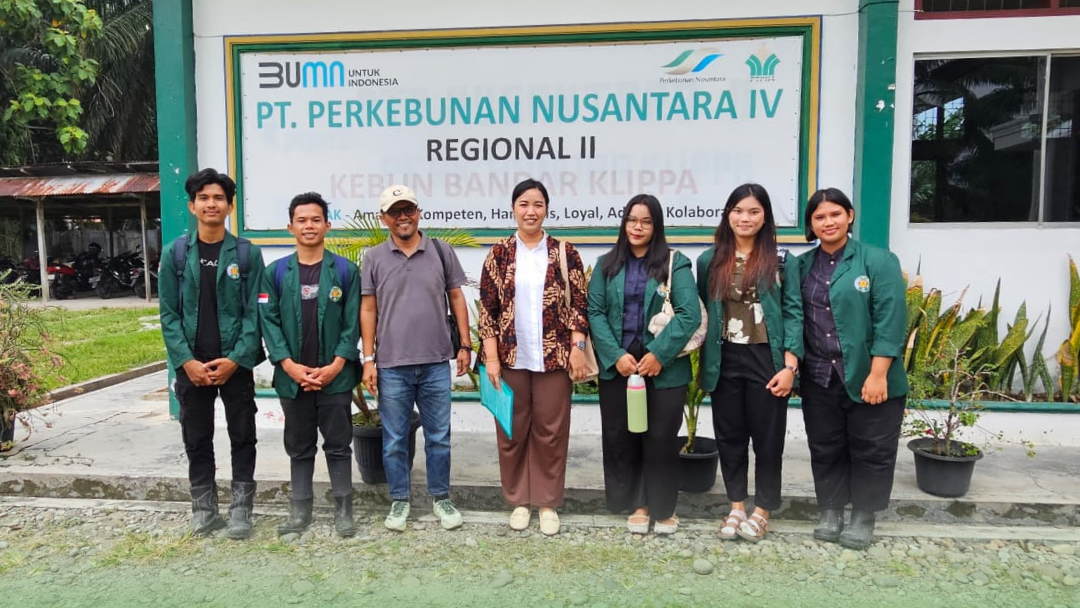
Universitas Sumatera Utara (USU) continues to strengthen experiential learning through student Field Work Practice (PKL) activities in professional environments. One such effort was carried out through the supervision of student PKL at PTPN IV Regional II, Bandar Klippa Plantation, Batang Kuis District, Deli Serdang Regency, on July 16, 2026.
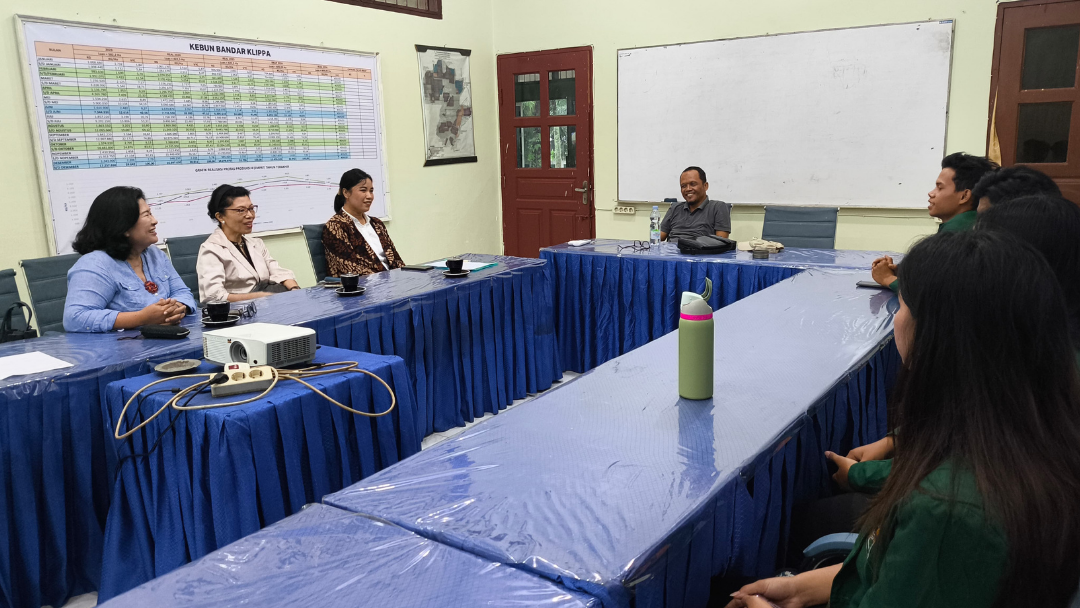
The supervision was conducted by Julieta Christy, S.P., M.Agr., a lecturer at the Faculty of Agriculture, USU, to monitor and evaluate the implementation of student PKL conducted from July 1–31, 2026. Five students—Aulia Alkadri Gusraniki, Hosea Mora Tua Sinaga, Anggun Banjarnahor, Bella Yuni C. Sipayung, and Zefrina Nst—were assigned to Afdeling 3 and 4 and participated in various maintenance activities for Mature Oil Palm (TM) plants.
Connecting Theory with Practice
PKL serves as a means for students to integrate the knowledge gained in the classroom with real-world conditions in the workplace. In addition to technical competence, students gain experience in communication, teamwork, problem-solving, responsibility, and adapting to a professional work culture.
During the PKL, students participated in oil palm maintenance activities, field data recording and analysis, and the preparation of technical reports. They also interacted directly with plantation management, afdeling assistants, field supervisors, and company employees.
These experiences strengthened students’ ability to connect agronomic concepts with real-world challenges in the field. One of the innovations they studied was the application of injection or infusion methods for controlling pests and diseases in oil palm plants, which allows control agents to be delivered directly into plant tissues for more efficient use.
Developing Graduates Ready for the Workplace
At the initial stage, students faced challenges in adapting to work procedures, coordination processes, operational standards, and the work culture of the plantation environment. Through guidance from field supervisors and encouragement to actively ask questions and gather information, students were able to adapt and demonstrate progress in carrying out their responsibilities.
The supervision results showed that all five students were able to participate in technical activities with discipline and responsibility while demonstrating effective teamwork and communication skills. Nevertheless, students still need to further develop their ability to analyze technical issues in greater depth, propose innovative ideas, and take a more proactive approach when engaging in discussions with practitioners in the field.
Strengthening Education–Industry Partnerships
The implementation of PKL at PTPN IV Regional II demonstrates the importance of collaboration between higher education institutions and the workplace in preparing competent and adaptable graduates. Through direct experience in the plantation environment, students gain an understanding of professional demands while having the opportunity to apply the knowledge acquired during their studies.
Going forward, students’ learning experiences are expected to be expanded through exposure to various stages of plantation management, from nursery operations and Immature Oil Palm (TBM) to Mature Oil Palm (TM) management and the processing of plantation products at palm oil mills.
This activity also represents USU’s contribution to supporting SDG 4 (Quality Education) through experiential learning, SDG 8 (Decent Work and Economic Growth) through strengthening students’ competencies and work readiness, and SDG 17 (Partnerships for the Goals) through collaboration between higher education and industry.
Thus, PKL supervision is not only part of academic evaluation but also an effort to ensure that students gain relevant learning experiences, develop professional competencies, and become better prepared to enter the workforce after completing their education.