


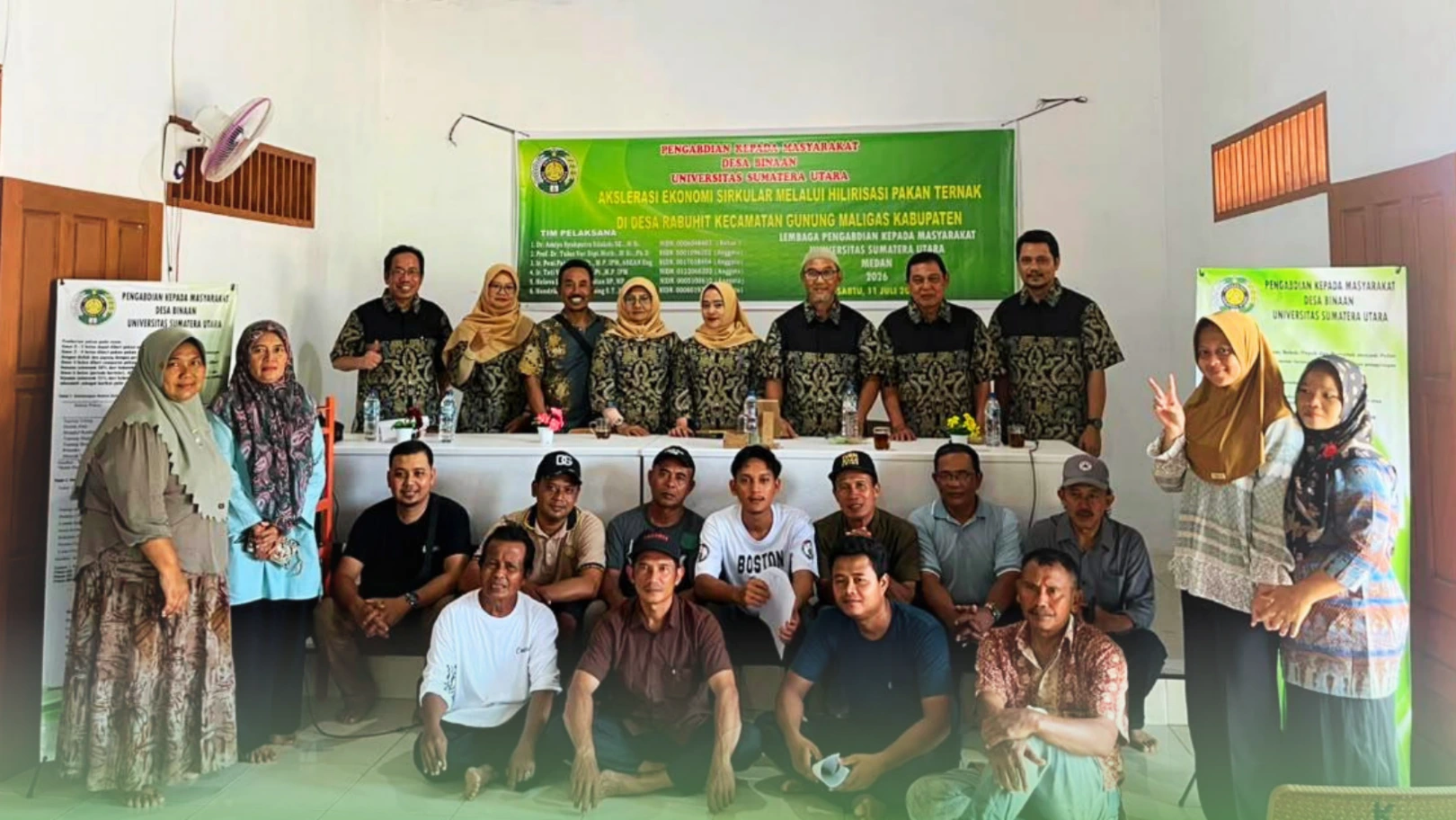
Simalungun – Following the launch of the Assisted Village Program in Rabuhit Village, Gunung Maligas District, Simalungun Regency, the community service team from Universitas Sumatera Utara (USU) has focused on implementing tangible activities in the field. This effort is carried out through technology transfer for agricultural and livestock waste management to help improve the local community’s economy.
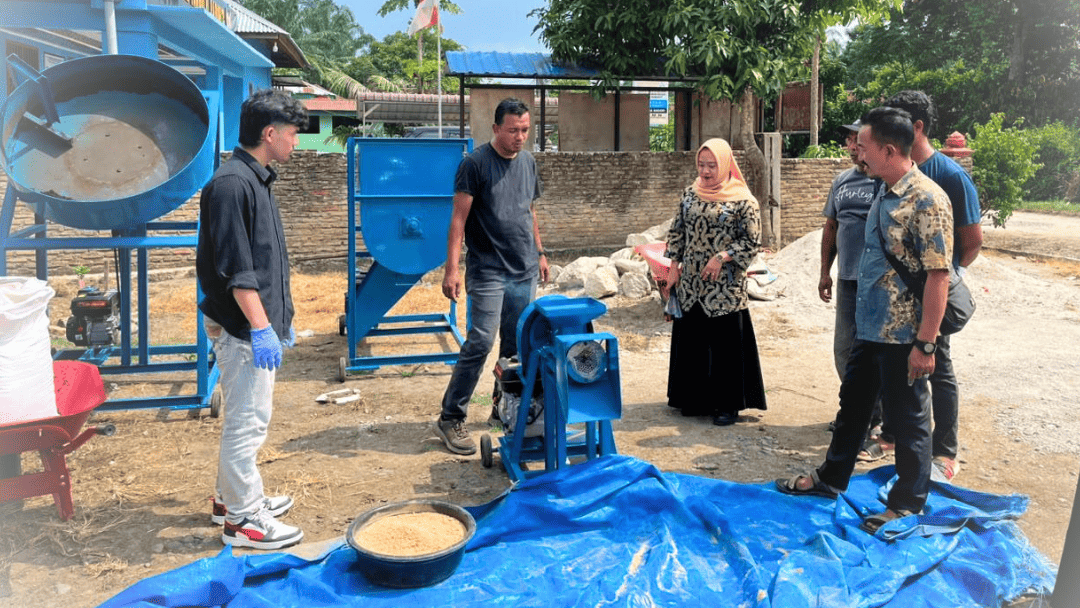
The first training focused on producing feed for livestock and catfish independently using a pelletizer machine. The farmer and livestock groups led by Rohiman were equipped with skills to process locally available raw materials into nutritious feed that meets established standards. The high-quality pellets produced are used for chicken farming and catfish cultivation in Rabuhit Village. This initiative serves as a strategic solution to reduce dependence on commercially manufactured feed, which has previously placed a significant financial burden on livestock farmers.
The second activity focused on processing cattle and goat manure using a granulator machine. Residents were trained to transform livestock waste, which has the potential to pollute the environment, into high-value granular organic fertilizer. In addition to creating cleaner and more sanitary residential surroundings, the fertilizer products provide residents with a new source of income.
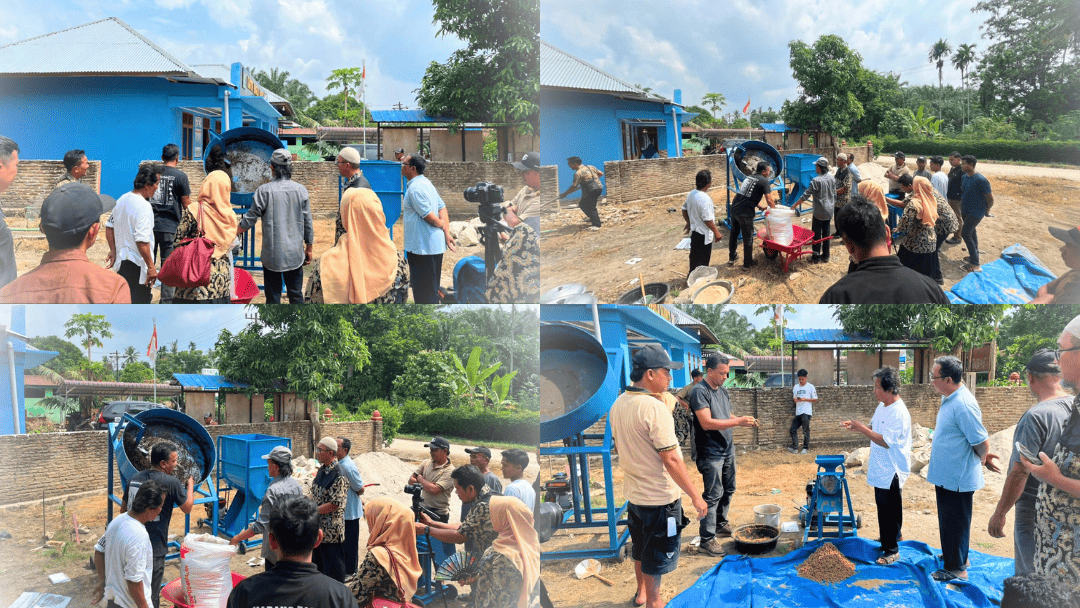
The program, implemented by the Institute for Community Service (LPPM) of USU, is led by Dr. Amlys Syahputra Silalahi, S.E., M.Si., together with a multidisciplinary team of experts from the Faculty of Mathematics and Natural Sciences (FMIPA), namely Prof. Dr. Tulus Vor.Dipl.Math., M.Si., Ph.D.; from the Faculty of Agriculture, Ir. Peni Patriani, S.Pt., M.P., IPM., ASEAN.Eng.; Ir. Tati Vidiana Sari, S.Pt., M.P., IPM.; and Helova Leonard Panjaitan, S.P., M.P.; and from the Faculty of Engineering, Hendrik Voice Sihombing, S.T., M.T. As of August 2026, the community service program in Rabuhit Village has achieved 87% of its target.
The successful adoption of this technology has directly contributed to increased community income as agricultural and livestock productivity improves. Training, mentoring, and periodic evaluations will continue through September 2026 to establish an environmentally friendly area based on the Zero Waste concept.
This initiative is aligned with the achievement of the Sustainable Development Goals (SDGs), particularly SDG 3: Good Health and Well-being through improved environmental sanitation and community welfare, and SDG 8: Decent Work and Economic Growth through increased productivity, new income opportunities, and community economic empowerment.