


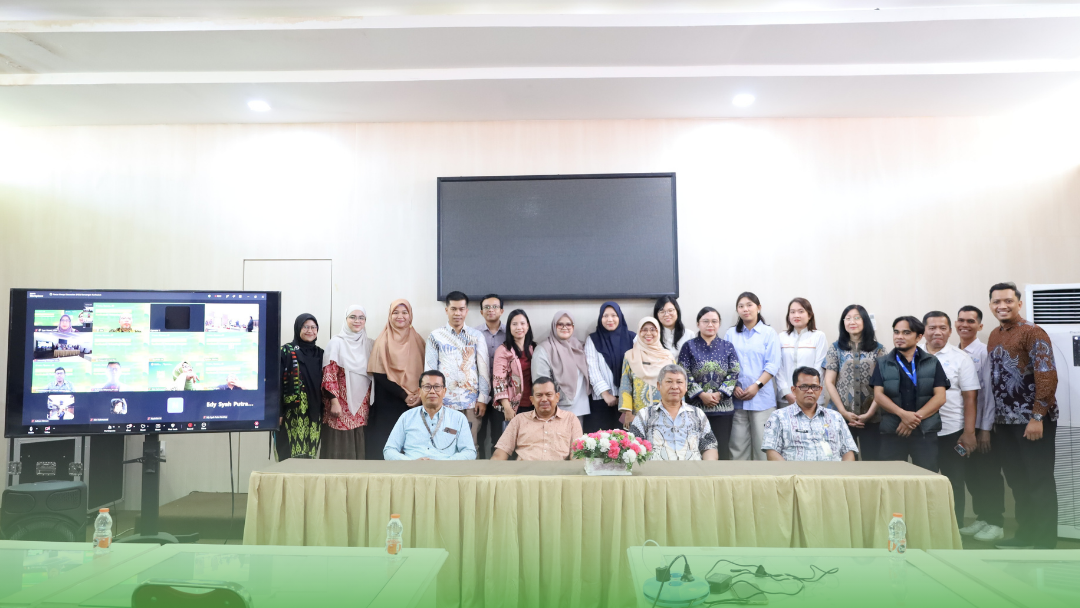
Medan, August 6, 2026 – The Food Technology Study Program, Faculty of Agriculture, Universitas Sumatera Utara (FP USU), continues to strengthen its commitment to improving the quality of education by developing a curriculum that is relevant to advances in science and technology, workforce needs, and challenges in the food industry. This commitment was realized through the implementation of a Focus Group Discussion (FGD) on the Design of an Outcome-Based Education (OBE) Curriculum on Thursday, August 6, 2026, at the D. H. Penny Hall, FP USU.
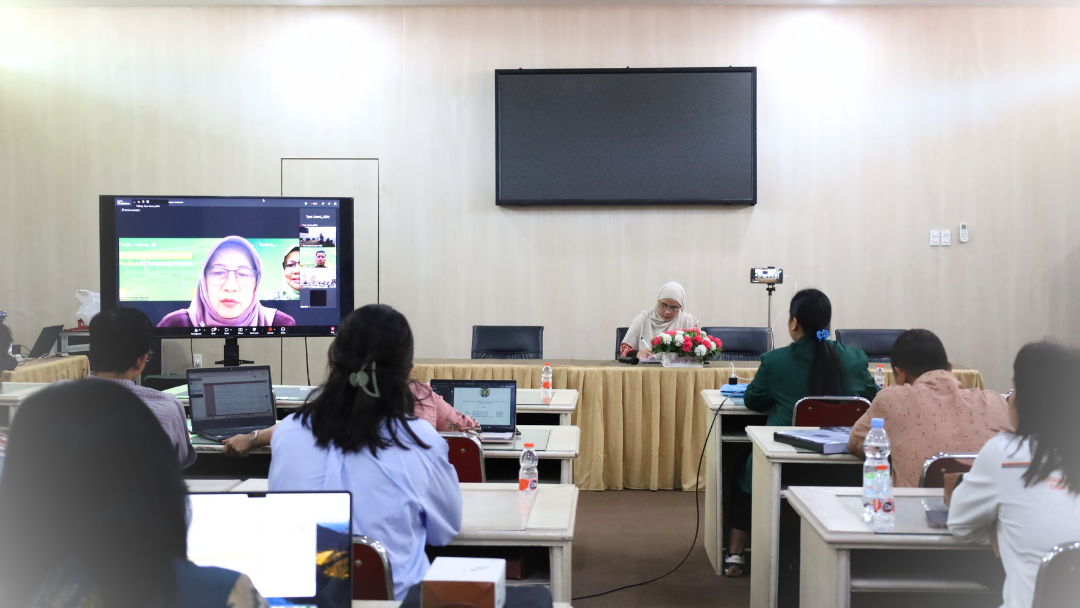
The activity was conducted in a hybrid format, both onsite and via Zoom Meeting, and involved various stakeholders, including academics, industry representatives, government agencies, MSMEs, alumni, lecturers, and students. The involvement of diverse stakeholders was essential in obtaining comprehensive input to refine the curriculum so that it becomes increasingly adaptive to current developments and future needs.
The FGD was opened by the Head of the Food Technology Study Program, FP USU, Dr. Ridwansyah, S.TP., M.Si., together with the Dean of FP USU, Dr. Rulianda Purnomo Wibowo, S.P., M.Ec., and Vice Dean I of FP USU, Dr. Nini Rahmawati, S.P., M.Si. The presence of faculty and study program leadership at the opening demonstrated institutional support for the development of the OBE Curriculum as part of efforts to improve educational quality and ensure the relevance of graduate competencies to workforce needs.
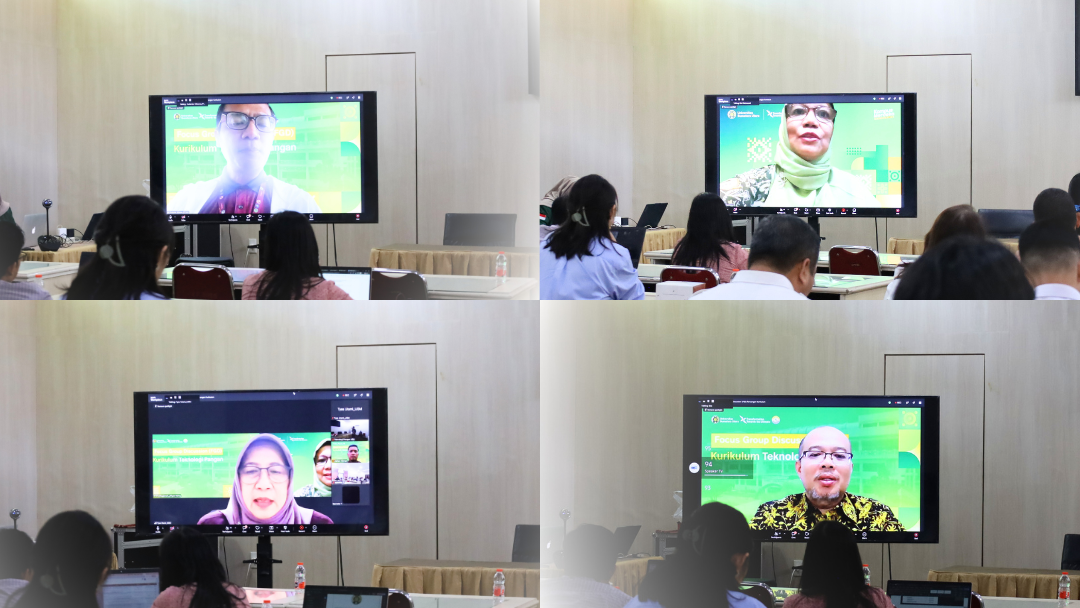
In his remarks, Dr. Ridwansyah emphasized the importance of open, constructive, and productive discussions in the curriculum development process. All input gathered from various stakeholders is expected to serve as an important basis for producing a higher-quality curriculum that is adaptive and future-oriented.
“We hope that today’s discussion will be open, constructive, and productive. All suggestions, criticisms, and recommendations will be documented and serve as important input in developing a higher-quality, adaptive curriculum oriented toward future needs,” said Dr. Ridwansyah.
Meanwhile, Vice Dean I of FP USU, Dr. Nini Rahmawati, S.P., M.Si., stated that the FGD served as a strategic forum for obtaining input, experience, and perspectives from various stakeholders, particularly academics, industry representatives, alumni, students, and other relevant parties.
“We greatly expect that the synergy among various stakeholders will produce a curriculum that not only meets national higher education standards but also produces outstanding, innovative, and character-driven graduates with competencies relevant to industry and society,” she said.
Dean of FP USU, Dr. Rulianda Purnomo Wibowo, S.P., M.Ec., emphasized that every study program must understand developments taking place in the business, industrial, and technological sectors. According to him, a curriculum should not merely consist of courses but must describe the competencies graduates need to possess, the problems they should be able to solve, and the technologies and skills they need to master.
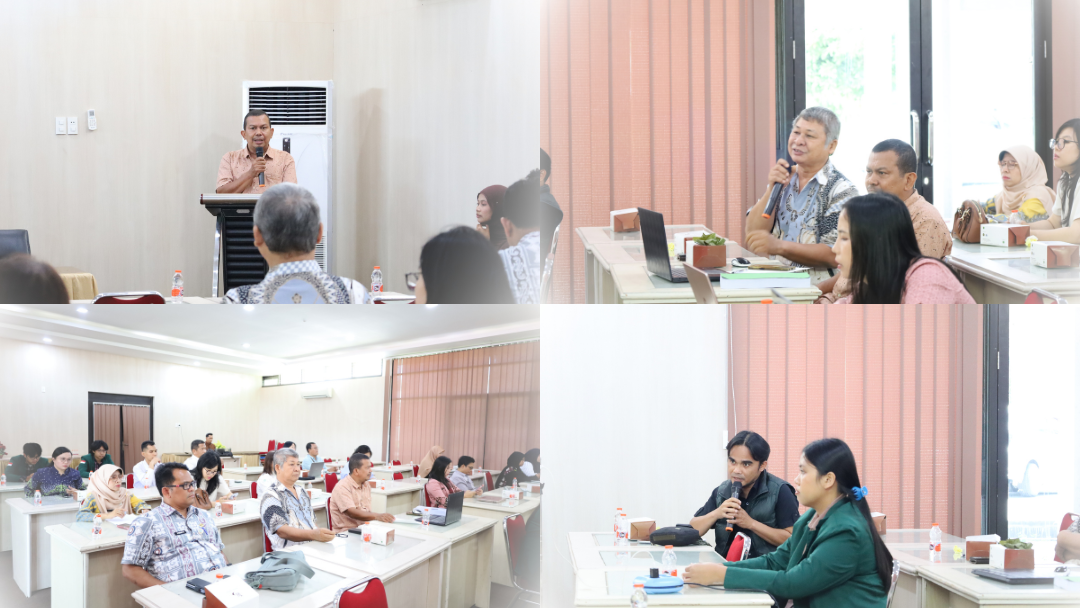
“Every study program must truly understand what is happening today in the business, industrial, and technological sectors. A curriculum should not merely consist of courses; it must be relevant and emerge from an understanding of what competencies are needed, what problems graduates should be able to solve, and what technologies and skills they should master,” he explained.
Furthermore, Dr. Rulianda stated that higher education institutions need to anticipate changes and prepare for workforce needs over the next five to ten years. Therefore, communication between study programs and various stakeholders needs to be established more systematically and effectively.
“I hope this FGD produces a curriculum that is more relevant, adaptive, applicable, and future-oriented,” he added.
During the event, participants gained insights from two speakers with expertise in curriculum development and food technology. Prof. Dr. Ir. Tyas Utami, M.Sc., Head of the Department of Food and Agricultural Product Technology, Faculty of Agricultural Technology, Universitas Gadjah Mada, delivered a presentation entitled “Implementation of OBE in Food Technology Curriculum Development.”
Meanwhile, Prof. Dr. Ir. Eko Hari Purnomo, S.T.P., M.Sc., from IPB University, delivered a presentation entitled “Food Technology Graduate Competencies in Facing Food Industry 5.0.” Both presentations provided important perspectives on the implementation of OBE and the competencies that need to be developed to enable Food Technology graduates to adapt to technological advancements and the transformation of the food industry.
Following the presentations and question-and-answer session, the activity continued with a presentation of the OBE Curriculum of the Food Technology Study Program at USU. Participants then took part in an FGD with stakeholders consisting of academics, industry representatives, government agencies, MSMEs, alumni, and students. The discussion was aimed at obtaining concrete input regarding the curriculum design, learning outcomes, graduate competencies, and the alignment of the curriculum with the needs of the workforce and society.
The results of the discussion were subsequently formulated into a number of recommendations, which were presented during a plenary session for joint feedback and further refinement. The event continued with the signing of the minutes of the meeting and a joint commitment as a form of support for the development of the OBE Curriculum of the Food Technology Study Program, FP USU, before the activity concluded.
Through this FGD, the Food Technology Study Program, FP USU, seeks to ensure that its curriculum is oriented not only toward knowledge acquisition but also toward graduates’ ability to apply their competencies, solve problems, innovate, adapt to change, and meet the needs of industry and society. Collaboration with various stakeholders serves as an important foundation for developing a curriculum that is responsive to technological developments and future challenges in the food industry.
The development of the OBE Curriculum also contributes to FP USU’s efforts to achieve the Sustainable Development Goals (SDGs). The activity supports SDG 4: Quality Education through the development of a learning-outcome-oriented curriculum and the enhancement of graduate competencies. Aligning competencies with workforce needs also supports SDG 8: Decent Work and Economic Growth, particularly by preparing competent human resources who are ready to contribute to the food sector. Discussions on technological developments and the future needs of the food industry are also aligned with SDG 9: Industry, Innovation and Infrastructure through the strengthening of innovation and human resource capacity. Meanwhile, the involvement of academics, industry representatives, government agencies, MSMEs, alumni, lecturers, and students reflects SDG 17: Partnerships for the Goals through multi-stakeholder collaboration in creating higher education that is relevant, innovative, adaptive, and globally competitive.
With the spirit of “Together Refining the Curriculum, Building Competitive Graduates,” the Food Technology Study Program, FP USU, continues to strengthen the quality of education, research, and community service to produce outstanding, adaptive, innovative, and character-driven graduates who are capable of making meaningful contributions to development and the advancement of the food industry.