


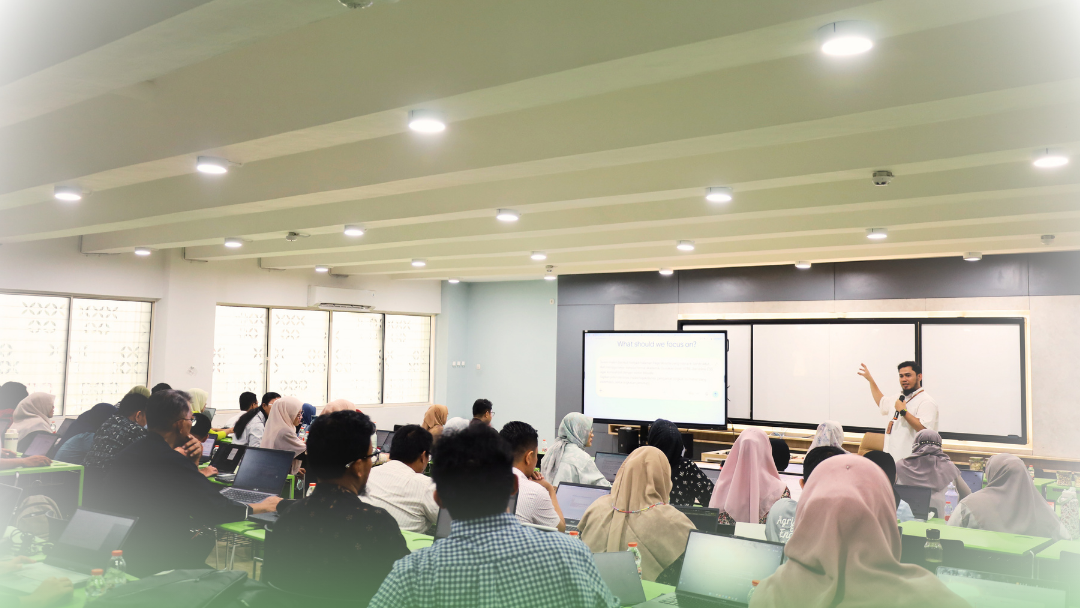
Medan, July 15, 2026 – The Faculty of Agriculture at Universitas Sumatera Utara (FP USU) organized a Kelas USU Learning Management System (LMS) Workshop as part of its efforts to strengthen the implementation of digital learning across the faculty. The workshop was officially opened by the Vice Dean for Academic Affairs of the Faculty of Agriculture, Dr. Nini Rahmawati, S.P., M.Si., and attended by Anggi Maisarah, S.H., M.H., Digitalization Manager at the Directorate of Learning Digitalization, Universitas Sumatera Utara. The session featured Ade Maulana, S.Kom., M.T.I. as the keynote speaker.
In her opening remarks, Dr. Nini Rahmawati emphasized that the adoption of a Learning Management System is a strategic step toward improving the quality of teaching by making it more effective, well-structured, and responsive to technological advancements. She noted that optimizing the use of the LMS is expected to accelerate digital learning transformation while enhancing academic quality across Universitas Sumatera Utara.
The workshop was organized to assist lecturers in effectively utilizing Kelas USU as the university's digital learning platform. Participants received both theoretical guidance and practical training on a wide range of LMS features, including course content management, learning activities, assignment creation, and the integration of digital learning media to support a more efficient, structured, and accessible teaching and learning process.
Through this initiative, the Faculty of Agriculture USU, in collaboration with the Directorate of Learning Digitalization, reaffirmed its commitment to strengthening lecturers' capacity to implement technology-enhanced learning. The Kelas USU platform is expected to continue evolving as an innovative and sustainable digital learning ecosystem that supports high-quality education and academic excellence.
This initiative also contributes to the achievement of the Sustainable Development Goals (SDGs), particularly SDG 4 (Quality Education) by enhancing the quality and accessibility of higher education through digital learning, and SDG 9 (Industry, Innovation and Infrastructure) by promoting innovation and strengthening digital infrastructure to support modern teaching and learning practices.