


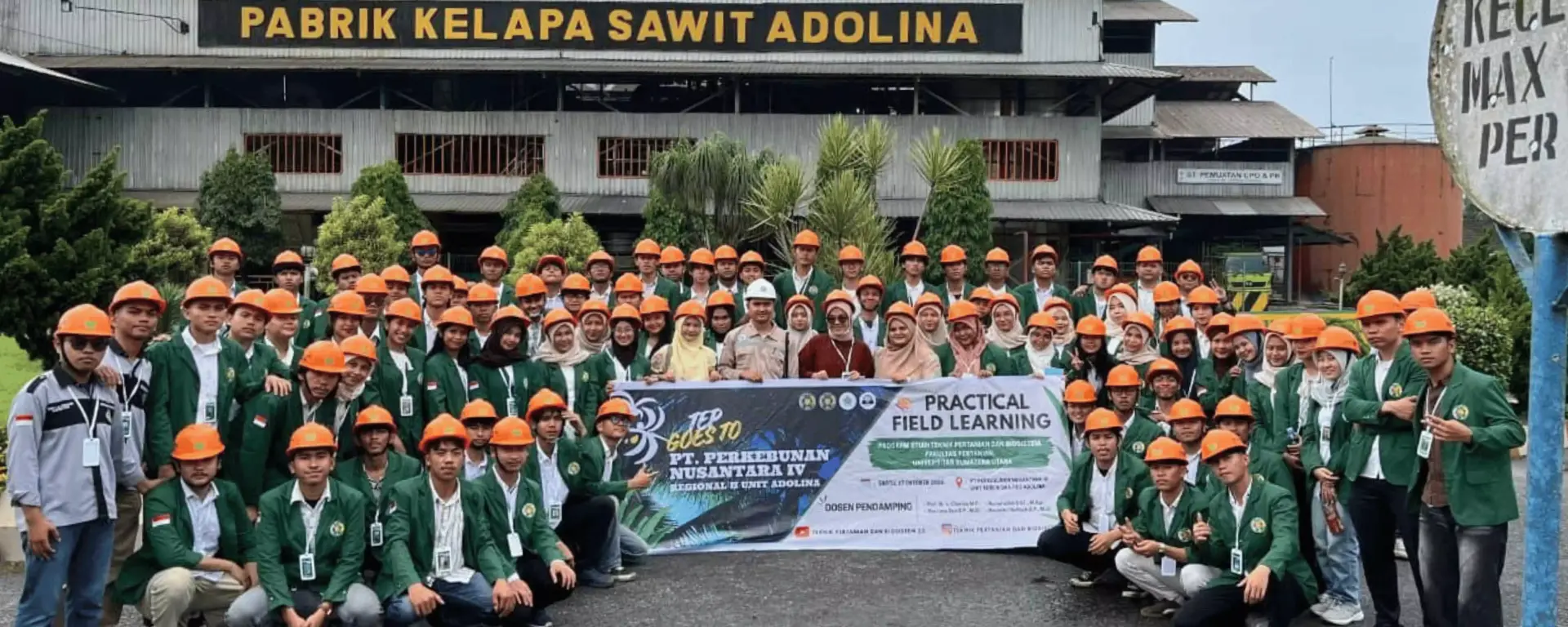
MEDAN — The Agricultural and Biosystems Engineering Study Program, Faculty of Agriculture, Universitas Sumatera Utara (USU), conducted a field trip activity for the Plantation Crops 1 (Oil Palm and Rubber) course for class of 2025 students to PTPN IV Regional II Adolina Plantation and Mill Unit on Saturday, October 17, 2026. This activity served as a contextual learning medium for students to directly learn about oil palm plantation management practices and processing procedures within an industrial environment.
This visit was designed to enrich students' understanding of lecture materials through direct field observation. By visiting both plantation and mill units in a single series of activities, students were able to see the interconnections between cultivation stages, harvesting activities, fresh fruit bunch (FFB) transport, and processing operations at the palm oil mill.
The activity was accompanied by three lecturers, namely Ms. Vira Irma Sari, S.P., M.Si., Ms. Nursaadah, S.ST., M.Agr., and Ms. Rouzatul Nafisah, S.P., M.Si. From PTPN IV Regional II Adolina Plantation Unit, presentation materials were delivered by Mr. Muhammad Kevin Bramantyo, Assistant Head, and Mr. Pindo Prasetio. Meanwhile, during the visit to the Adolina Mill Unit, students received explanations from Mr. Jealshon Nico Sinulingga as Manager of Adolina Mill and Mr. Dyo Fauzan as Mill Assistant.
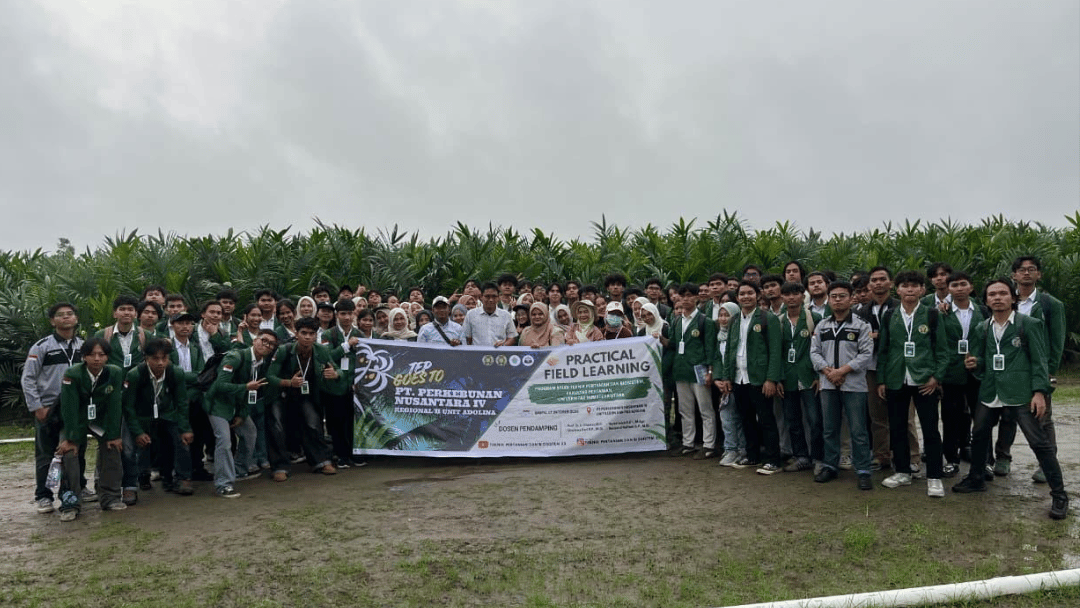
At the plantation, students studied the stages of oil palm management encompassing nursery, immature plantation (TBM), and mature plantation (TM). During the nursery stage, students observed the pre-nursery and main-nursery systems, including seedling maintenance, supporting facilities, and watering technology application.
Learning continued with the management of immature and mature crops, covering fertilization, pest and disease control, land sanitation, and crop census. Students were also introduced to the technical aspects of harvesting, such as calculating harvesting density figures, labor requirements, harvesting tool utilization, and harvest transportation arrangements. These aspects are essential to support smooth harvesting operations and ensure harvested FFB is transported promptly.
Students also gained insights into breeding pollinating insects for oil palm, Elaeidobius kamerunicus, which play a role in pollination and support fruit formation. This observation demonstrated that plantation productivity is determined not only by crop maintenance, but is also influenced by biological factors and planned operational management.
At the mill unit, students learned a general overview of the processing workflow from FFB into crude palm oil (CPO) and palm kernel. Explanations from mill officials provided an understanding of processing stages, machinery and equipment functions, as well as the importance of material flow regulation in supporting seamless production processes.
This visit also broadened students' perspectives on the role of technology and mechanization within the palm oil industry. Machine utilization, production flow control, process efficiency, and occupational safety attention are vital aspects to be understood by prospective Agricultural and Biosystems Engineering graduates.
By observing the plantation and mill units in an integrated manner, students gained a comprehensive view that the success of the palm oil industry requires coordination across crop management, harvesting, transport of yields, and mill processing. Each stage plays a role in maintaining raw material quality and supporting production efficiency.
This field visit complements classroom learning previously acquired by students. Course materials previously covered through lecturer explanations, presentations, images, and videos could be understood more concretely through direct observation of operational activities across the plantation and mill.
For Agricultural and Biosystems Engineering students, this experience is vital to understand the real-world application of science, particularly regarding agricultural mechanization, technology utilization, resource management, work systems, and production process efficiency. Students also had the opportunity to recognize the scope of work and professional responsibilities in oil palm plantation management and processing.
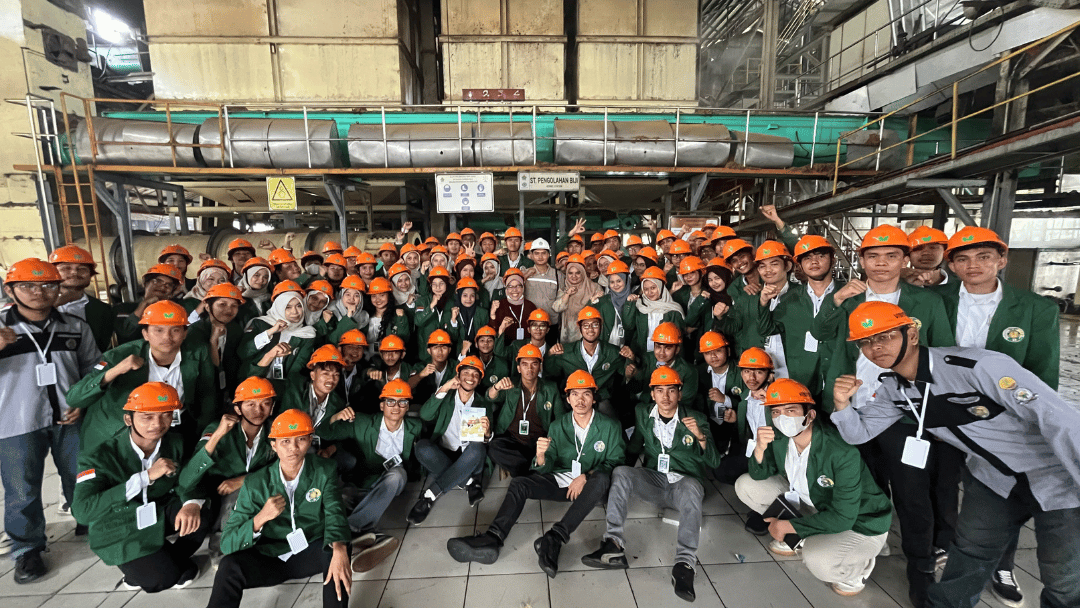
Accompanying lecturer, Vira Irma Sari, S.P., M.Si., expressed hope that this activity enriches students' knowledge, competencies, and experience regarding oil palm management, from nurseries to FFB processing at the mill. As the first field trip forthe class of 2025 Agricultural and Biosystems Engineering students, this activity is expected to be a memorable experience that fosters a spirit of learning and career interest in the palm oil plantation sector.
Field experiences are also expected to encourage students to develop critical and solution-oriented thinking in addressing agricultural sector challenges. Equipped with technical knowledge and an understanding of industry needs, students are expected to contribute to the development of effective, efficient, and sustainable agricultural technologies.
This field trip aligns with several Sustainable Development Goals (SDGs). SDG 4: Quality Education is reflected through experiential learning that bridges academic knowledge with professional practice. This activity helps students expand their competencies and prepare for workforce requirements.
Furthermore, SDG 8: Decent Work and Economic Growth relates to introducing work environments, industrial operational processes, and competencies required to support the palm oil plantation and processing sector. Meanwhile, SDG 9: Industry, Innovation, and Infrastructure is relevant to learning about mechanization, machinery and equipment usage, as well as technology application in production processes.
From a sustainability standpoint, this activity opens learning spaces on the importance of resource utilization efficiency and responsible production process management, aligning with SDG 12: Responsible Consumption and Production. This understanding serves as foundational knowledge for students to view palm oil industry development not only from productivity aspects, but also through efficiency and sustainability requirements.
Through this activity, the Faculty of Agriculture USU continues to promote learning that integrates theory, practice, and exposure to the professional world. It is hoped that the experience at PTPN IV Regional II Adolina Plantation and Mill Unit serves as a foundation for students to grow into competent, adaptive graduates who are ready to contribute to the advancement of Indonesia's agricultural sector.