


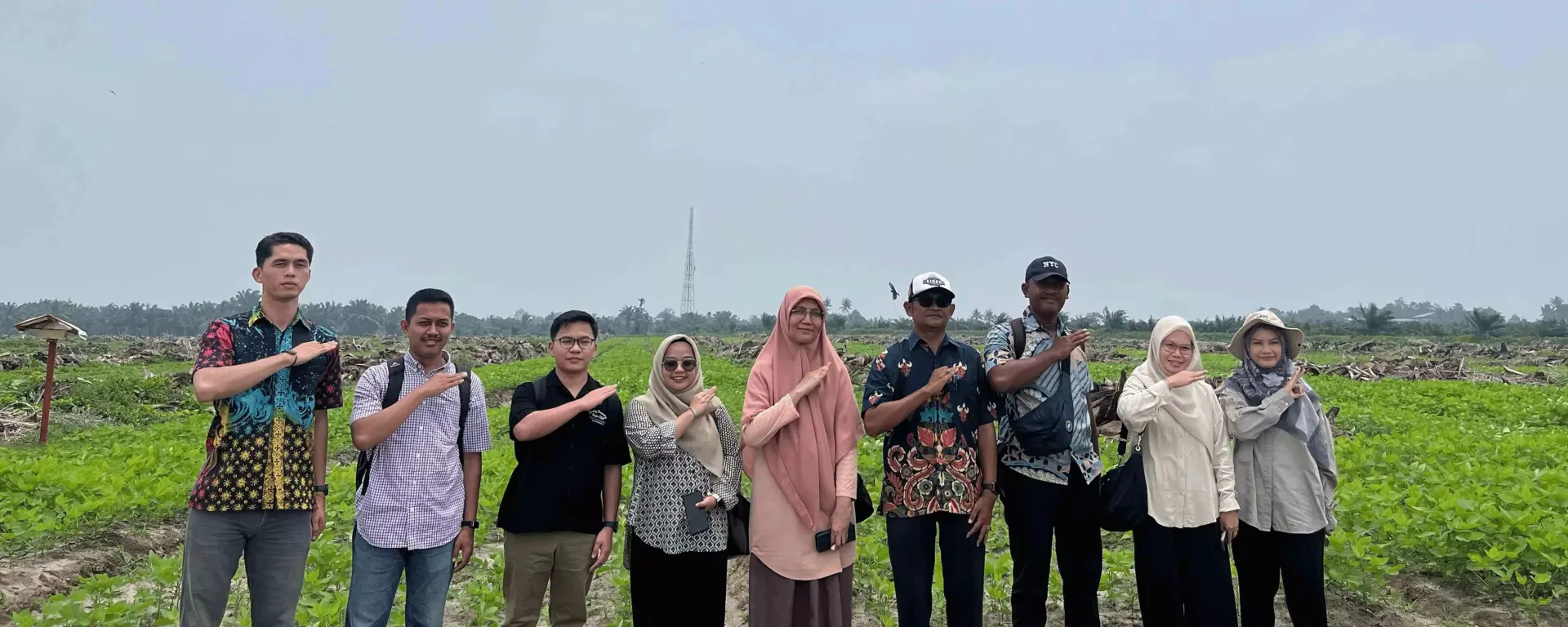
Efforts to strengthen the development of soybean commodities once again brought together the academic community of the Faculty of Agriculture, Universitas Sumatera Utara (FP USU), with partners in the plantation sector. Lecturers from the Undergraduate Program in Agrotechnology, together with the Undergraduate Program in Agricultural and Biosystems Engineering, conducted an inspection of the implementation of accelerated soybean planting through cooperation with PTPN IV Regional 2 on Thursday (October 1, 2026). The inspection served as an opportunity to directly observe the dynamics of cultivation implementation while building connections between academic knowledge and agricultural practices in the field.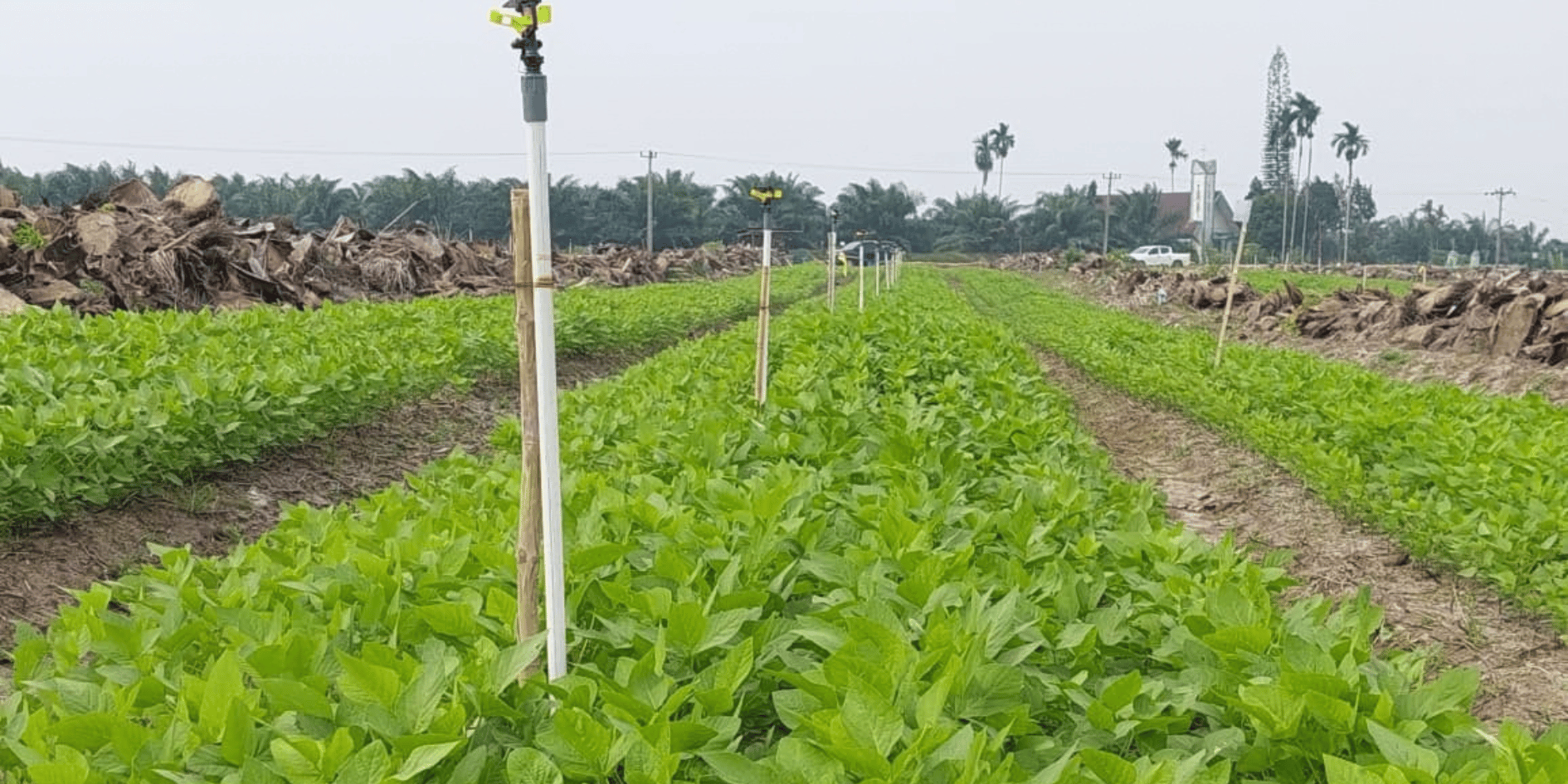
The presence of two study programs with complementary areas of expertise provided a more comprehensive perspective on soybean cultivation development. Agrotechnology contributed through approaches to crop cultivation and management, while Agricultural and Biosystems Engineering brought technological and agricultural systems perspectives to support the production process. The combination of these two approaches was an important part of developing agricultural solutions that are not only theory-based but also responsive to field needs.
The inspection with PTPN IV Regional 2 also provided an opportunity for the academic community to understand the actual conditions of the soybean crops and various aspects related to accelerating soybean planting. Direct interaction with partners enabled an exchange of experiences regarding the management of agricultural activities at the field level. For higher education institutions, this experience formed part of the process of strengthening the relevance of learning, research, and community service to developments in the agricultural sector.
Soybeans have a strategic position in the food system because they are related to the need for food and raw materials for various processed products. The development of soybean cultivation requires integration between technological knowledge, resource management, and the ability to translate knowledge into practices that are appropriate to local conditions. In this context, the involvement of higher education institutions and field partners is one form of strengthening a knowledge-based agricultural ecosystem.
This activity also reflects contributions to the Sustainable Development Goals (SDGs), particularly SDG 2: Zero Hunger through the development of food commodity production, SDG 12: Responsible Consumption and Production through the implementation of sustainable production practices, and SDG 17: Partnerships for the Goals through strengthening partnerships between higher education institutions and the agricultural sector. These three goals demonstrate that agricultural commodity development does not stand alone, but is connected to aspects of production, sustainability, and institutional networks. The synergy between FP USU and PTPN IV Regional 2 provides a space for translating these goals into concrete activities in the field.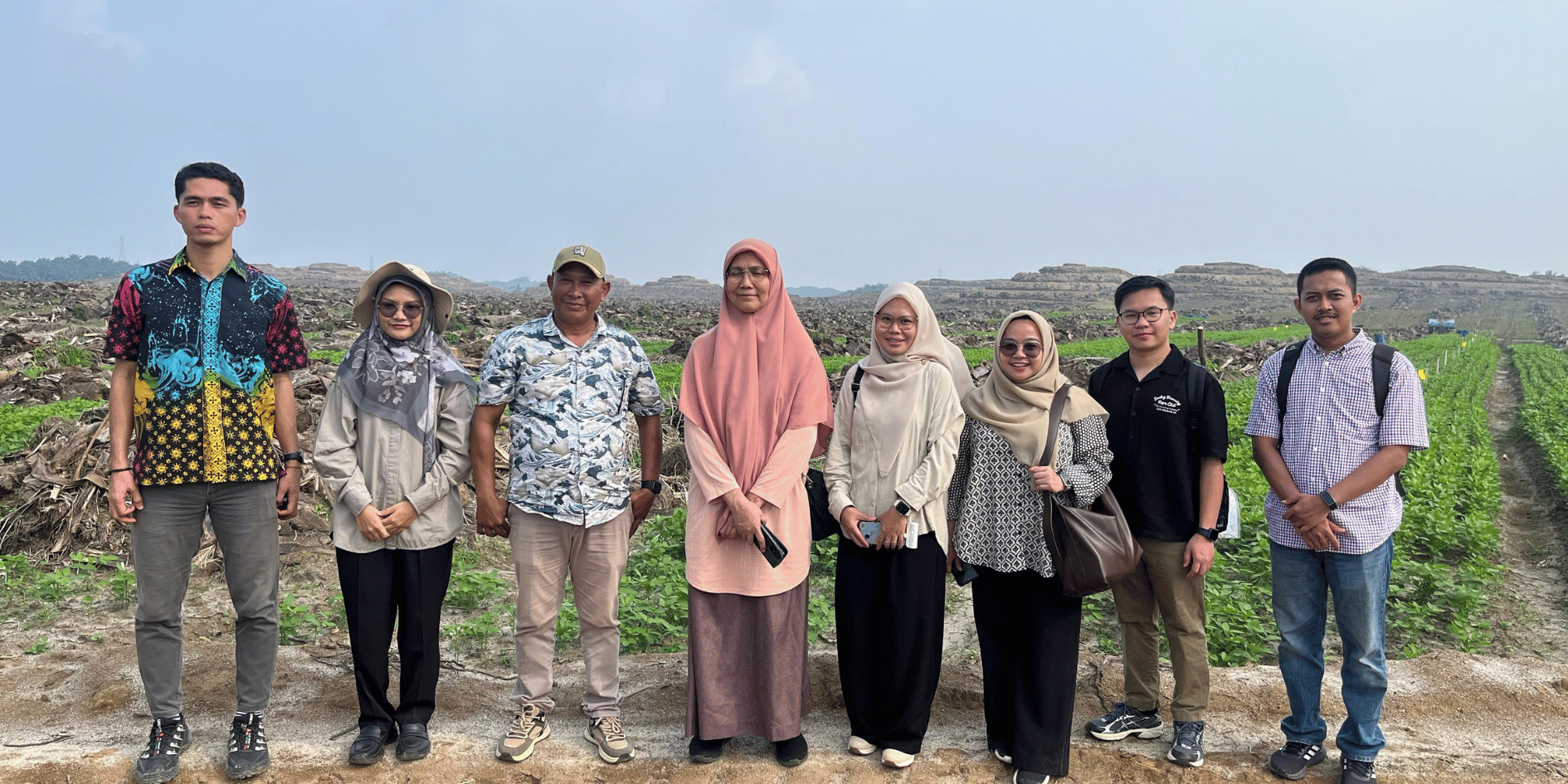
Moving forward, the connection between the academic community and partners in the agricultural sector is expected to continue developing through knowledge exchange, the application of innovation, and the strengthening of field experience. Accelerated soybean planting is not only part of efforts to develop the commodity but also provides a learning opportunity on how science and technology can respond directly to agricultural needs.