


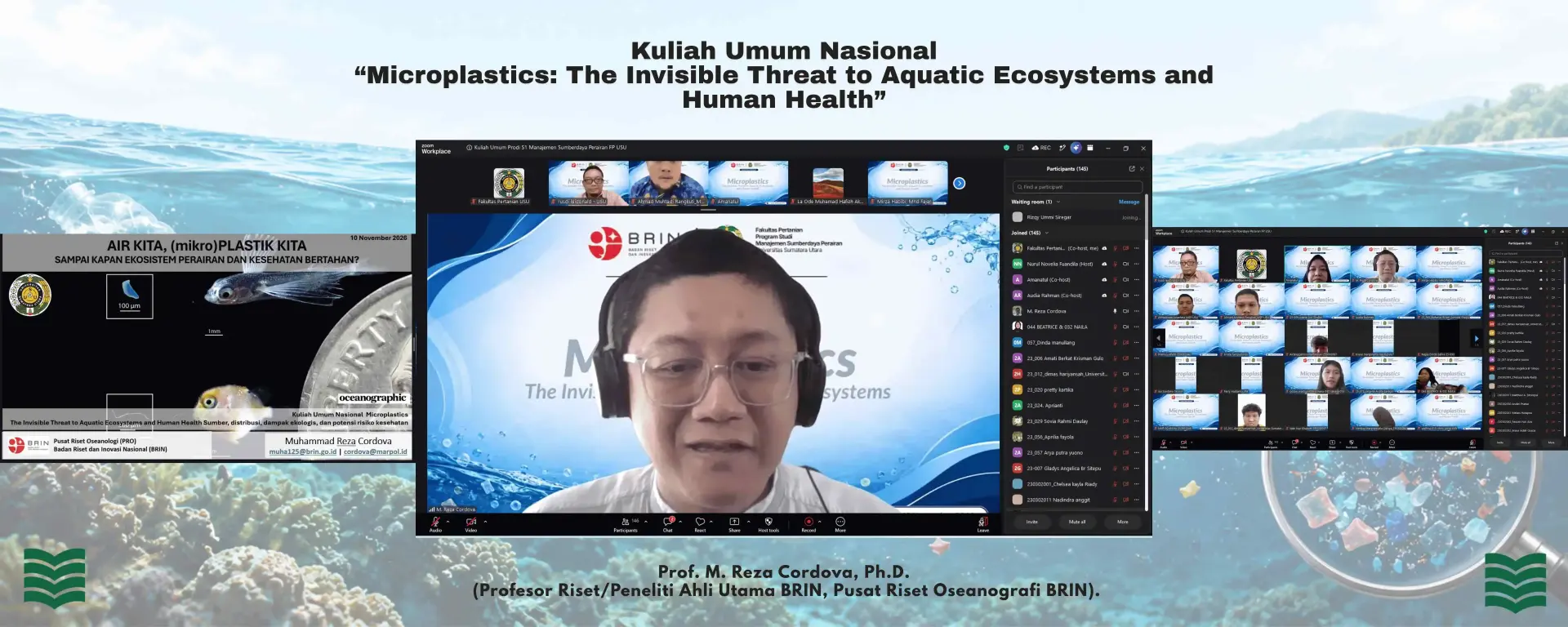
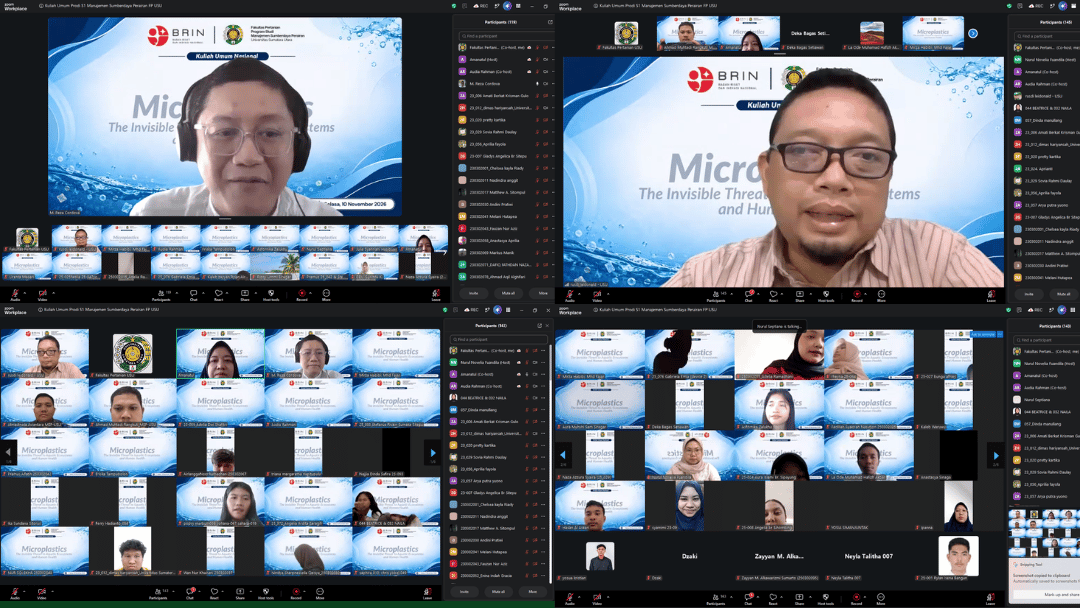
MEDAN, November 10, 2026 – The Undergraduate Program in Aquatic Resources Management (MSP), Faculty of Agriculture, Universitas Sumatera Utara (USU), held a National Public Lecture entitled “Microplastics: The Invisible Threat to Aquatic Ecosystems and Human Health” on Tuesday (November 10, 2026). The event featured Prof. Dr. Muhammad Reza Cordova, a researcher from the Center for Oceanographic Research, National Research and Innovation Agency (BRIN), as the main speaker.
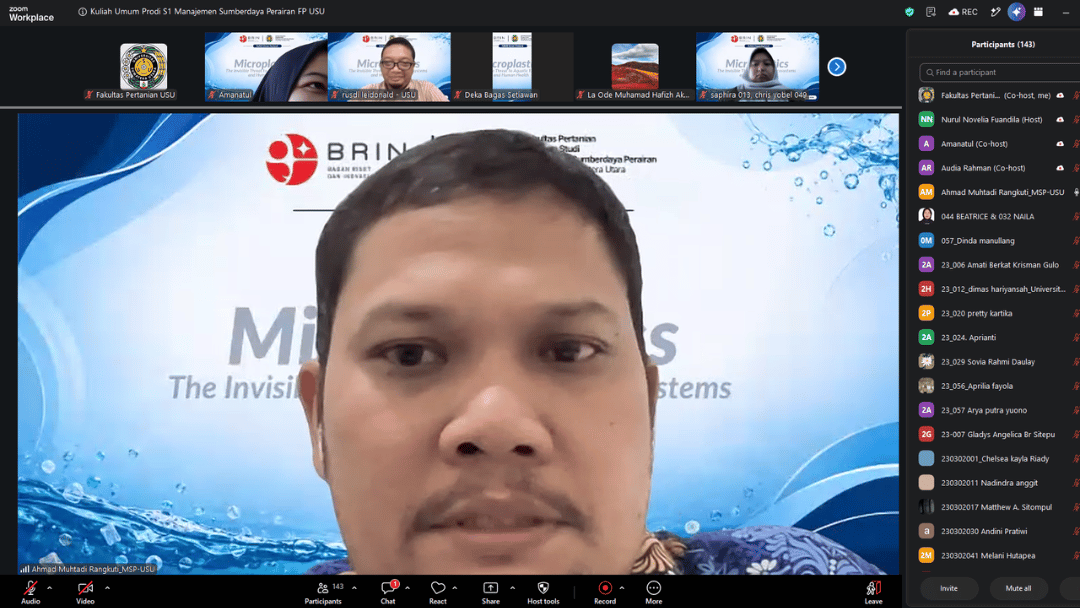
The public lecture was officially opened by the Head of the Undergraduate Program in Aquatic Resources Management at USU, Dr. Ahmad Muhtadi, S.Pi., M.Si., with Rusdi Leidonald, S.P., M.Sc. serving as moderator.
This activity was part of the MSP USU Study Program’s efforts to broaden students’ academic knowledge, strengthen environmental literacy, and expand their understanding of increasingly complex aquatic pollution issues, particularly microplastic contamination in freshwater, coastal, and marine ecosystems.
Microplastics Pose a Serious Threat to Aquatic Ecosystems
In his opening remarks, the Head of the MSP USU Study Program, Dr. Ahmad Muhtadi, emphasized the importance of strengthening students’ competencies in understanding various aquatic environmental issues, particularly microplastic pollution, which has now become a global concern.
According to him, microplastic pollution is no longer merely a plastic waste problem but has developed into an ecological issue closely related to the sustainability of aquatic resources, the safety of fishery products as food, and human health.
This public lecture was expected to broaden students’ perspectives on the importance of scientific and multidisciplinary approaches to identifying pollution sources, understanding the distribution of microplastics, and formulating control and management strategies.
This activity was also in line with the MSP USU Study Program’s commitment to integrating the latest research findings into the learning process while encouraging the development of student research relevant to the challenges of aquatic resource management in Indonesia.
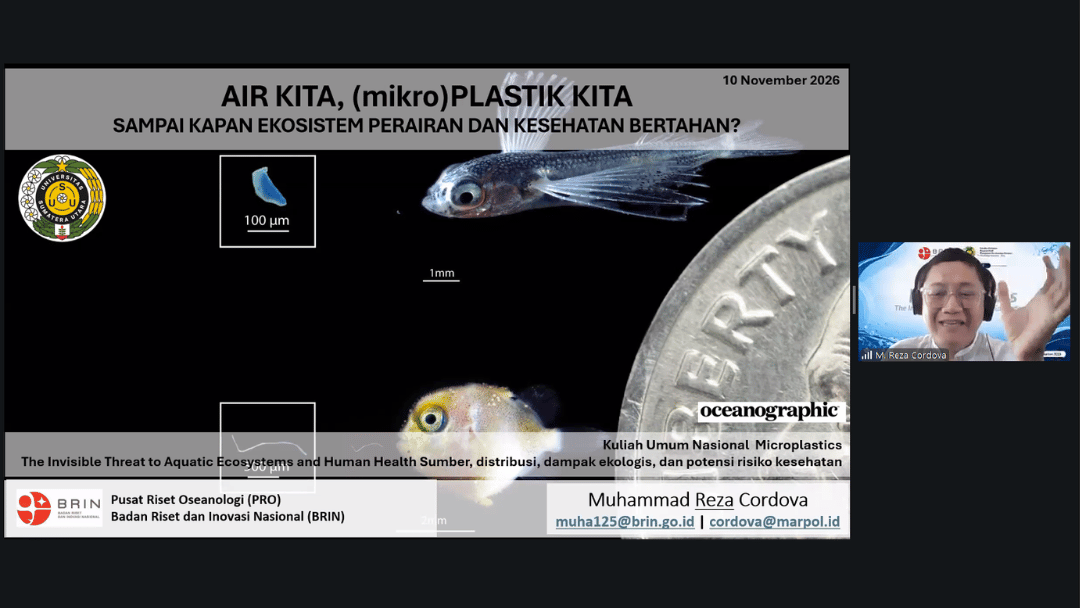
Prof. Reza Cordova: Plastic Does Not Disappear; It Only Becomes Increasingly Invisible
In his presentation entitled “Our Water, Our (Micro)Plastics: How Long Can Aquatic Ecosystems and Health Endure?”, Prof. Dr. Muhammad Reza Cordova discussed various aspects of plastic pollution, ranging from the sources and pathways through which plastic waste enters aquatic environments, the fragmentation process that turns it into microplastics, and its distribution in aquatic environments to its impacts on organisms and potential risks to human health.
One of the key messages conveyed in the public lecture was that plastic does not truly disappear from the environment; instead, it can fragment into increasingly smaller and less visible particles.
Microplastic particles can spread through river flows, human activities, ocean currents, as well as transportation and sedimentation processes. Their presence has been reported in various components of ecosystems, including water, sediment, and aquatic organisms.
Prof. Reza also presented various research findings on microplastic contamination in aquatic biota and fishery commodities in Indonesia. These findings indicate that microplastics have been detected in several types of fish, shrimp, and shellfish that have economic value and are consumed by the public.
This presentation was an important concern because microplastic pollution is related not only to environmental quality but also has the potential to affect the sustainability of fishery resources and food safety.
Ecological Impacts and Potential Risks to Human Health
Furthermore, Prof. Reza explained that exposure to microplastics in aquatic organisms can trigger various biological responses, including oxidative stress, growth disorders, behavioral changes, reproductive disorders, and potential damage at the cellular and genetic levels.
In addition to the impacts on organisms, the public lecture also discussed the possibility of human exposure to microplastics through food, beverages, and the environment.
Although various studies have demonstrated the presence of microplastics in several human tissues and organs, Prof. Reza emphasized the importance of distinguishing between evidence of particle presence, exposure levels, and the establishment of health risks.
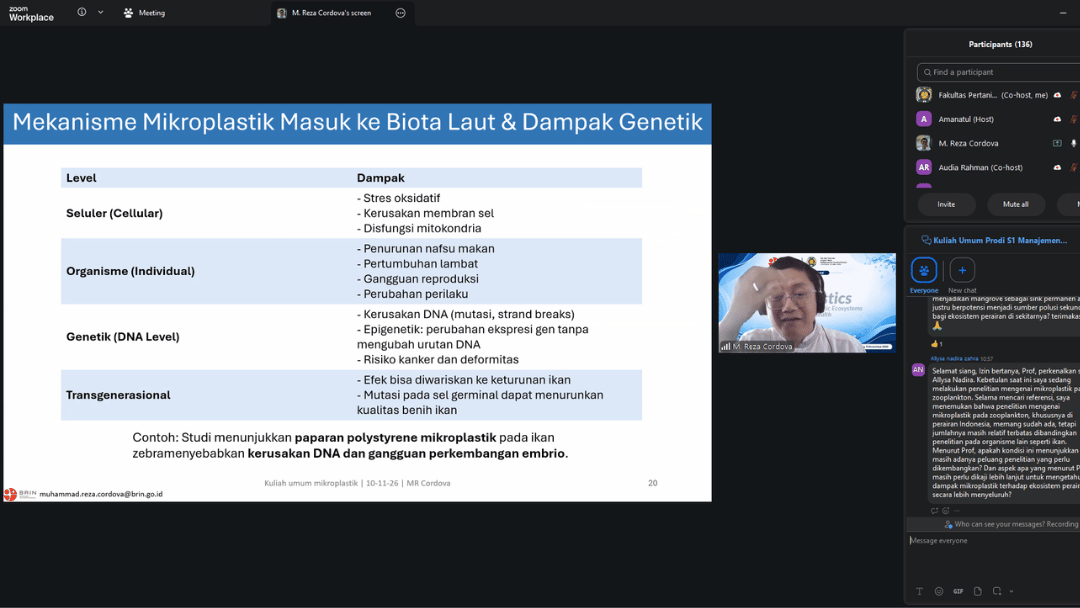
Studies on causal relationships, hazardous exposure levels, and long-term health consequences still require more comprehensive research.
These aspects demonstrate the importance of developing standardized research methods, laboratory quality control, and toxicological studies to produce more accurate and comparable scientific information.
Encouraging Research Collaboration and Strengthening Scientific Methods
One of the strategic issues also discussed was the continued variation in sampling, identification, and reporting methods used in microplastic research in Indonesia.
These methodological differences can produce substantial variations in data, making it necessary to harmonize and standardize research procedures, including the implementation of quality assurance and quality control (QA/QC).
In his presentation, Prof. Reza highlighted several research development priorities, namely standardizing microplastic analysis methods, providing long-term monitoring data, studying exposure through fishery commodities, conducting toxicity research, and assessing the risks of interactions between microplastics and other pollutants, such as heavy metals and persistent organic pollutants.
This public lecture also opened opportunities to strengthen academic and research collaboration between MSP USU and BRIN, particularly in the fields of aquatic pollution, biomonitoring, ecotoxicology, and sustainable aquatic resource management.
For MSP USU students, the material presented was directly relevant to various academic fields, such as aquatic pollution, water quality, aquatic ecology, coastal area management, and aquatic resource conservation.
Strengthening MSP USU’s Contribution to Sustainable Development
The organization of this national public lecture was one form of the MSP USU Study Program’s commitment to providing learning based on developments in science and the latest research findings.
In addition to strengthening students’ academic capacity, this activity is expected to encourage the emergence of research ideas and innovations in efforts to prevent and control plastic pollution in aquatic environments.
This activity also supports the achievement of the Sustainable Development Goals (SDGs), particularly SDG 4 (Quality Education), SDG 6 (Clean Water and Sanitation), SDG 12 (Responsible Consumption and Production), SDG 14 (Life Below Water), and SDG 17 (Partnerships for the Goals).
Through academic activities involving national researchers, the MSP USU Study Program continues to strengthen its role as a center for the development of knowledge, education, and research in the field of aquatic resource management.
This public lecture also reaffirmed that efforts to address microplastic pollution require synergy among universities, research institutions, the government, the business sector, and the community.
Protecting aquatic environments from plastic pollution is not only about saving ecosystems but also about safeguarding the sustainability of fishery resources and the health of future generations.