


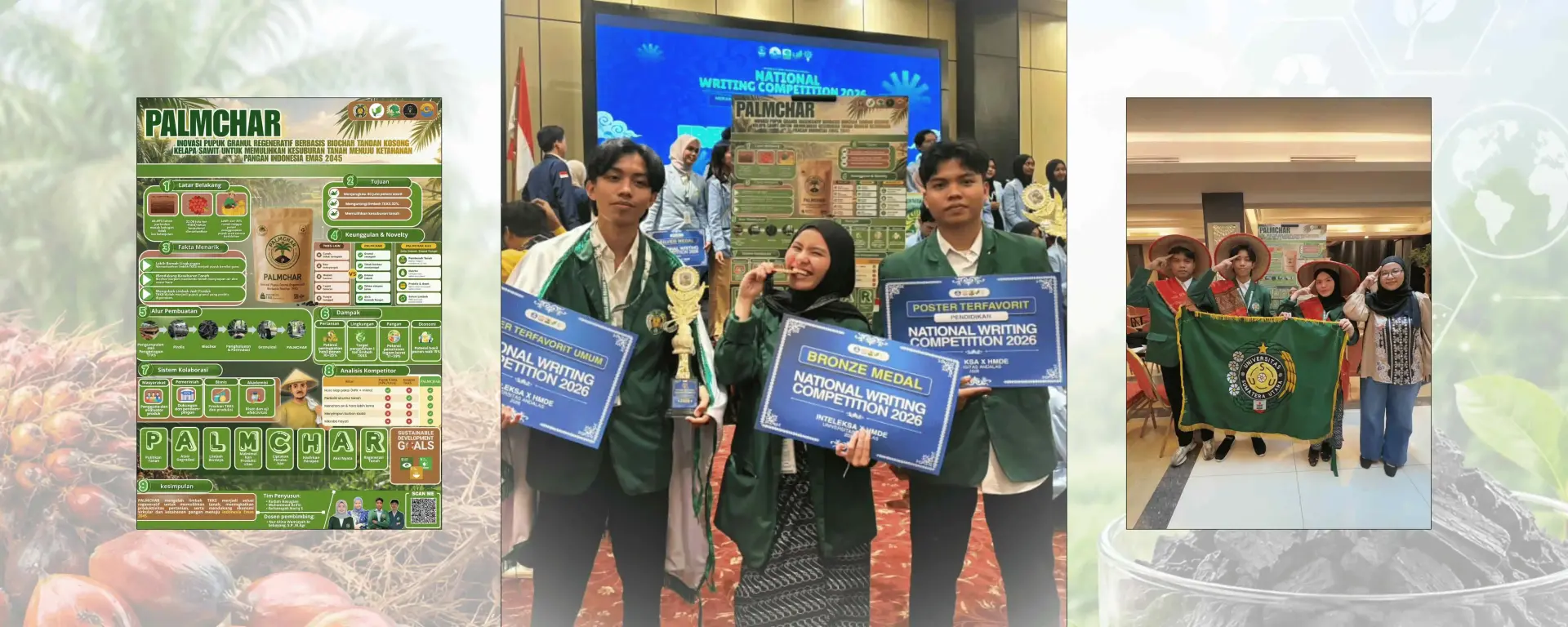
Students of Universitas Sumatera Utara (USU) have once again achieved national-level academic recognition through the development of innovative ideas in plantation waste management and sustainable agriculture. The PALMCHAR Team successfully won a Bronze Medal at the 2026 National Writing Competition (NWC) held at Universitas Andalas, Padang, West Sumatra, on November 7–8, 2026.
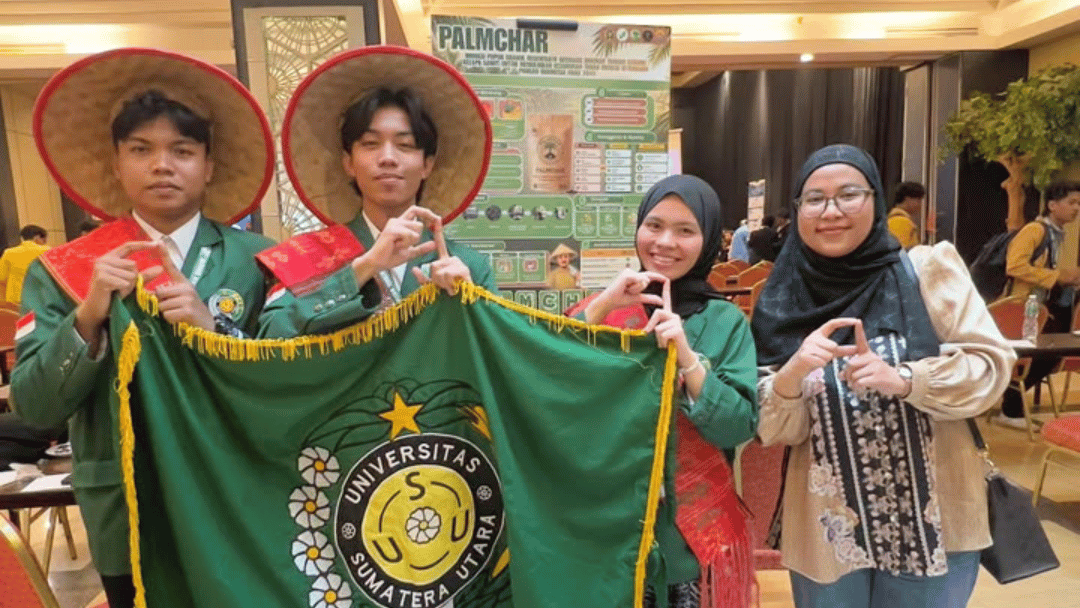
This achievement was earned by a multidisciplinary collaborative team from Universitas Sumatera Utara consisting of Farhansyah Noriq Simanjuntak (Student ID 240301047), a student of the Agrotechnology Study Program, Faculty of Agriculture; Rodiah Hasugian (Student ID 240907014), a student of the Faculty of Social and Political Sciences; and Muhammad Arifin (Student ID 240704091), a student of the Faculty of Cultural Sciences. The three participated in the competition under the guidance of Nur Ulina Warnisyah Sebayang, S.P., M.Agr., a lecturer in the Agrotechnology Study Program, Faculty of Agriculture, USU, whose areas of expertise include soil biology, soil fertility, and agricultural biotechnology.
In the competition, the PALMCHAR Team presented an innovation involving the use of oil palm empty fruit bunches (EFB) as raw material for biochar, a carbon-rich material produced through the thermochemical conversion of biomass under oxygen-limited conditions. This innovation offers an approach to utilizing organic plantation residues to produce value-added products with the potential to support improvements in soil quality, resource-use efficiency, and more sustainable plantation waste management.
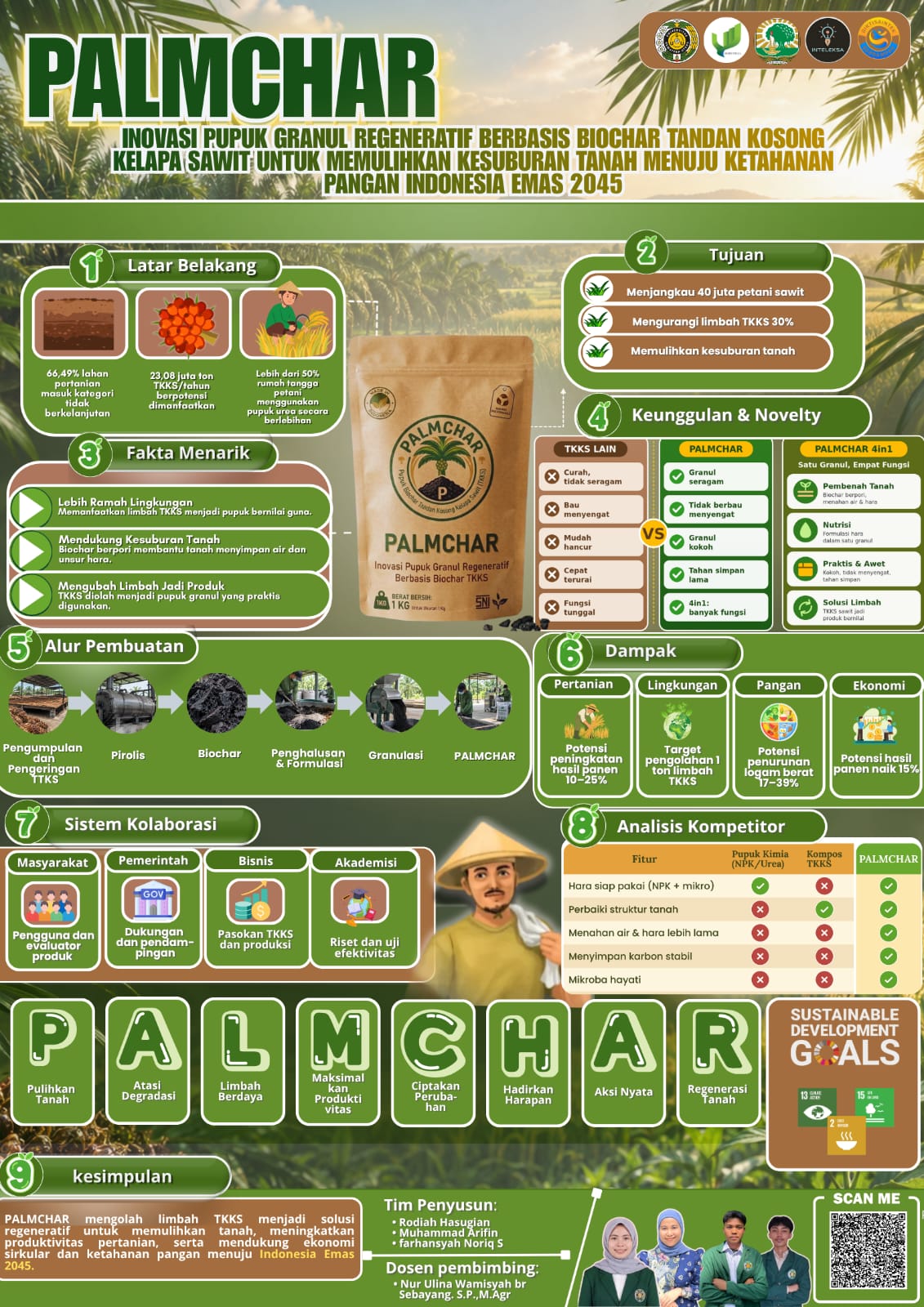
Scientifically, biochar has physicochemical characteristics that can potentially improve soil quality by enhancing its physical, chemical, and biological properties. Applying biochar under certain soil conditions can contribute to increased water retention capacity, improved soil structure and porosity, increased cation exchange capacity, and nutrient retention. In addition, its relatively stable carbon content makes biochar one of the materials widely studied in soil carbon management strategies and climate change mitigation.
The use of EFB as a raw material for biochar is relevant considering that oil palm is one of Indonesia’s strategic plantation commodities, particularly in North Sumatra. The availability of residual biomass from the palm oil processing industry creates opportunities to develop waste valorization technologies that focus not only on reducing residues but also on increasing the utility value of biomass in agricultural production systems.
Through the PALMCHAR innovation, the USU student team introduced the concept of a circular economy, positioning organic plantation waste as a potential resource that can be reused in agricultural systems. This approach aligns with the principles of sustainable agriculture, which emphasize resource efficiency, maintaining soil health, and reducing the environmental impacts of production activities.
The strength of the PALMCHAR concept also lies in its multidisciplinary collaborative approach, which integrates agricultural science perspectives with social and communication aspects. This collaboration is an important part of developing agricultural technology innovations that are not only scientifically grounded but also consider opportunities for implementation and public acceptance of the technology.
The PALMCHAR Team’s success in winning a Bronze Medal in this national-level competition demonstrates USU students’ capacity to identify current issues in the plantation sector, develop science-based ideas, and communicate innovative solutions through scientific writing.
The role of the supervising lecturer in this activity was part of the efforts to strengthen academic culture and foster student achievement. Scientific guidance was directed toward improving students’ abilities to develop literature-based arguments, integrate scientific concepts, and cultivate critical thinking in formulating alternative solutions to agricultural and environmental problems.
For the Faculty of Agriculture, USU, this achievement represents one of the contributions made by students of the Agrotechnology Study Program to the development of local resource-based innovations, particularly the utilization of plantation biomass to support soil management and sustainable agricultural systems.
The PALMCHAR innovation is also relevant to the achievement of the Sustainable Development Goals (SDGs), particularly SDG 12 (Responsible Consumption and Production), SDG 13 (Climate Action), and SDG 15 (Life on Land), through its approach to utilizing biomass waste, managing carbon, and improving soil resource quality.
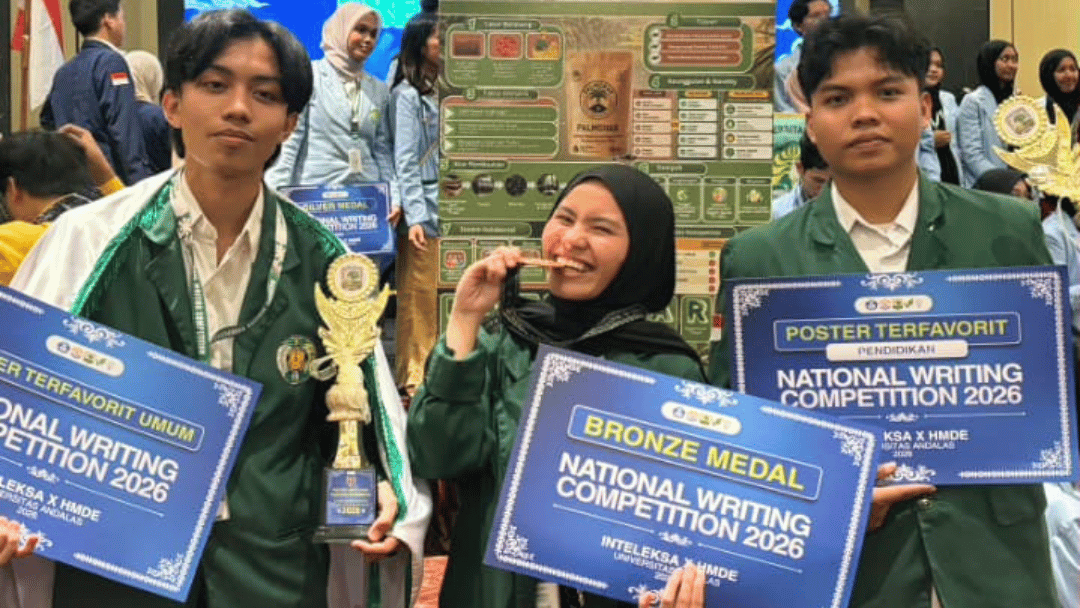
This achievement is expected to motivate students of the Faculty of Agriculture, USU, to continue improving their academic competencies, expanding cross-disciplinary collaboration, and producing innovations relevant to future challenges in agricultural and plantation sector development.
Through the strengthening of research, innovation, and collaboration, the Faculty of Agriculture, Universitas Sumatera Utara, remains committed to encouraging the emergence of a generation of outstanding and innovative young academics who contribute to sustainable agricultural development.