


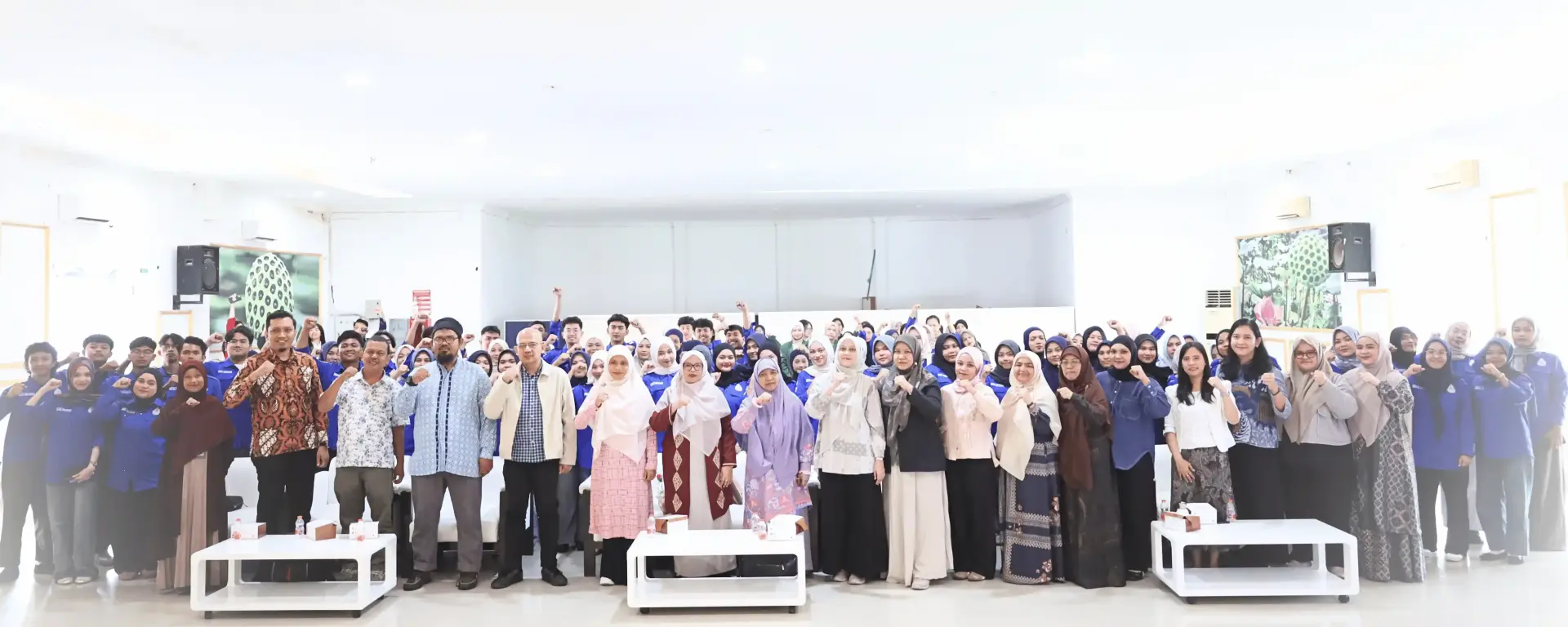
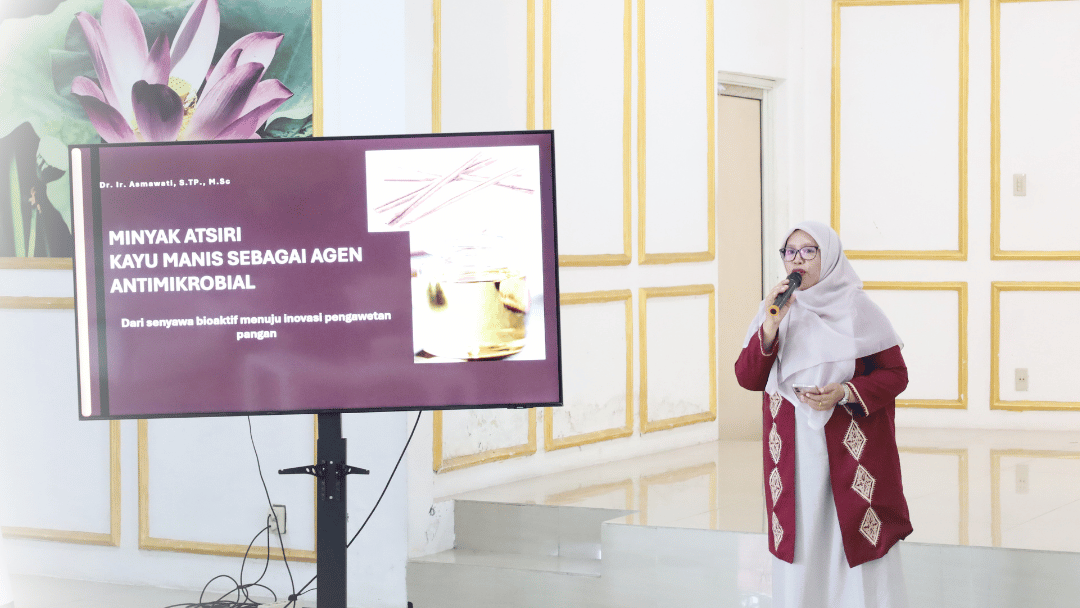
The Undergraduate Program in Food Technology, Faculty of Agriculture, Universitas Sumatera Utara (FP USU), held a National Public Lecture entitled “The Utilization of Cinnamon Essential Oil as an Antimicrobial Agent” on Friday, November 6, 2026, from 08:30 to 11:00 WIB, at the Soeratman Hall, FP USU. The event featured Dr. Ir. Asmawati, STP, M.Sc., Head of the Undergraduate Program in Food Technology and Agricultural Products, Faculty of Agriculture, Universitas Syiah Kuala (FP USK), as the speaker.
The event was attended by the Dean of FP USU, Dr. Rulianda Purnomo Wibowo, S.P., M.Ec.; Head of the Undergraduate Program in Food Technology at FP USU, Dr. Ridwansyah, S.T.P., M.Si.; Secretary of the Undergraduate Program in Food Technology at FP USU, Adrian Hilman, S.T.P., M.Sc., Ph.D.; as well as lecturers, educational staff, and students of the Undergraduate Program in Food Technology at FP USU. Also present was a delegation from the Undergraduate Program in Food Technology and Agricultural Products at FP USK, consisting of 10 lecturers and educational staff and 80 students from the 2024 cohort.
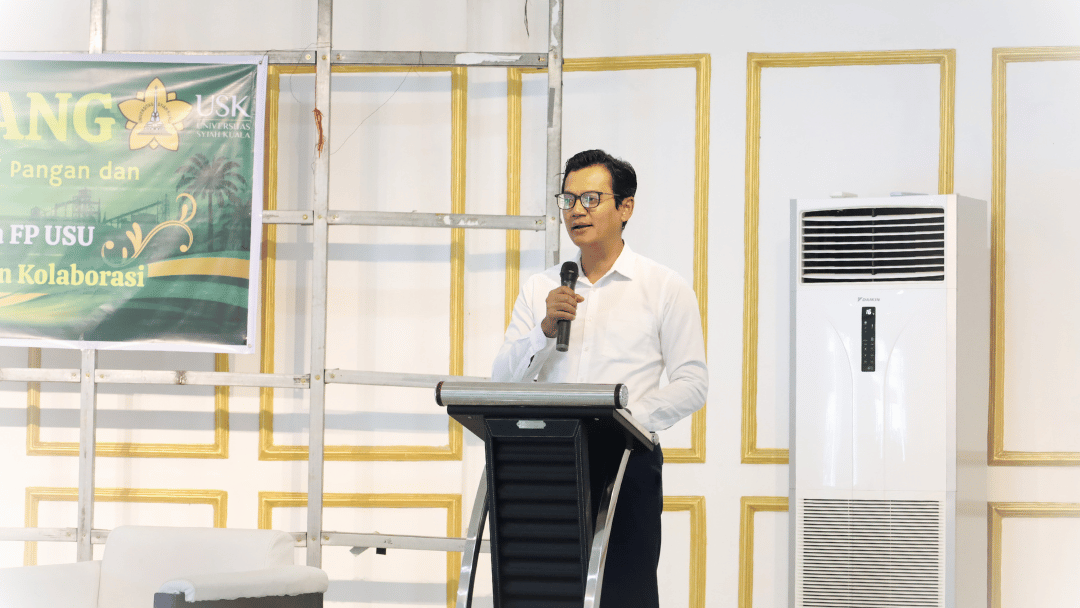
In his remarks, the Dean of FP USU, Dr. Rulianda Purnomo Wibowo, expressed his hope that this event would serve as an initial step toward strengthening collaboration between USU and USK, particularly in the fields of education, research, and community service. According to him, challenges in the food sector require the involvement of various parties and cannot be resolved individually.
“Food is one of the basic human needs, and its challenges will always exist. We cannot face these challenges alone; we must address them together through collaboration, not competition,” he said.
Furthermore, he emphasized that universities and study programs have a responsibility to provide solutions to various national problems, enhance the country's competitiveness, and promote public welfare. In his view, the opportunity to obtain education and knowledge must be accompanied by the responsibility to apply that knowledge for the benefit of society and the advancement of the agricultural sector.
“Through this visit, we can exchange ideas and build collaboration. Hopefully, in the future, USU, USK, Unand, Unri, and various other universities can work together to produce technologies that can enhance competitiveness, enabling farmers to live better lives and communities to become more prosperous,” he added.
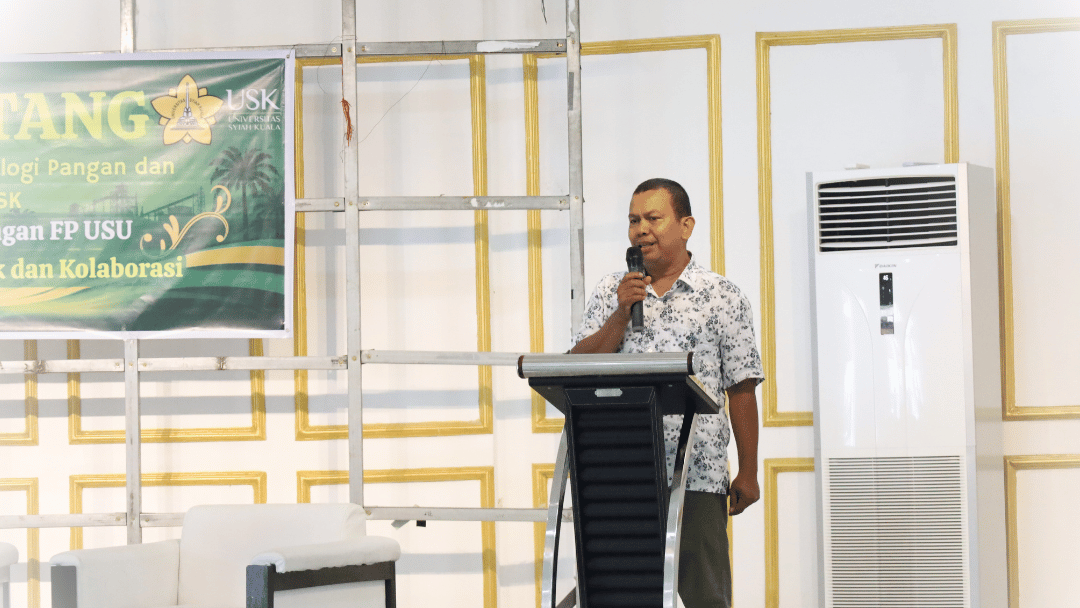
In line with this, the Head of the Undergraduate Program in Food Technology at FP USU, Dr. Ridwansyah, welcomed the academic visit from FP USK. He hoped that the relationship between the two study programs would continue to develop through various collaborative activities involving both lecturers and students.
“I hope that the Food Technology program at USU and the Food Technology and Agricultural Products program at USK can collaborate in the future. This collaboration is expected to benefit both study programs, including by opening up opportunities for cooperation among students. We also hope to make a reciprocal visit to USK on a future occasion,” he said.
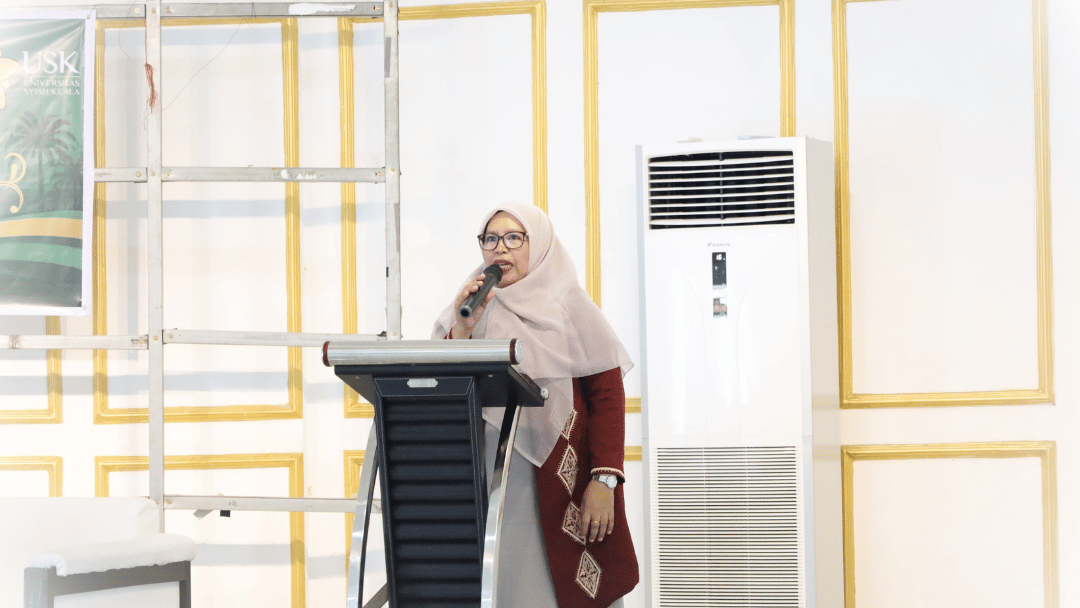
Meanwhile, the Head of the Undergraduate Program in Food Technology and Agricultural Products at FP USK, Dr. Ir. Asmawati, STP, M.Sc., expressed her appreciation for the warm welcome extended by the entire community of the Undergraduate Program in Food Technology at FP USU. She explained that the visit also provided an opportunity for her team to learn and exchange experiences, considering that the study program she leads is relatively younger than the Undergraduate Program in Food Technology at FP USU.
“We are pleased with the warm welcome from the Undergraduate Program in Food Technology at FP USU. There are still many things we need to learn and develop. Therefore, we hope that through this meeting, we can receive input from the lecturers on various good practices that we can implement,” she said.
She also revealed that most of the students participating in the visit were from North Sumatra. In addition to strengthening relationships among students, the activity was expected to foster enthusiasm for continued growth together. “Being successful on your own is ordinary, but achieving success together is something we need to encourage,” she added.
During the presentation session, Dr. Asmawati discussed the potential of cinnamon essential oil (cinnamon oil) as a natural antimicrobial ingredient that can be utilized in the development and preservation of food products. She explained that cinnamon oil is an essential oil extracted from the bark and leaves of cinnamon plants, with various species each having their own characteristics.
The presentation covered the process of processing cinnamon into essential oil and its potential applications in various food products, such as meat and poultry, fish and shrimp, fresh fruit, as well as bread and bakery products. In its development, three formulation strategies can be applied: edible coating, active packaging, and emulsions and encapsulation.
One of the main topics discussed was the development and optimization of cinnamaldehyde nanoemulsions and the effectiveness of their use in chicken meat marination systems. Through the presentation of research findings, the speaker explained how nanoemulsion technology and controlled release can support the utilization of active compounds as antimicrobial agents. Participants were also introduced to antimicrobial mechanisms, target microorganisms, and microscopic observation results.
One of the research findings presented showed that the formation of microorganism colonies on marinated chicken meat was lower than that on untreated meat used as the control. This demonstrates the potential of cinnamon essential oil as an alternative for developing more innovative food preservation technologies.
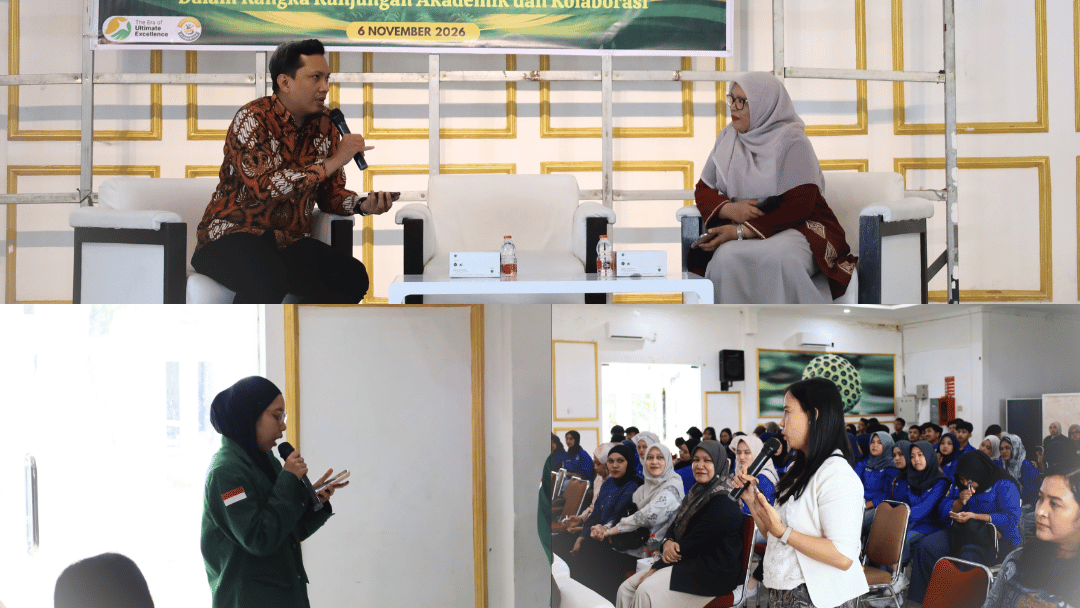
The public lecture was conducted interactively through presentations and discussions with participants. The students' enthusiasm was evident in their involvement in discussions on the potential of natural ingredients, formulation technology, and the application of research findings in the field of food technology.
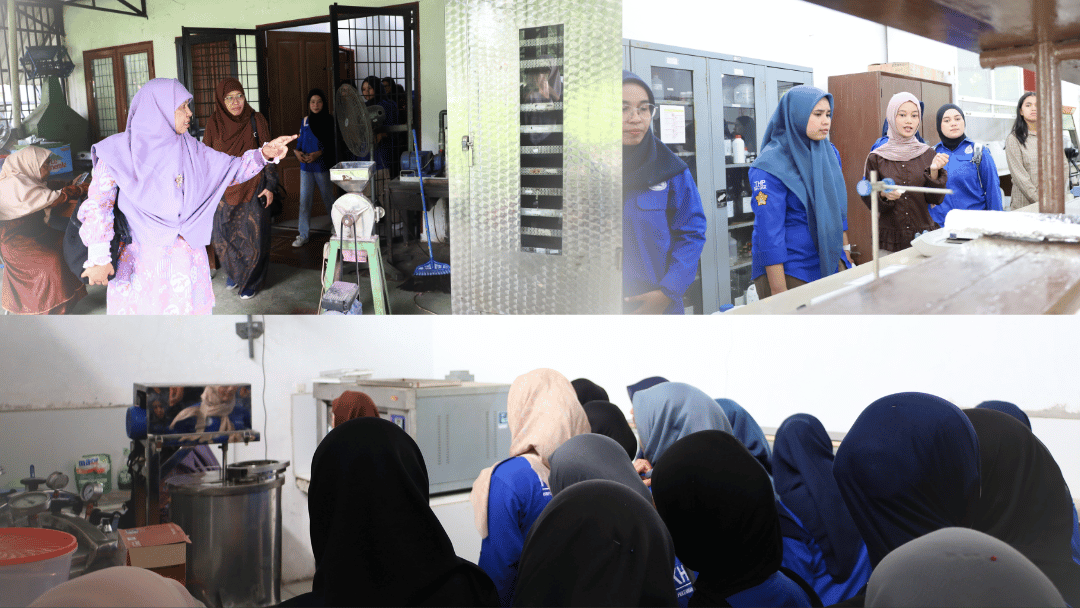
Following the public lecture session, the event continued with introductions among lecturers, educational staff, and students from both institutions to strengthen academic relationships and build communication among the wider study program communities. The visit then continued with tours of several laboratories belonging to the Undergraduate Program in Food Technology at FP USU, including the Flour House and the Food Chemistry and Biochemistry Analysis Laboratory. This visit provided the FP USK delegation with an opportunity to learn about the laboratory facilities, academic activities, and supporting resources for research and the development of food technology at FP USU.
Through this activity, FP USU hopes that its institutional relationship with FP USK will become closer and lead to concrete cooperation in the fields of education, research, and community service. This collaboration is also in line with the Sustainable Development Goals (SDGs) 2 (Zero Hunger) through the development of innovations that support food safety and food security, SDGs 4 (Quality Education) through knowledge exchange and the enhancement of academic insights, and SDGs 17 (Partnerships for the Goals) through strengthening partnerships among universities to produce innovations that benefit society and the development of the agricultural sector.