


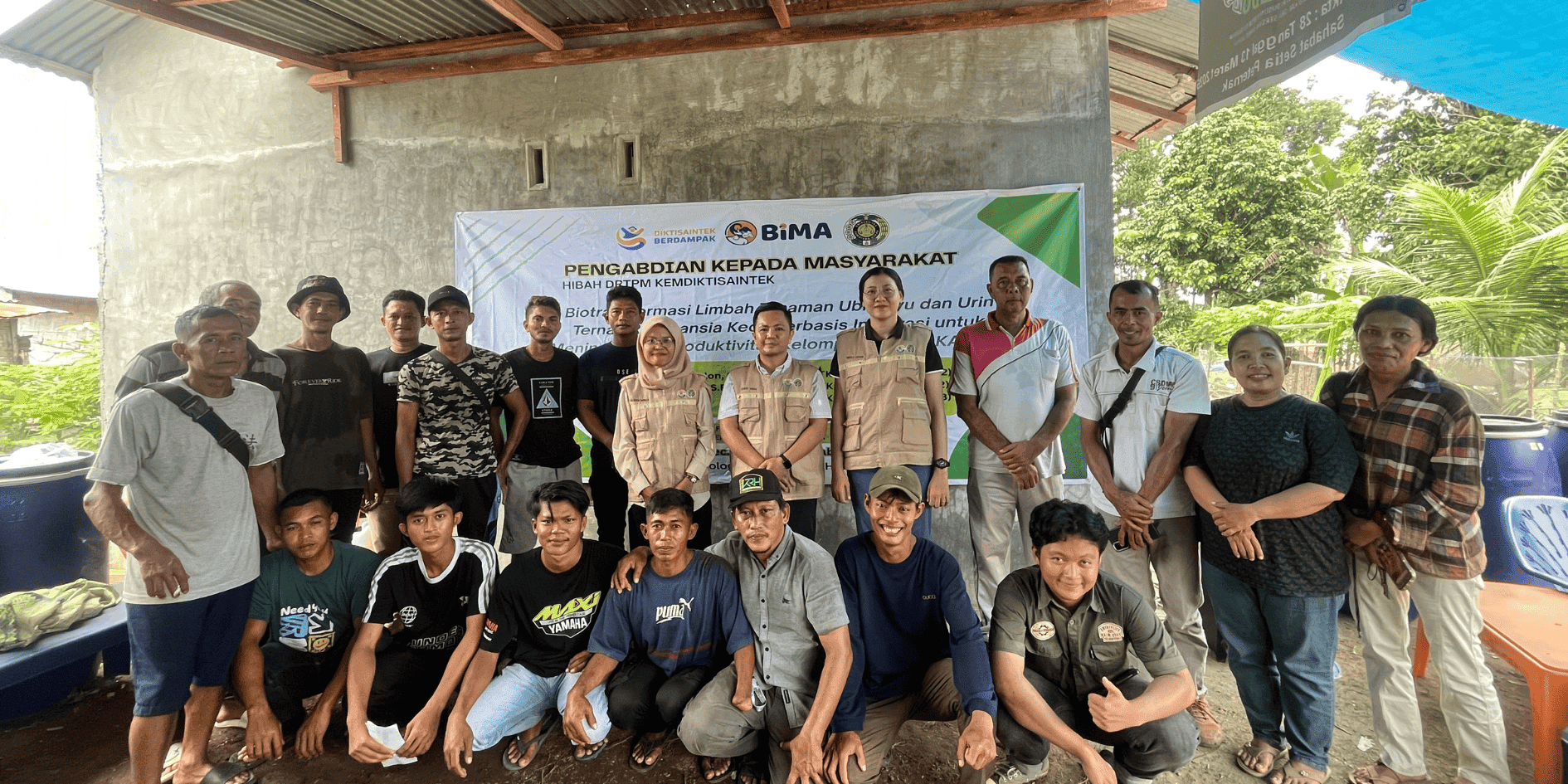
Deli Serdang, North Sumatra — Universitas Sumatera Utara (USU), through the Faculty of Agriculture, carried out the 2026 Funding Year Community Service Program with the KAPEDO Livestock Group in Glugur Rimbun Village, Deli Serdang Regency. This program was supported by the Directorate of Research and Community Service (DPPM), Directorate General of Research and Development, Ministry of Higher Education, Science, and Technology, through the Community-Based Empowerment Scheme, Scope of Community Partnership Empowerment for the 2026 Funding Year.
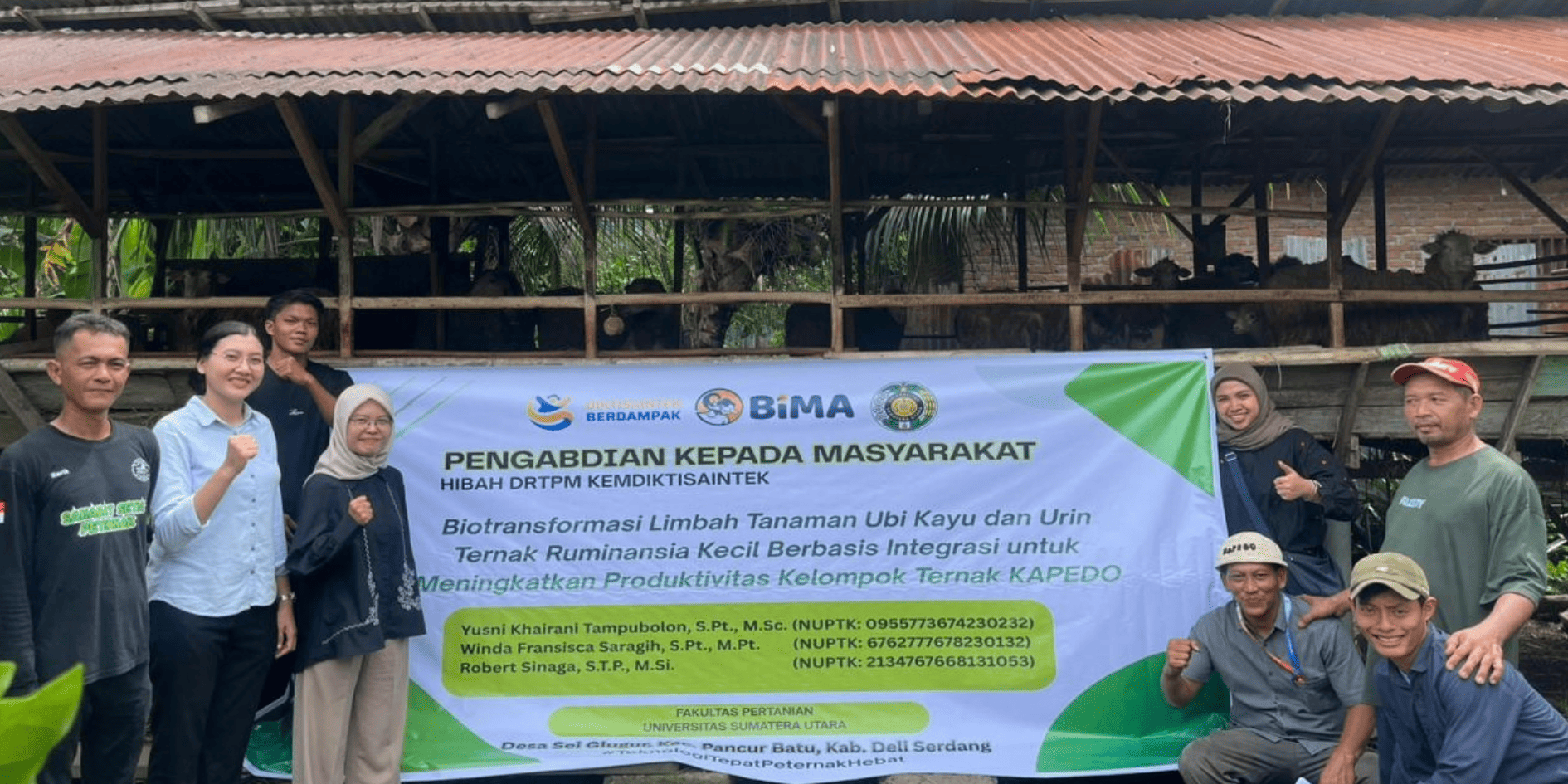
The program, which carries the theme “Integrated Biotransformation of Cassava Plant Waste and Small Ruminant Livestock Urine to Increase the Productivity of the KAPEDO Livestock Group,” aims to improve the group's capacity to utilize agricultural and livestock waste available within their business environment.
The activity was led by Yusni Khairani Tampubolon, S.Pt., M.Sc., together with members Winda Fransisca Saragih, S.Pt., M.Pt., and Robert Sinaga, S.T.P., M.Si., and involved students Dinda Amelya and M. Raffi Akbar.
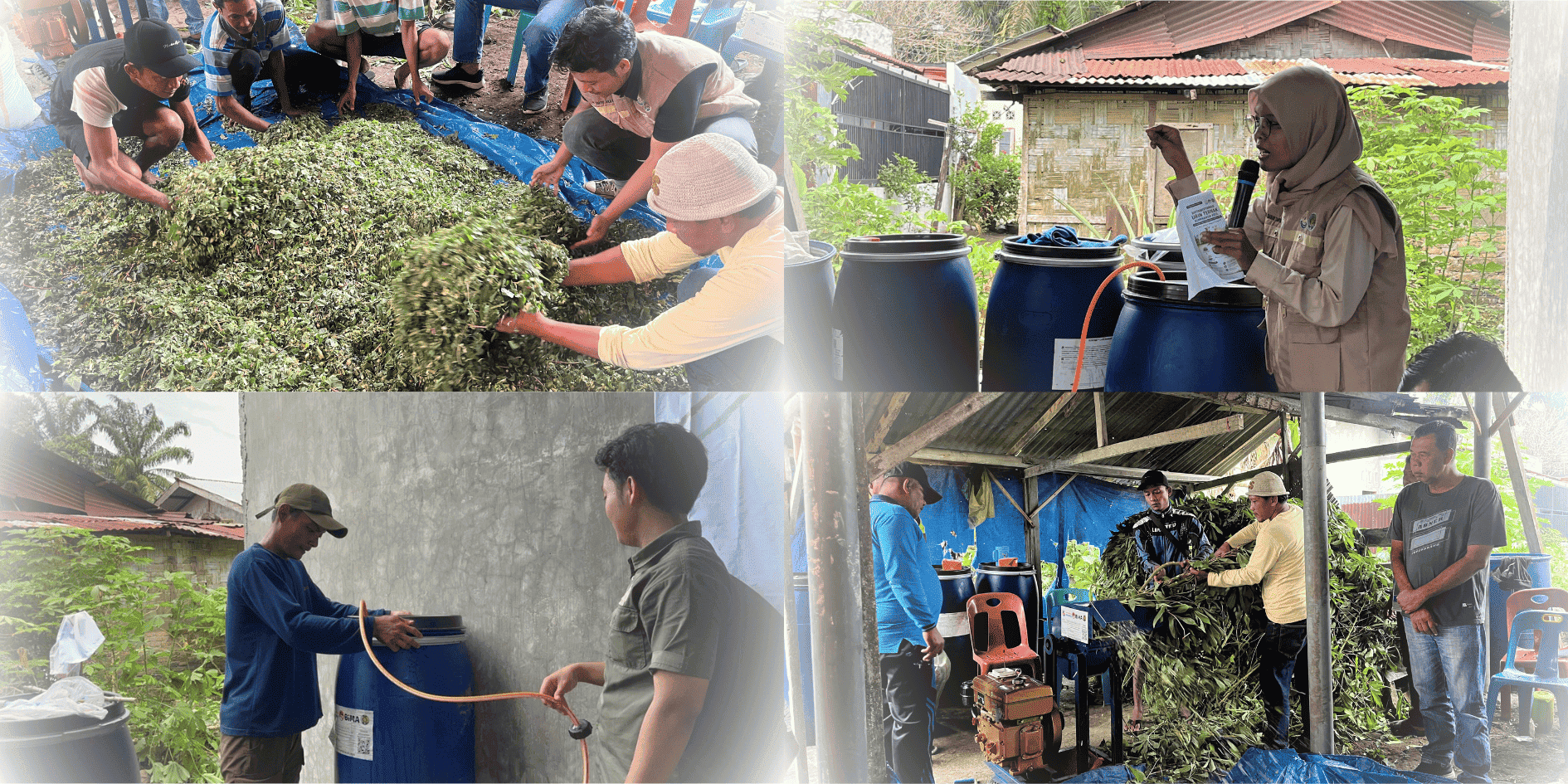
Under the program, the USU team provided a number of facilities and appropriate technologies to the partner group, namely a chopper machine for chopping cassava plant waste, livestock urine collection facilities, silage fermentation barrels, liquid organic fertilizer (POC) fermentation barrels, as well as supporting materials and equipment.
The facilities were used in the practice of processing cassava waste into silage as livestock feed, while livestock urine was collected and processed into liquid organic fertilizer. This application allows by-products from agricultural and livestock activities to be reused within the production system.
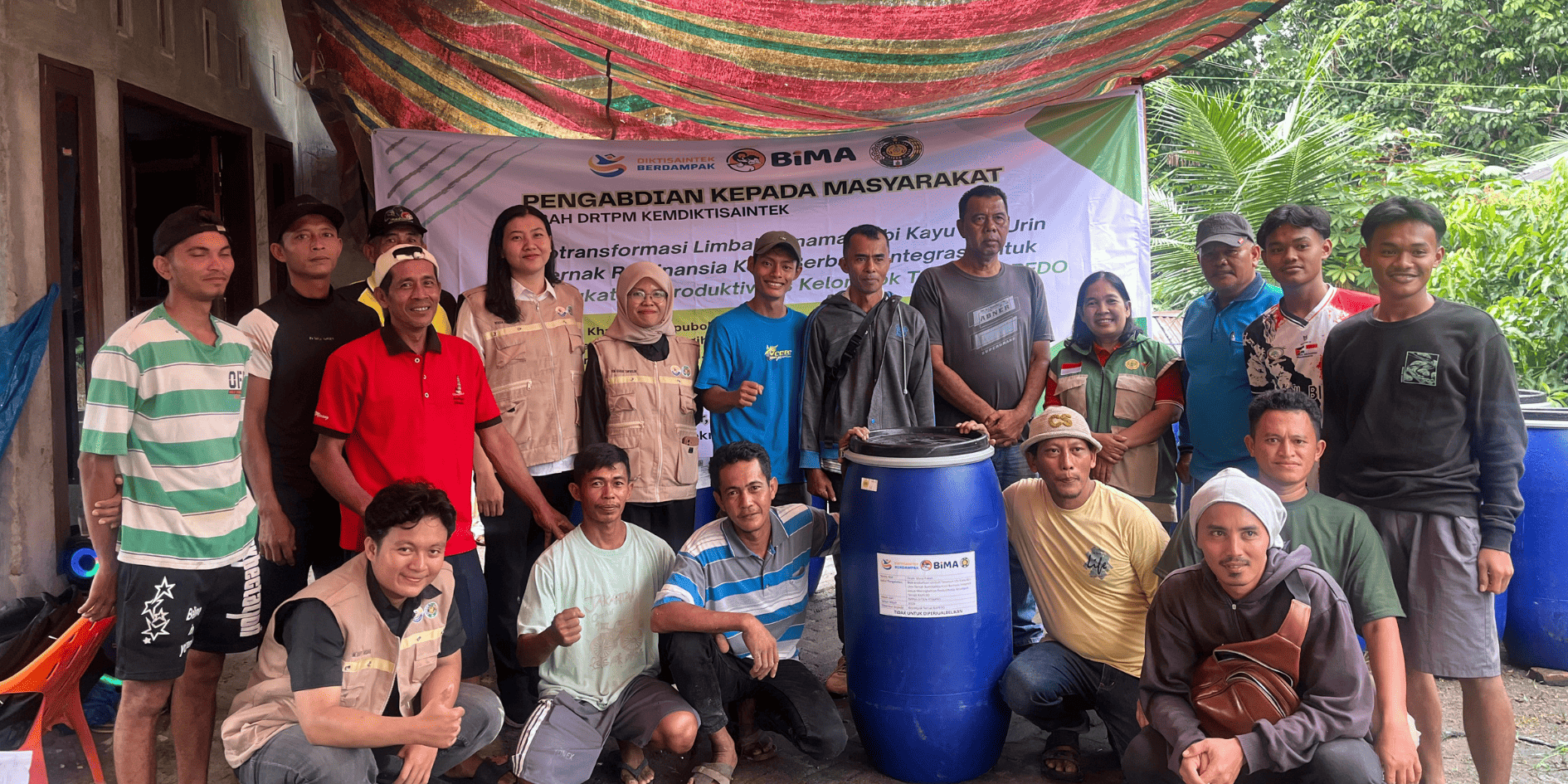
In addition to providing equipment, the team also conducted counseling, demonstrations, hands-on practice, and assistance. Group members received training ranging from the use of the chopping machine, silage production and fermentation processes, processing urine into POC, to utilizing the processed products.
The Head of the Community Service Program team, Yusni Khairani Tampubolon, stated that the program was designed by utilizing materials that are easily obtained by the community.
“We designed this program so that the group can optimize the resources already available around them. Cassava waste can be reused as feed, while livestock urine can be processed into liquid organic fertilizer so that it has utility within the agricultural system,” she said.
The Head of the KAPEDO Livestock Group, Surya Prayoga, expressed appreciation for the activity because, in addition to providing new knowledge, the program also provided facilities that can be used by the group in its daily business activities.
The implementation of this Community Service Program is aligned with several Sustainable Development Goals (SDGs) targets. The reuse of agricultural and livestock waste supports SDG 12: Responsible Consumption and Production through the implementation of more efficient resource utilization and waste reduction. The program also contributes to SDG 2: Zero Hunger through the development of local resource utilization to support sustainable agricultural and livestock production systems. From the perspective of community empowerment, improving the group's skills and capacity is related to SDG 8: Decent Work and Economic Growth.
Through a combination of appropriate technology, provision of production facilities, training, and assistance, the USU Community Service Program, together with the KAPEDO Livestock Group is expected to establish waste utilization practices that can continue to be developed independently and support the sustainability of community businesses.