


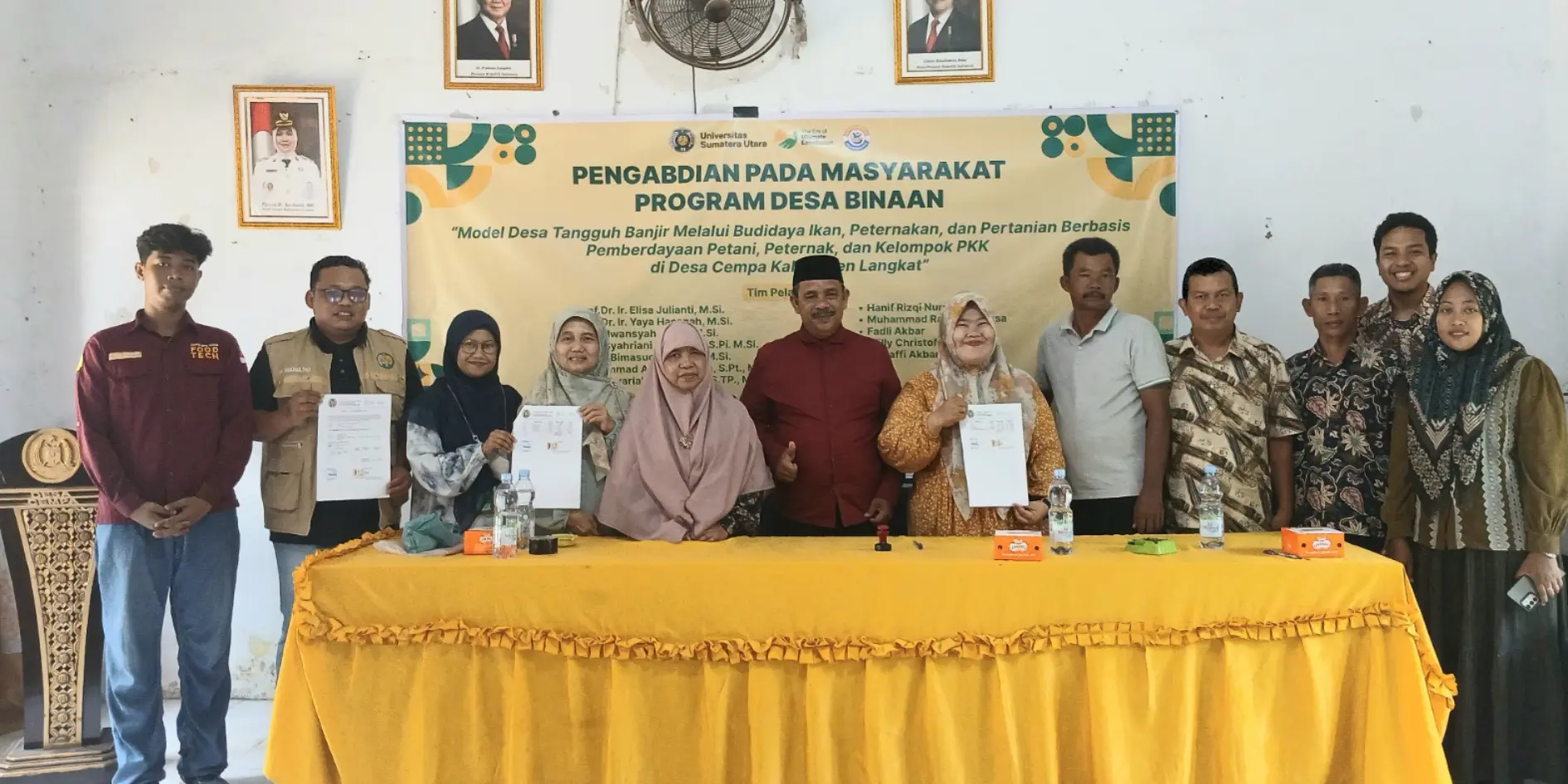
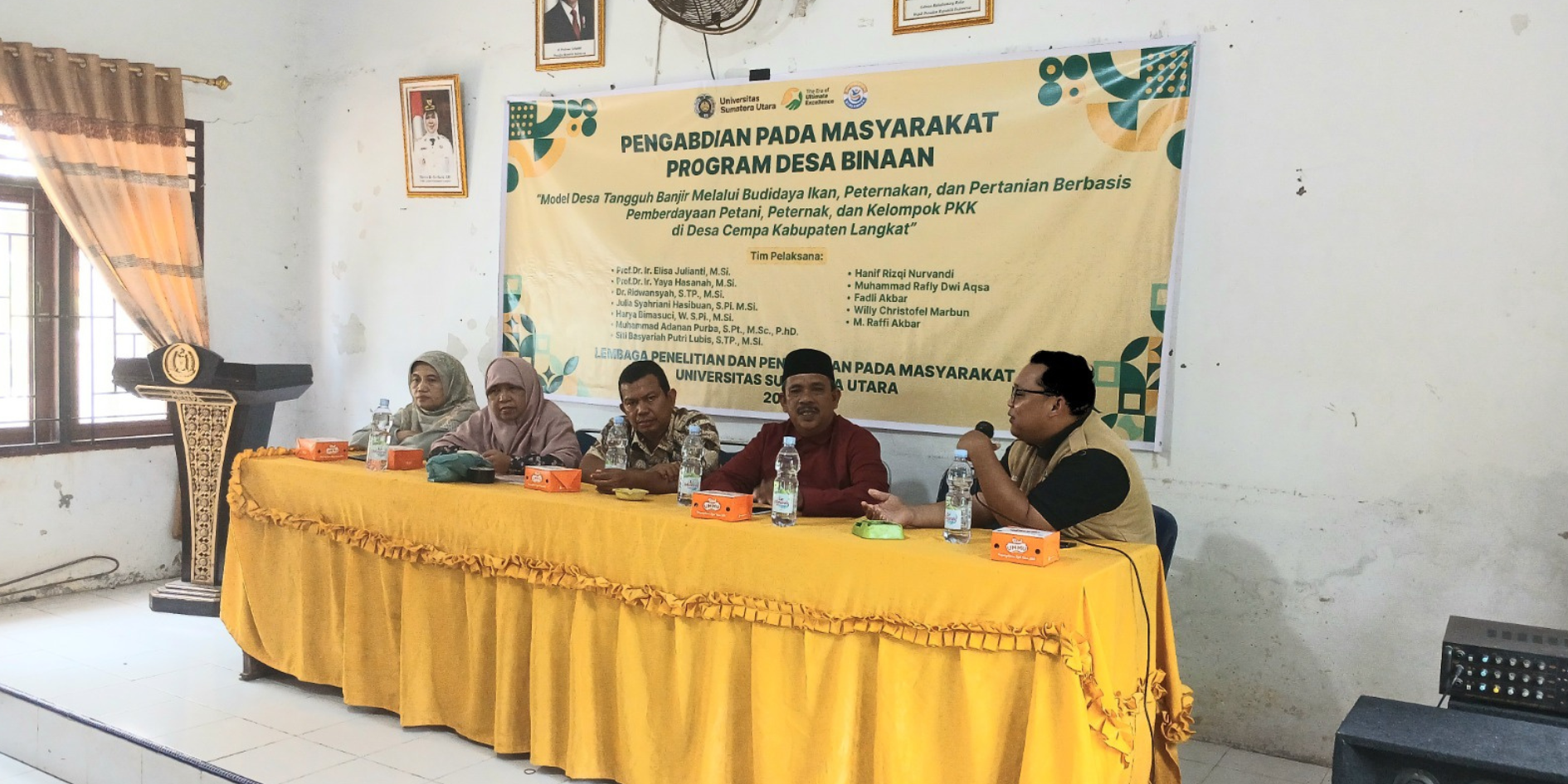
The Institute for Research and Community Service (LPPM) of Universitas Sumatera Utara (USU), through the Community Service Program under the Assisted Village Scheme, with funding from the 2026 Non-PNBP LPPM USU, is implementing a program entitled “Flood-Resilient Village Model through the Integration of Fish Farming, Livestock, and Agriculture Based on the Empowerment of Farmers, Livestock Farmers, and PKK Groups in Cempa Village, Langkat Regency.” The activity is led by Prof. Dr. Ir. Elisa Julianti, M.Si., with members Prof. Dr. Ir. Yaya Hasanah, M.Si., Dr. Ridwansyah, S.TP., M.Si., Julia Syahriani Hasibuan, S.Pi., M.Si., Harya Bimasuci W., S.Pi., M.Si., Muhammad Adanan Purba, S.Pt., M.Sc., PhD., and Siti Basyariah Putri Lubis, S.TP., M.Si., from the Faculty of Agriculture USU. The team is developing a Flood-Resilient Village Model through the integration of fish farming, livestock, and agriculture based on community empowerment in Cempa Village, Langkat Regency, as a multi-year program for 2026–2028.
Cempa Village has considerable economic potential. The agricultural sector is one of the main pillars of the community's economy, with oil palm as a major commodity producing approximately 83,000 tons per year. In addition, the village has horticultural potential, including approximately 150 tons of oranges per year and honey guava. In the livestock sector, the community raises broiler chickens, quails, goats, and cattle. Meanwhile, the fisheries sector is supported, among others, by catfish farming, with production of approximately 1.5 tons per year.
This potential is also supported by various community-based MSMEs, including tempeh, satay, banana and cassava chips, as well as products made from oil palm fronds. Cempa Village also has natural tourism potential in the form of rivers and drainage canals that can be developed into local nature- and education-based tourism destinations.
However, these various potentials have not yet been fully managed optimally. One of the main challenges is annual flooding, which occurs particularly during the rainy season. Flooding can last for up to approximately two months, hampering agricultural, livestock, and fisheries activities, damaging infrastructure, and disrupting transportation and the distribution of community products.
In the fisheries sector, for example, cultivation is still carried out traditionally using simple ponds or cages. One gourami farmer reported that of the 5,000 fingerlings stocked, only approximately 1,000 survived until harvest. The mortality rate of approximately 80 percent indicates the need for improvements in cultivation technology and management, particularly in water quality management.
To address these challenges, the Faculty of Agriculture USU team provided two biofloc ponds equipped with aerators and equipment for monitoring water quality, as well as fingerlings, materials, and equipment for establishing an organic vegetable cultivation demonstration plot. The team also provided a chopper and training in the production of silage feed and Total Mixed Ration (TMR) to address feed limitations and improve livestock nutritional quality. These technologies are expected to improve the success and efficiency of community fish farming.
The team also provided training in food processing based on local commodities to empower women's PKK groups. The products developed include fish floss and fish crackers, as well as oyster mushroom nuggets and meatballs, and salted quail eggs. These activities are expected to improve skills while creating new business opportunities to increase household income.
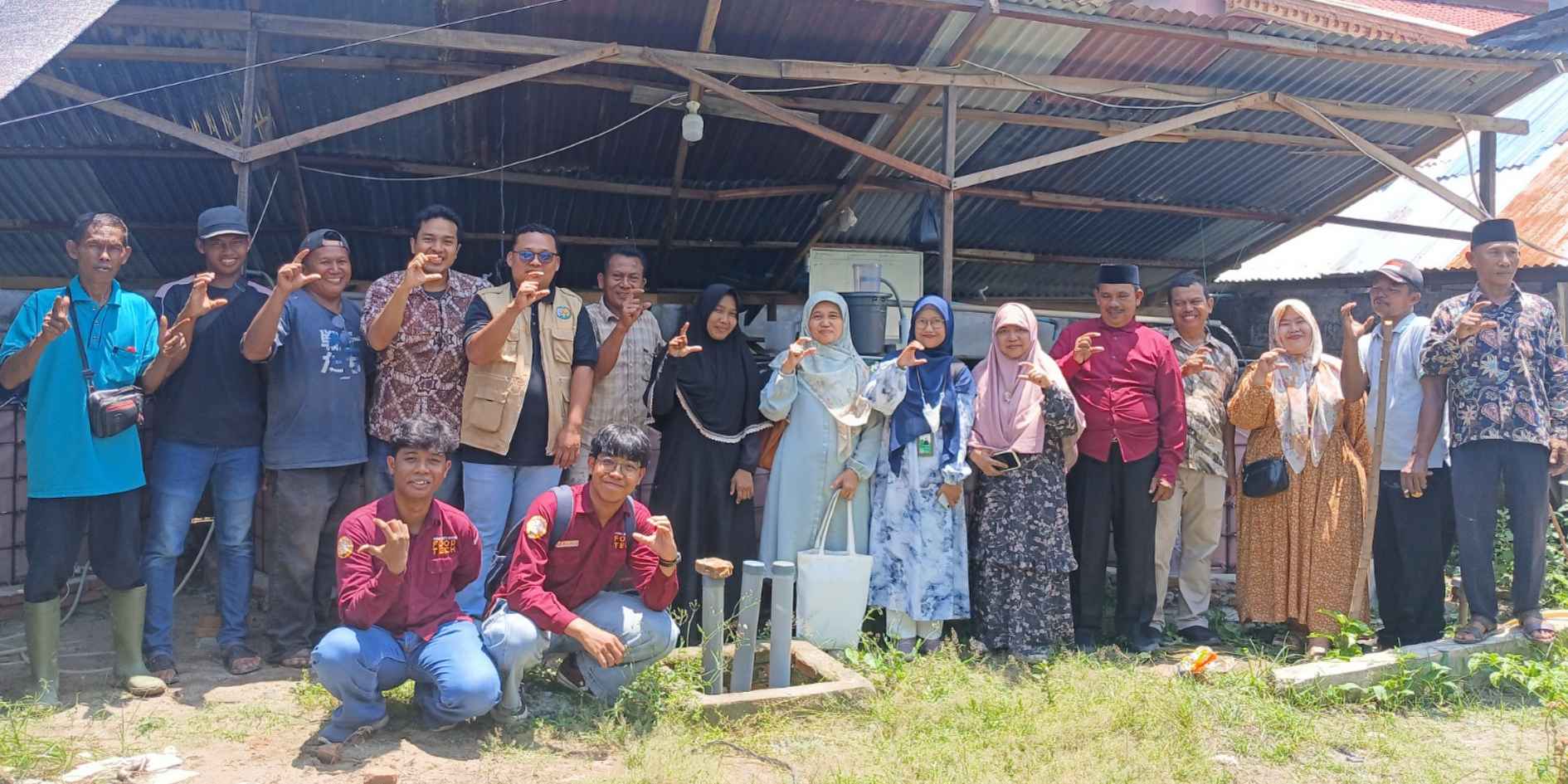
Under the Assisted Village Program, partners will receive assistance through 2028. The assistance includes production improvement, financial management using a simple application, and online marketing strategies. Students are also involved in evaluating technology implementation, recording transactions, and monitoring market developments. Through this program, Cempa Village is expected not only to increase community productivity and income, but also to develop the capacity to adapt to flooding and grow into an independent, productive, and sustainably resilient village.
This community service program supports the achievement of SDG 1, SDG 2, SDG 5, SDG 12, SDG 13, and SDG 17, particularly in poverty alleviation, food security, women's empowerment, sustainable production, climate change adaptation, and strengthening partnerships.