


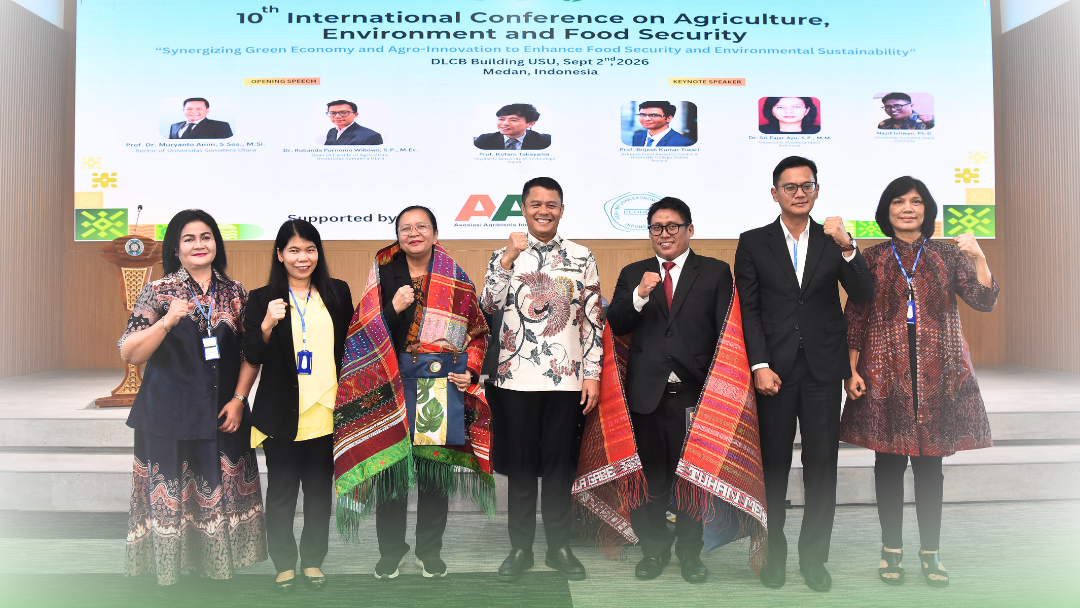
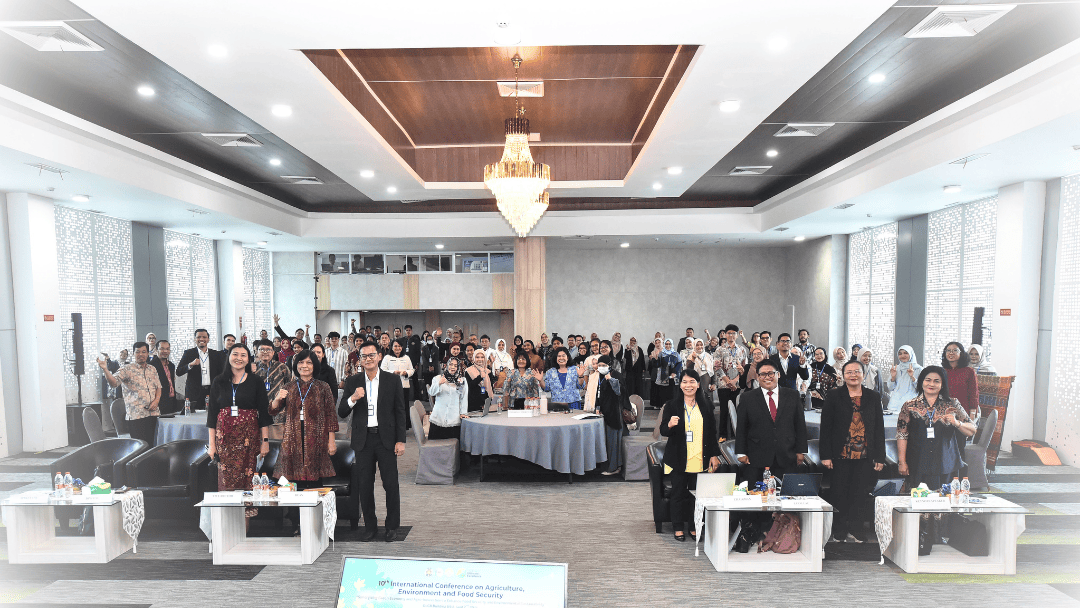
Medan, September 2, 2026 — The Faculty of Agriculture, Universitas Sumatera Utara (FP USU), once again strengthened its international academic network by organizing the 10th International Conference on Agriculture, Environment and Food Security (IC-AEFS) 2026 at the 8th Floor of the DLCB Building, Universitas Sumatera Utara, Medan, on Wednesday (September 2, 2026).
Under the theme “Synergizing Green Economy and Agro-innovation to Enhance Food Security and Environmental Sustainability,” IC-AEFS 2026 was held both onsite and online. The conference brought together academics, researchers, practitioners, government representatives, students, and stakeholders to share knowledge, research findings, and innovations in agriculture, the environment, and food security.
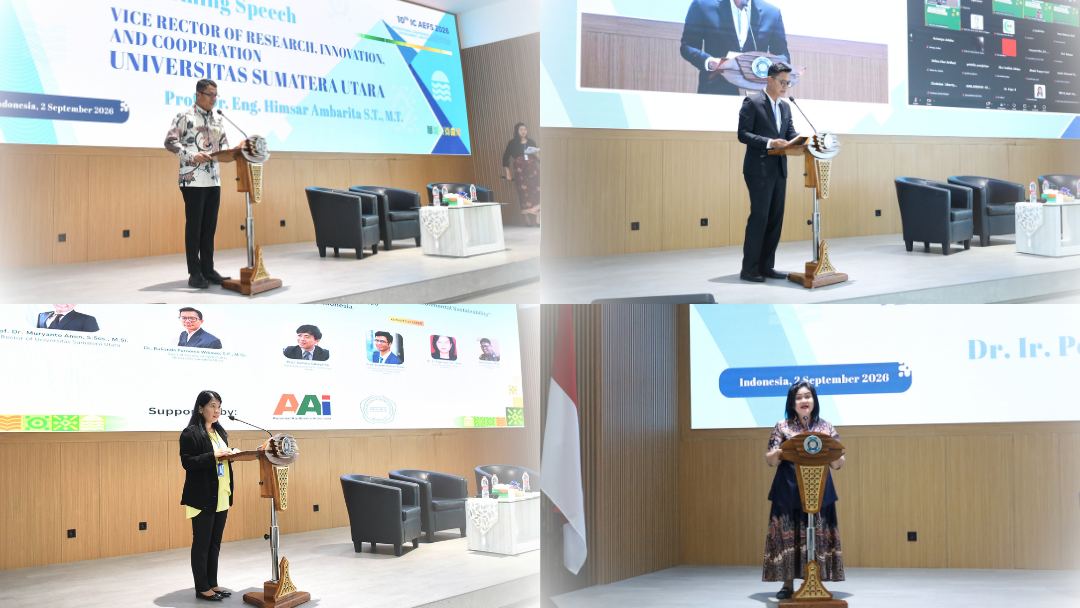
Chair of the IC-AEFS 2026 Organizing Committee, Prof. Riswanti Sigalingging, S.T.P., M.Si., Ph.D., stated that the conference was expected to serve as a platform for disseminating knowledge, research findings, and innovations while strengthening collaboration in addressing various challenges facing agriculture and food systems.
“Knowledge only becomes valuable when it is shared, disseminated, and applied to benefit humankind.”
IC-AEFS 2026 was attended by participants from approximately 36 universities in Indonesia, 14 universities abroad, and two Indonesian government agencies. Prof. Riswanti expressed her hope that the conference would provide a meaningful space for knowledge exchange, network building, and the establishment of new collaborations.
Dean of FP USU, Dr. Rulianda Purnomo Wibowo, S.P., M.Ec., emphasized in his remarks that IC-AEFS was not merely a forum for presenting research findings, but also a platform for transforming scientific knowledge into solutions and concrete action.
“AEFS 2026 is not only a conference for exchanging knowledge, but also a platform for building solutions and accelerating our collective contribution to the SDGs.”
Meanwhile, in remarks from USU Rector Prof. Dr. Muryanto Amin, S.Sos., M.Si., and Vice Rector III for Research, Innovation, and Collaboration, Prof. Dr. Eng. Himsar Ambarita, S.T., M.T., it was stated that the challenges of climate change, land degradation, water scarcity, and socioeconomic inequality require transformation in the agricultural sector.
“Transformation is no longer an option—it is a necessity.”
He emphasized the importance of promoting agro-innovation, sustainable agricultural practices, smart technologies, and the green economy to build agricultural systems that are productive, resilient, environmentally friendly, and inclusive.
“Let us turn research and innovation into meaningful action for a more food-secure and sustainable future.”
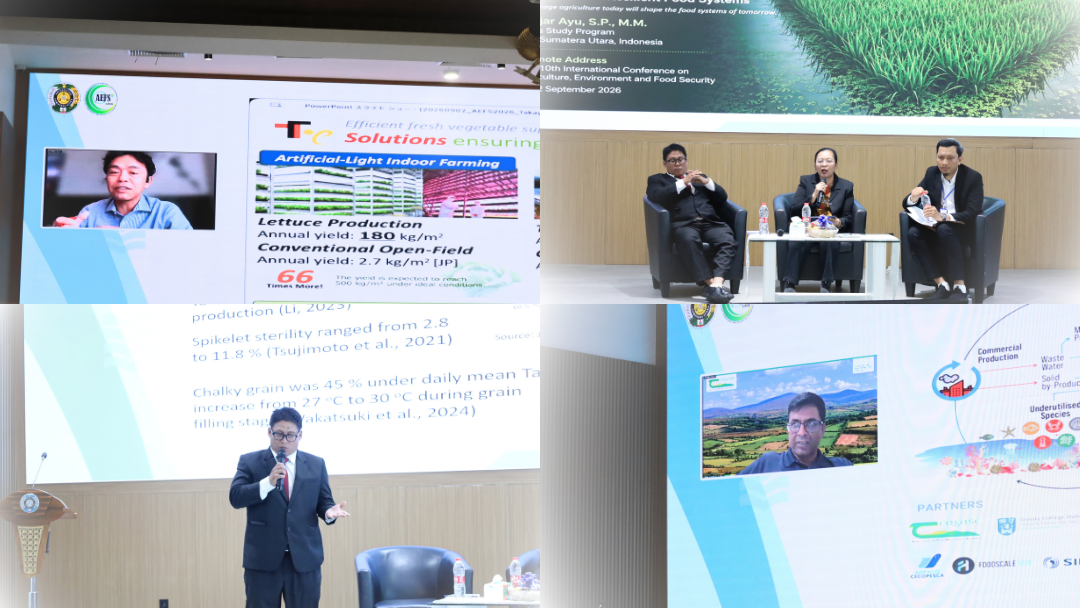
The conference featured four keynote speakers from Indonesia and abroad. Prof. Kotaro Takayama from Toyohashi University of Technology discussed the application of the Speaking Plant Approach and artificial intelligence in environmental control for greenhouse horticulture.
Next, Dr. Sri Fajar Ayu, S.P., M.M., from Universitas Sumatera Utara discussed sustainable agribusiness management through green innovation to build resilient food systems. Nazif Ichwan, S.T.P., M.Si., Ph.D., from Universitas Sumatera Utara presented strategies for genetics-based adaptation and water management to maintain rice productivity in the face of climate change pressures.
Meanwhile, Prof. Brijesh Kumar Tiwari from Ashtown Food Research Centre & University College Dublin delivered a presentation entitled “Missing Gaps to Establish Sustainable Food Systems.” The discussion highlighted various gaps that need to be addressed in building sustainable food systems, including the importance of transformational approaches, translating technology into applicable innovations, and strengthening food systems and value chains.
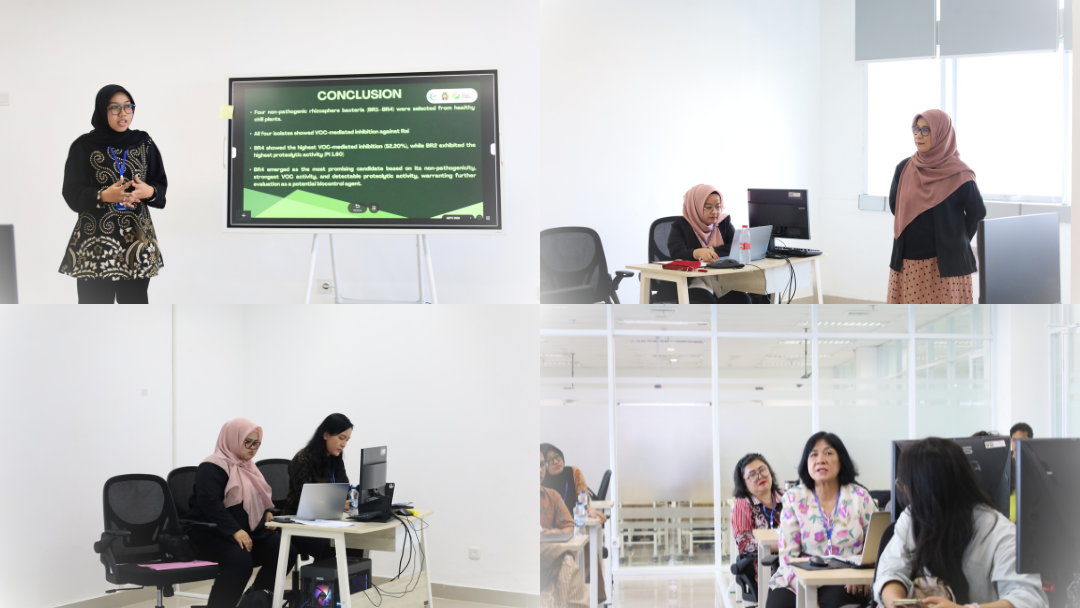
In addition to the plenary sessions, participants took part in AEFS Parallel Sessions I and II to present and discuss various research findings in the fields of agriculture, the environment, food, and food security.
Concluding the series of activities, Vice Dean III of FP USU for Research, Collaboration, and Cooperation, Dr. Ir. Posma Mangasi Pintaria Marbun, M.P., expressed appreciation to all keynote speakers, presenters, participants, committee members, and partners who supported the implementation of IC-AEFS 2026.
“I hope that the knowledge and ideas shared during AEFS 2026 will inspire new research, strengthen collaboration, and contribute to sustainable solutions for agriculture, food security, and environmental challenges.”
The organization of IC-AEFS 2026 also strengthened FP USU’s commitment to supporting the achievement of the Sustainable Development Goals (SDGs). The conference theme and discussions were relevant to SDG 2 (Zero Hunger) through efforts to strengthen food security; SDG 12 (Responsible Consumption and Production) through sustainable innovation and production; SDG 13 (Climate Action) through the development of agricultural adaptation strategies in response to climate change; and SDG 15 (Life on Land) through the management and protection of natural resources. The strengthening of national and international academic networks and collaboration, which formed an important part of IC-AEFS 2026, also supported SDG 17 (Partnerships for the Goals).
Through the organization of IC-AEFS, now entering its 10th year, FP USU continues to promote collaboration, research, and innovation as part of its efforts to build resilient and sustainable agricultural and food systems capable of addressing future challenges.