


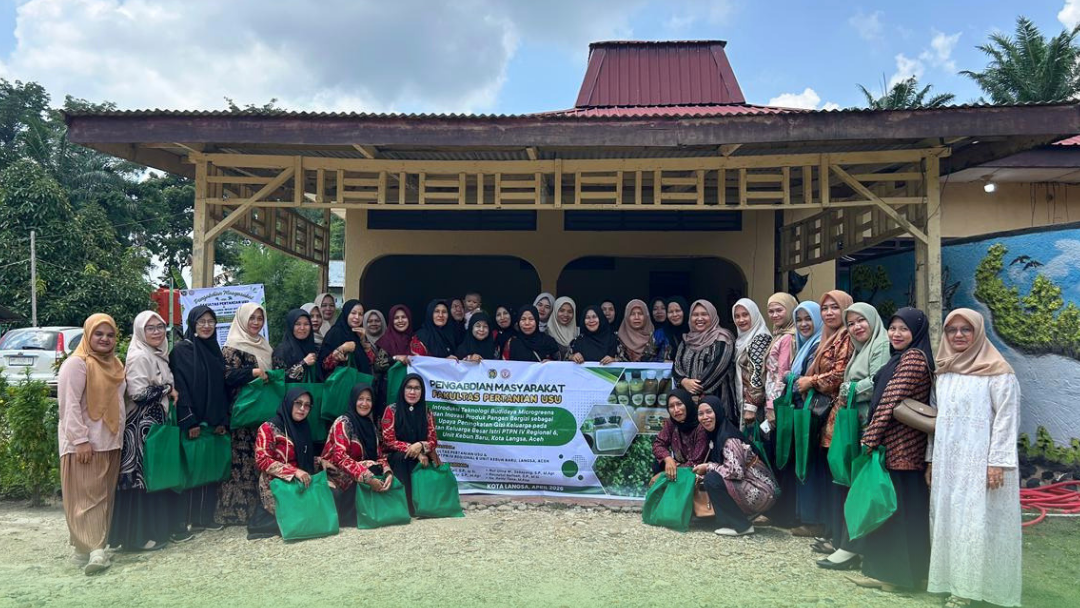
A team of lecturers from the Agrotechnology Study Program, Faculty of Agriculture, Universitas Sumatera Utara (USU), held training on the cultivation and processing of microgreens for members of the Ikatan Keluarga Besar Istri (IKBI) of PTPN IV Regional VI Kebun Baru Unit. This self-funded community service activity was held in Gampong Pondok Kelapa, Langsa Baro District, Langsa City, Aceh, and was attended by 40 participants comprising the wives of employees and leaders of PTPN IV Regional VI Kebun Baru Unit.
The activity, themed “Introduction to Microgreens Cultivation Technology and Nutritious Food Product Innovation as an Effort to Improve Family Nutrition,” was led by Vira Irma Sari, S.P., M.Si., as the team leader, together with four other members of the community service team: Julieta Christy, S.P., M.Agr.; Nur Ulina Warmisyah Br Sebayang, S.P., M.Agr.; Rouzatul Nafisah, S.P., M.Si.; and Ns. Reisy Tane, M.Kep.
Addressing Food Security Challenges and Low Vegetable Consumption among Children
The activity was initiated to address several issues faced by mothers who are members of IKBI, including low vegetable consumption among children due to a lack of variety in processed vegetable dishes, as well as concerns about fluctuations in vegetable prices and availability in the market.
Microgreens are young plants harvested at 7–14 days of age, with a height of approximately 3–10 cm. Despite their small size, their nutritional content—including vitamin C, vitamin E, vitamin K, beta-carotene, flavonoids, phenolic compounds, and antioxidants—is reported to be 4 to 40 times higher than that of mature plants of the same species. Their cultivation is also relatively simple, making it easy for homemakers to practice at home, even by utilizing only their home terraces.
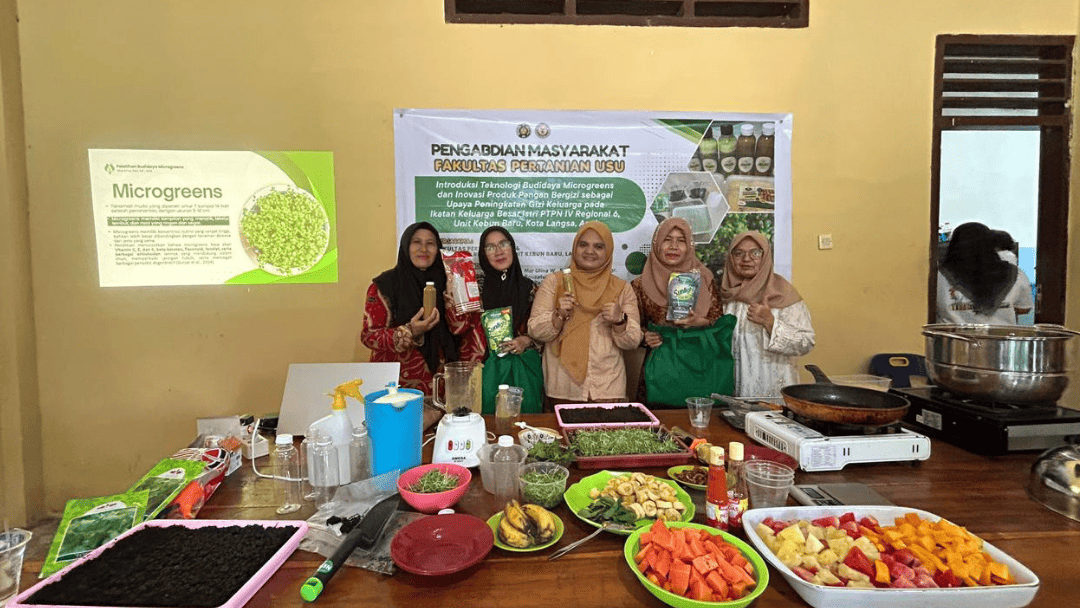
The activity began with a presentation on the benefits, cultivation, and processing of microgreens delivered by Vira Irma Sari, S.P., M.Si., followed by a discussion and question-and-answer session with the participants. Subsequently, all participants took part in hands-on microgreens planting using starter kits that had been distributed, consisting of trays, growing media, hand sprayers, and vegetable seeds.
The community service team also invited the mothers to practice processing microgreens into two nutritious food products: microgreens nuggets made from chicken, milk, white bread, eggs, and cheese; and smoothies featuring various fruit combinations, such as mango-papaya, banana-pineapple, watermelon-mint, and banana-date, combined with mustard green microgreens, coconut water, and honey.
Based on interviews conducted during the evaluation stage, the participants expressed great enthusiasm as they gained new knowledge and ideas for preparing healthy menus for their families, particularly as a way to encourage children who are reluctant to eat vegetables. The mild taste of microgreens in the nuggets was considered helpful in allowing children to consume vegetables without realizing it, while the smoothies produced could be stored for up to one week to help meet the family’s nutritional and fiber needs.
The IKBI mothers committed to practicing microgreens cultivation in their respective homes. The head of the IKBI Kebun Baru Unit even plans to organize a creativity competition featuring food products made from microgreens to further encourage enthusiasm among its members.
This community service activity was also one form of implementing the Higher Education Key Performance Indicators (IKU), particularly IKU 3 (Lecturers Engaging in Activities Outside Campus) and IKU 5 (Lecturers’ Work Being Utilized by the Community).
This community service activity also aligns with several targets of the Sustainable Development Goals (SDGs), including:
- SDG 2 – Zero Hunger: Promoting household food security by enabling families to independently produce part of their vegetable needs.
- SDG 3 – Good Health and Well-being: Improving family nutrition, particularly among children, through the consumption of highly nutritious food derived from microgreens.
- SDG 4 – Quality Education: Providing education and new skills training for homemakers outside the formal education system.
- SDG 5 – Gender Equality: Empowering women/homemakers by improving skills that have the potential to become a source of additional family income.
- SDG 17 – Partnerships for the Goals: Establishing collaboration among the Faculty of Agriculture, Universitas Sumatera Utara; PTPN IV Regional VI Kebun Baru Unit; and the IKBI organization to support community empowerment.
The collaboration between the Faculty of Agriculture, Universitas Sumatera Utara, and IKBI PTPN IV Regional VI Kebun Baru Unit is expected to serve as a beneficial alternative activity that supports household food security. The Faculty of Agriculture, Universitas Sumatera Utara, remains committed to continuously introducing applicable agricultural innovations with a direct impact on community well-being, while reaffirming the role of higher education institutions as strategic partners in realizing food security and sustainable development in Indonesia.