


 Unit Marihat 2026.webp)
Students of the Agrotechnology Study Program, Faculty of Agriculture, Universitas Sumatera Utara (FP USU), once again gained a valuable opportunity to develop their competencies and broaden their knowledge through Field Work Practice (PKL) at the Marihat Unit of the Indonesian Oil Palm Research Institute (PPKS). Group 40, consisting of Nisa Maulidina Pohan, Maulana Aditia Ridho, Syifa Alowinata, Rivaldo Hasibuan, and Iqbal Rasyid, undertook the PKL from July 1–31, 2026, focusing on oil palm (Elaeis guineensis Jacq.). Through this activity, the students not only deepened the theoretical knowledge acquired in the classroom but also became directly involved in various research and professionally managed oil palm plantation activities.
The PKL at the Marihat Unit of PPKS served as a means for students to gain first-hand insight into the application of science and technology in research and the plantation industry. The research center provided a comprehensive learning environment for students to explore various aspects of oil palm breeding and cultivation, ranging from observing the characteristics of parent palms and pollen laboratory technology to commercial nursery management. To ensure that the activity was carried out in accordance with the established learning objectives, the students received guidance and supervision from their Field Supervisor (DPL), Nursa'adah, S.ST., M.Agr., as well as field supervisors and mentors at the Marihat Unit of PPKS, who continuously guided and monitored the students’ involvement throughout the PKL.
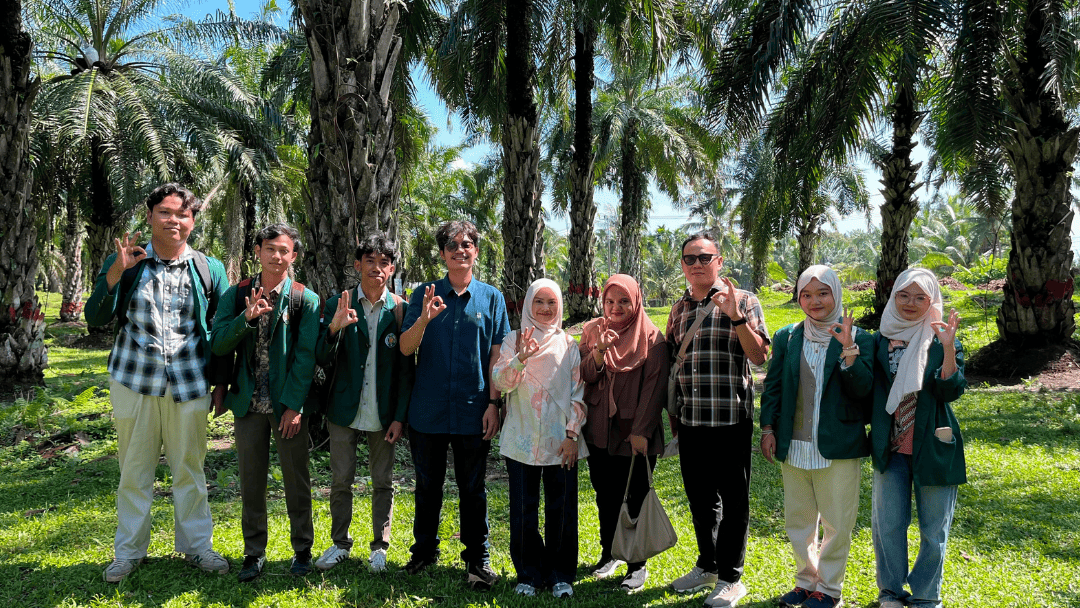
In the Dura and Pisifera Parent Palm Division, the students studied various stages of the breeding process in depth, including flower observation, bagging, artificial pollination, and harvesting. These activities provided a comprehensive understanding of the oil palm breeding process for producing Tenera varieties, superior hybrids resulting from crosses between Dura and Pisifera palms. The hands-on learning experience in the research area provided valuable knowledge for students to understand the importance of selection and the implementation of Standard Operating Procedures (SOPs) in maintaining genetic purity and seed quality. Their involvement in breeding activities also enabled students to gain insight into the challenges and competency requirements emerging in the oil palm plantation industry.
At the Pollen Laboratory, students gained experience in a series of pollen-processing procedures, beginning with reception and extraction, followed by filtering and drying, pollen packaging and storage, viability testing, and mixing and labeling. The laboratory technologies applied provided insights into the importance of pollen quality in supporting the success of breeding programs and the production of superior planting materials. Students were encouraged to integrate their academic knowledge with practical laboratory experience, helping develop human resources equipped with the competencies, skills, and professional readiness required in the plantation sector.
Furthermore, in the Commercial Nursery Division, students learned comprehensively about the stages of oil palm nursery management, covering both the Pre-Nursery and Main Nursery stages. Activities included nursery site preparation, planting media preparation, shade preparation, planting germinated seeds, seedling maintenance, as well as Quality Control and the selection of abnormal seedlings. The hands-on experience in the nursery division provided a practical understanding of how superior planting materials are mass-produced under stringent quality standards to meet the needs of oil palm plantations in Indonesia.
The Field Work Practice at the Marihat Unit of PPKS also contributed to the achievement of the Sustainable Development Goals (SDGs), particularly SDG 2: Zero Hunger through the production of Tenera varieties with the potential to achieve optimal productivity and CPO yields, as well as the provision of superior planting materials. The activity also supported SDG 8: Decent Work and Economic Growth through the development of sustainable oil palm agribusiness; SDG 9: Industry, Innovation, and Infrastructure through the application of laboratory technology in pollen processing; SDG 12: Responsible Consumption and Production through the implementation of selection procedures, SOPs, and efficient resource utilization; and SDG 15: Life on Land through flower bagging practices that contribute to maintaining genetic purity and conserving oil palm genetic resources.
Collaboration between higher education institutions and research institutions, such as that established through the PKL at the Marihat Unit of PPKS, is expected to continue serving as a bridge for preparing students who are not only academically excellent but also adaptive, skilled, and ready to contribute to the development of Indonesia’s agricultural and plantation sectors. This effort also strengthens the contribution of higher education institutions to supporting the achievement of the Sustainable Development Goals.
FP USU extends its appreciation to the leadership, supervisors, staff, and entire PPKS Marihat community for their warm welcome, knowledge, experience, and guidance provided throughout the PKL.