


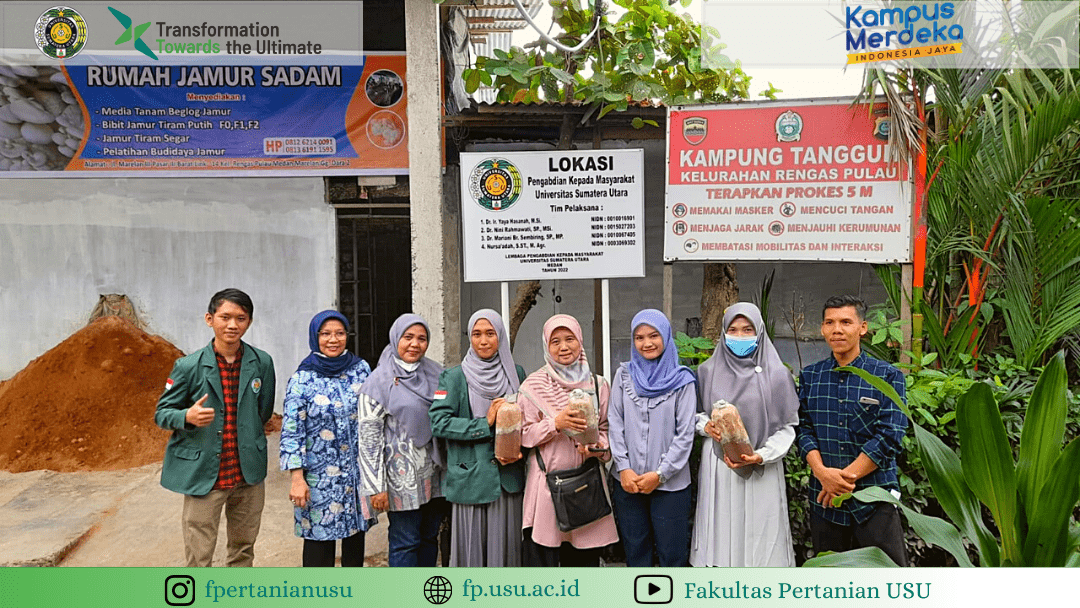
Oyster mushrooms contain 367 calories, 10.5–30.4% protein, 56.6% carbohydrates, 1.7–2.2% fat, 0.20 mg thiamin, 4.7–4.9 mg riboflavin, 77.2 mg niacin, and 314.0 mg calcium per 100 grams. Current oyster mushroom production is only 37,020 tons, while consumption reaches 47,753 tons. Production waste in the form of baglog contains macro nutrients, including N (0.6%), P (0.7%), K (0.02%), and organic carbon (49%).
One oyster mushroom producer in Medan Marelan produces approximately 7–12 kilograms per day, with a mushroom house capacity of up to 7,000 baglogs. Rumah Jamur Sadam not only produces fresh mushrooms but also processes products such as crispy mushrooms, mushroom pepes, mushroom satay, and stuffed tofu with the brand “Dapur Jamur,” which has received halal certification from MUI. However, the producer faces challenges, such as dependency on suppliers for F0–F2 mushroom spawn, unutilized baglog waste as compost, and the need to optimize its use for cultivated plants.
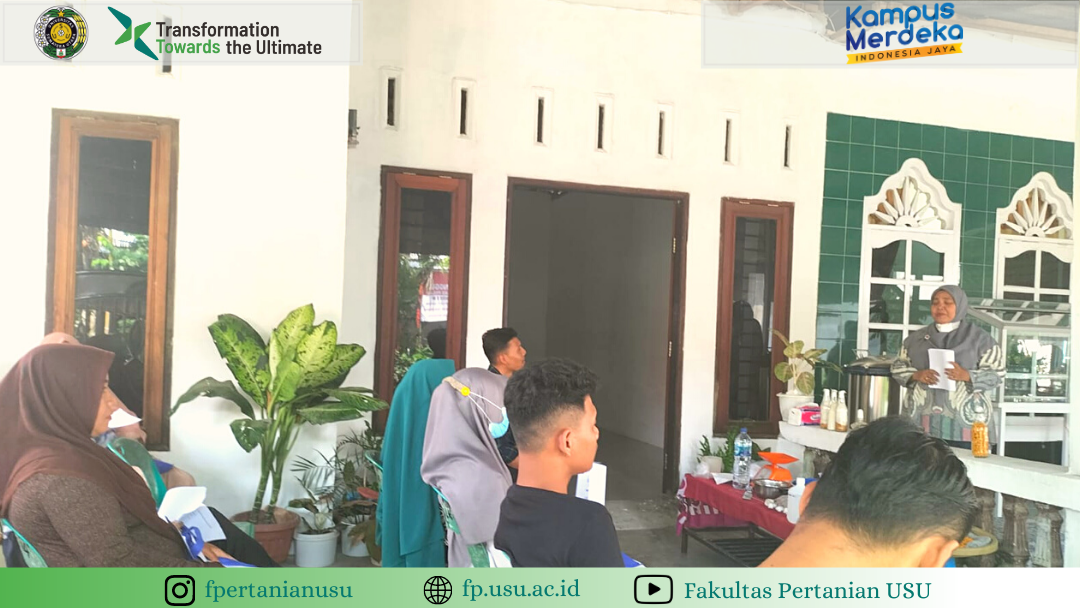
To address these issues, lecturers from the Faculty of Agriculture, Universitas Sumatera Utara, led by Dr. Ir. Yaya Hasanah, M.Si., alongside Dr. Nini Rahmawati, S.P., M.Si., Dr. Mariani Br. Sembiring, S.P., M.P., and Nursa’adah, S.ST., M.Agr., conducted a community service program at Rumah Jamur Sadam in Rengas Pulau, Medan Marelan District, Medan City.
The program included:
- Training and practice on producing F0–F2 oyster mushroom spawn.
- Practicing compost production from baglog waste.
- Utilizing baglog compost for mung bean cultivation.
- Technology transfer through equipment handover.
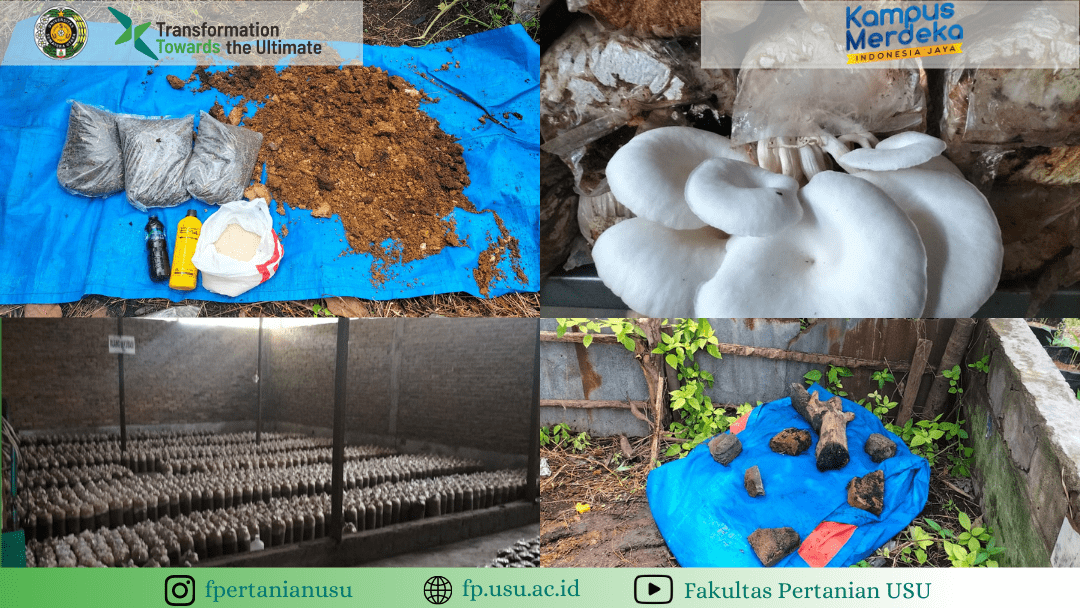
The initiative was well received by Rumah Jamur Sadam and the local community in Rengas Pulau. Participants enthusiastically engaged in the training and successfully understood the techniques for producing mushroom spawn (F0–F2), creating compost from baglog waste, and applying the compost to cultivated plants.
Through this training, participants gained a deeper understanding of utilizing organic baglog waste as compost, which can be reused as planting media for crops. Furthermore, producing F0–F2 oyster mushroom spawn and baglog-based compost has marketable value, providing economic empowerment opportunities and significant business prospects for the community.