


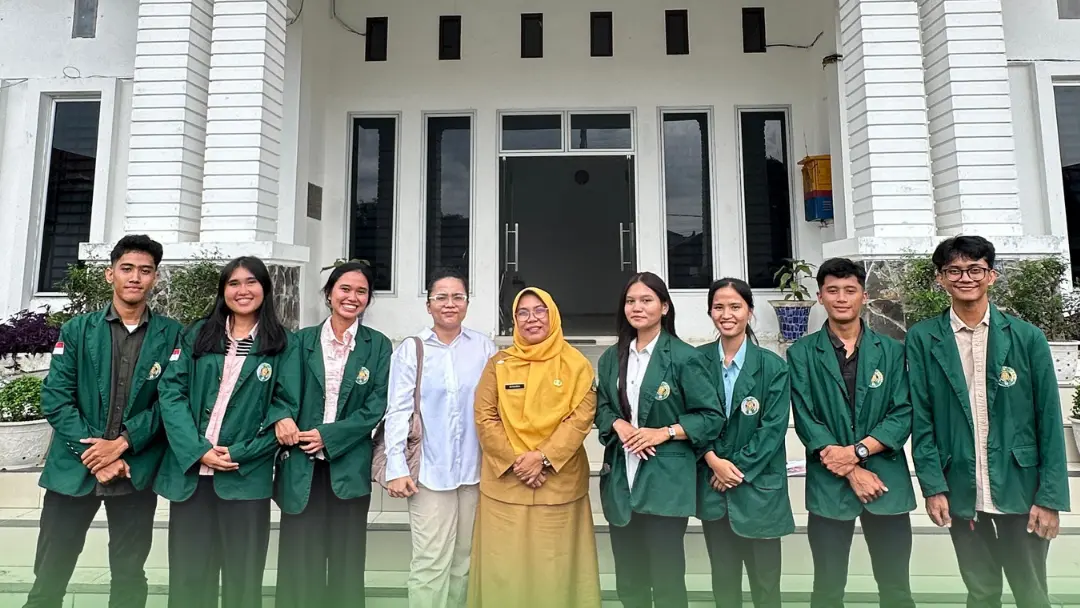
Medan — The supervision of the Field Internship (PKL) of students from the Agrotechnology Study Program, Faculty of Agriculture, Universitas Sumatera Utara (USU), at the Tanjung Selamat Palawija Seed Center, Medan, strengthened experiential learning through students’ direct involvement in the production and handling of palawija seeds. The activity supported the development of students’ technical competencies, professionalism, and work readiness while strengthening USU’s partnership with industry partners in support of SDG 4, SDG 8, and SDG 17.
Universitas Sumatera Utara (USU) continues to strengthen experiential learning through student Field Internship (PKL) activities in professional work environments. One such effort was carried out through the supervision of students’ field internships at the Tanjung Selamat Palawija Seed Center, Medan, on July 20, 2026.
The supervision was conducted by Beatrix Sofranes Napitupulu, S.Agr., M.Agr., a faculty member of the Faculty of Agriculture, USU, to monitor and evaluate the students’ field internship activities, which took place from July 1 to 31, 2026. Five students from the Agrotechnology Study Program—Helsa Natasya br Sembiring (230301125), Hegita Veronika br Sembiring (230301145), Irfan Izzuddin (230301266), Andri Wifali (230301281), and Sry Selpyana Sinaga (230301049)—were assigned to the Production and Technical Services Division (Yantek), particularly in the seed processing section.
Bridging Theory and Practice
The Field Internship serves as a means for students to integrate the knowledge gained in the classroom with real-world conditions in the workplace. In addition to technical competencies, students gained experience in communication, teamwork, attention to detail, and work discipline in a seed production environment.
During the internship, students were directly involved in a series of palawija seed production activities, from seed planting and harvesting to seed sorting and grading processes to ensure that the quality of the seeds produced met established standards. Students also interacted directly with field personnel and technical staff at the Seed Center in carrying out each stage of the activities.
This experience strengthened students’ understanding of the relationship between agronomic concepts learned in class and seed quality management practices in the field, particularly in ensuring that the seeds produced met standards for germination capacity and genetic purity.
Building Work Readiness
At the initial stage, students faced challenges in adapting to the work environment at the internship unit, including its work rhythm, operational procedures, and workplace culture. Through guidance from field personnel, as well as encouragement to actively ask questions and gather information, the students gradually adapted to the environment and demonstrated progress in carrying out their assigned tasks.
The supervision results showed that all five students were able to participate in technical activities with discipline and responsibility while demonstrating good teamwork and communication with the Seed Center staff.
Strengthening Education–Industry Partnerships
The implementation of the Field Internship at the Tanjung Selamat Palawija Seed Center demonstrates the importance of collaboration between higher education institutions and the professional sector in preparing competent and adaptable graduates. Through hands-on experience in a seed production unit, students gained an understanding of workplace demands while having the opportunity to apply the knowledge acquired during their studies.
This activity represents USU’s contribution to supporting SDG 4: Quality Education through experiential learning, SDG 8: Decent Work and Economic Growth through strengthening students’ competencies and work readiness, and SDG 17: Partnerships for the Goals through collaboration between higher education institutions and industry partners.
Thus, Field Internship supervision serves not only as part of academic evaluation but also as an effort to ensure that students gain relevant learning experiences, develop professional competencies, and become increasingly prepared to enter the workforce after completing their education.