


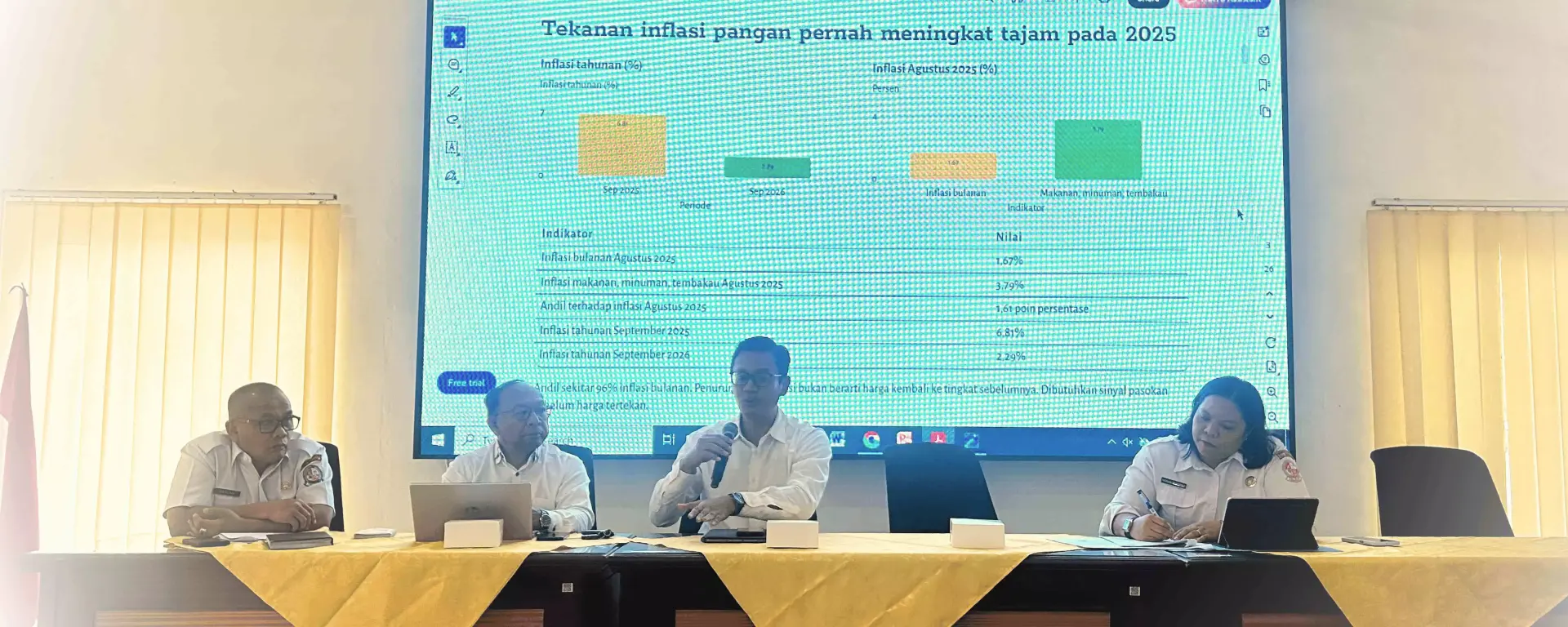
Deli Serdang, October 14, 2026 — The Dean of the Faculty of Agriculture, Universitas Sumatera Utara (FP USU), Dr. Rulianda Purnomo Wibowo, S.P., M.Ec., presented strategies for controlling food inflation based on production and consumption at the Study on a Strategic Food Inflation Control Model Based on Production and Consumption in Deli Serdang Regency. The activity was held at the Hall of Bappedalitbang Deli Serdang Regency on Wednesday, October 14, 2026.
The presentation emphasized the importance of shifting the approach to food inflation control from reactive measures implemented after prices rise to a predictive and preventive approach through integrated data monitoring. This approach is necessary to enable local governments to identify potential supply disruptions and price pressures at an early stage, allowing response measures to be prepared before their effects are felt by the community.
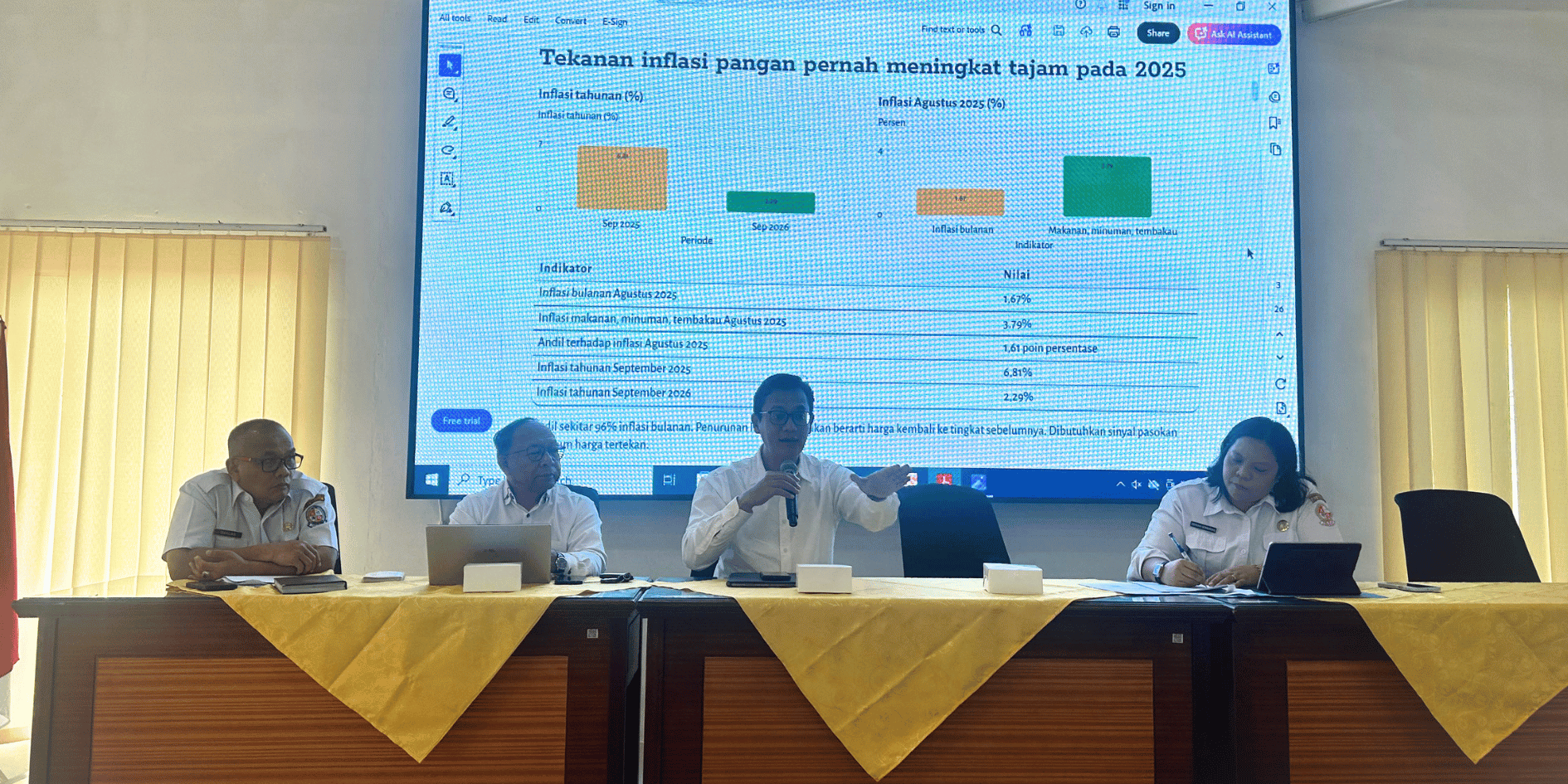
In his study, Dr. Rulianda explained that food inflation control must consider the characteristics of Deli Serdang Regency as both a producing and consuming region. With a population of approximately 2.078 million in 2025, the region's food requirements need to be analyzed alongside local production capacity and distribution flows from other regions. Deli Serdang's position within the Medan–Binjai–Deli Serdang–Karo region also makes smooth distribution an important factor in maintaining price stability.
“Food inflation control needs to begin early by examining the relationship between production, consumption needs, stock availability, and distribution. We cannot simply respond after prices have already increased. With integrated data, potential supply shortages can be identified earlier, giving local governments time to prepare preventive measures,” explained Dr. Rulianda.
The study covered eight strategic food commodities: rice, red chili peppers, bird's eye chili peppers, shallots, garlic, broiler chicken meat, chicken eggs, and cooking oil. Each commodity has different production characteristics, consumption patterns, and distribution challenges, requiring individual analysis.
Initial calculations from the study indicated that the ratio of rice production to rice requirements in Deli Serdang Regency was in the indicative range of 82.5–103.1 percent. Meanwhile, local shallot production was estimated to meet only around 4.8–7.2 percent of indicative demand. These figures provide an initial overview for identifying commodities that require further attention, while taking into account the need to validate production, consumption, and interregional supply data.
“Each commodity faces different challenges. Therefore, we need to identify which commodities are at risk of supply shortages, which factors influence their price movements, and when interventions need to be implemented. The results of this analysis are expected to help the government determine response priorities based on the conditions and risk levels of each commodity,” he added.
To support these anticipatory measures, the study proposes developing an Early Warning System (EWS) capable of projecting price risks over the next one to three months. The system will monitor five main indicators: supply gaps, price anomalies, price volatility, projected price pressures, and distribution disruptions. Based on these indicators, risks will be classified into green, yellow, and red status levels to guide local government responses.
The analysis is also planned to use Autoregressive Distributed Lag (ARDL) or Nonlinear Autoregressive Distributed Lag (NARDL) methods to examine dynamic relationships between supply and prices, as well as Seasonal Autoregressive Integrated Moving Average with Exogenous Variables (SARIMAX) to support price forecasting. The analytical results will be presented through a monitoring dashboard and interactive worksheets to make the information more accessible and useful for decision-making.
The presentation was followed by discussions with Bappedalitbang Deli Serdang Regency, Statistics Indonesia (BPS), Perum BULOG, and relevant regional government agencies, including institutions responsible for marine affairs and food security, livestock, and horticulture. The discussions focused on strengthening cross-sectoral data integration and aligning analytical findings with regional policy needs.

Through this study, which is planned to run for 60 days, the data-driven approach is expected to help local governments formulate more targeted inflation control measures, ranging from production and stock monitoring to strengthening distribution and addressing commodities at risk of price pressures.
The implementation of this food inflation control model aligns with the Sustainable Development Goals (SDGs), particularly SDG 2 (Zero Hunger) through efforts to maintain food availability and access; SDG 12 (Responsible Consumption and Production) through improved production and distribution efficiency; and SDG 1 (No Poverty) through efforts to protect people's purchasing power. Supported by scientific analysis and cross-sectoral coordination, the study is expected to provide a foundation for food policies that respond more effectively to risks and prioritize community well-being.