


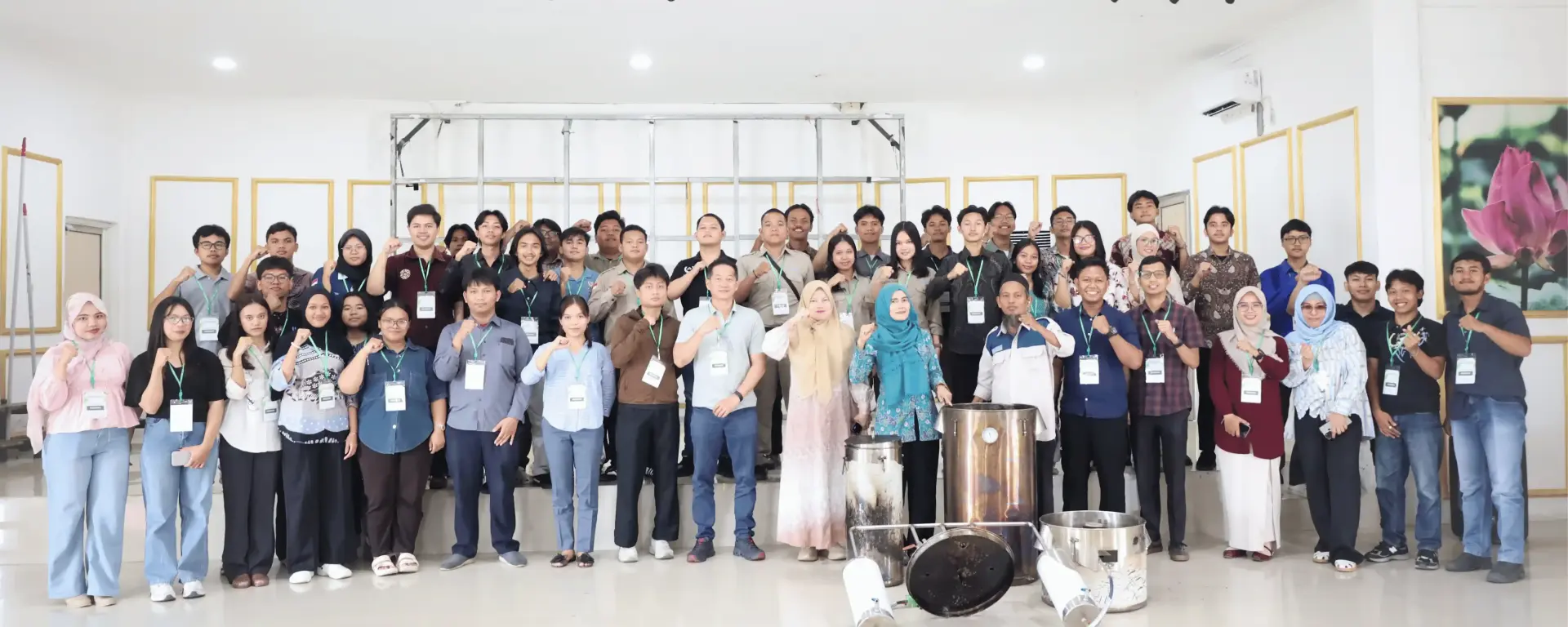
The Faculty of Agriculture, Universitas Sumatera Utara (FP USU), continued its series of Seminars and Workshops on Biochar Utilization in Oil Palm Plantations through a practical biochar production activity on Friday (November 13, 2026), at the Faculty of Agriculture, USU grounds. Carrying the theme “Utilization of Biochar in Oil Palm Plantations: From Science to Practice for Productivity and Sustainability,” the activity aimed to introduce the direct application of biochar technology to the community.
The workshop was attended by FP USU lecturers and students, as well as participants from various backgrounds, including the general public, associations, institutions, academics, researchers, and industry representatives.
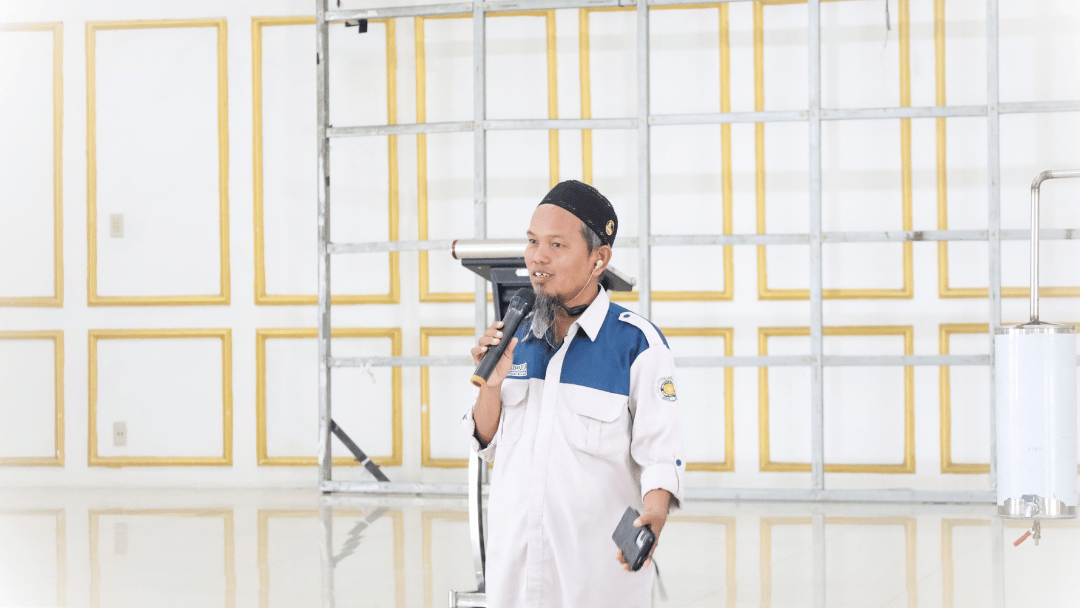
The activity began with remarks from the Head of the Soil Chemistry and Biology Laboratory, FP USU, Dr. Benny Hidayat, S.P., M.P., at the Soeratman Hall, FP USU. In his remarks, he explained that the idea of organizing the training originated from his observation that the students under his supervision did not yet fully understand the biochar production process. This prompted him to initiate training, which was subsequently developed into a workshop so that knowledge and skills related to biochar could be shared with the wider community. He hoped that this activity would provide benefits and encourage more parties to learn about and develop the utilization of biochar.
Following the remarks, participants received explanations about the equipment, basic principles, and stages of biochar production. The presentation explained that biochar plays an important role because it can transform biomass waste into a value-added resource, support soil health, and potentially serve as a carbon storage medium. To illustrate its carbon storage potential, one ton of biochar with a carbon content of 70% is estimated to be equivalent to approximately 49.3 m² of humid tropical forest.
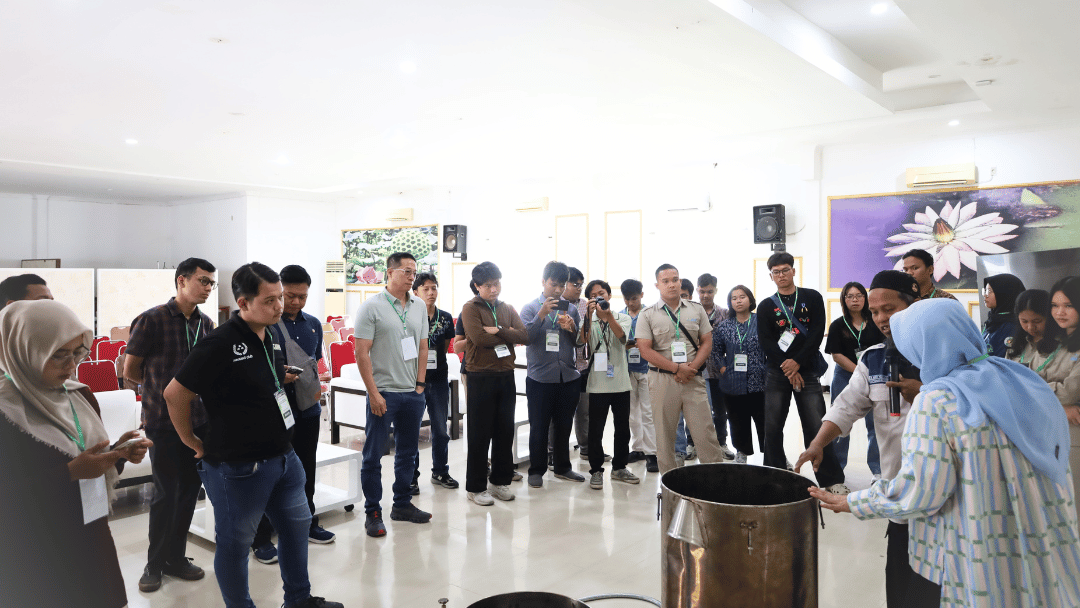
Biochar quality itself is determined by several aspects, including raw materials, production processes, product characteristics, safety, and intended use. To produce quality biochar, the production process involves several stages, namely biomass selection, drying and adjustment of material size, controlled pyrolysis, safe cooling, as well as quality testing and product traceability.
Participants were also introduced to two production methods, namely retort and kiln. The retort method uses indirect heating, with biomass placed in an enclosed chamber and heated from the outside. Meanwhile, the kiln method uses direct or partial heating, in which some of the material or gas is burned to generate heat. Both methods have different characteristics, making the control of temperature, atmosphere, product uniformity, and emissions important aspects of the production process.
In addition, six main indicators of quality biochar were explained: high organic carbon content, pH suited to its intended use, large surface area and pore volume, controlled ash content, freedom from contaminants, and stable, aromatic carbon characteristics.
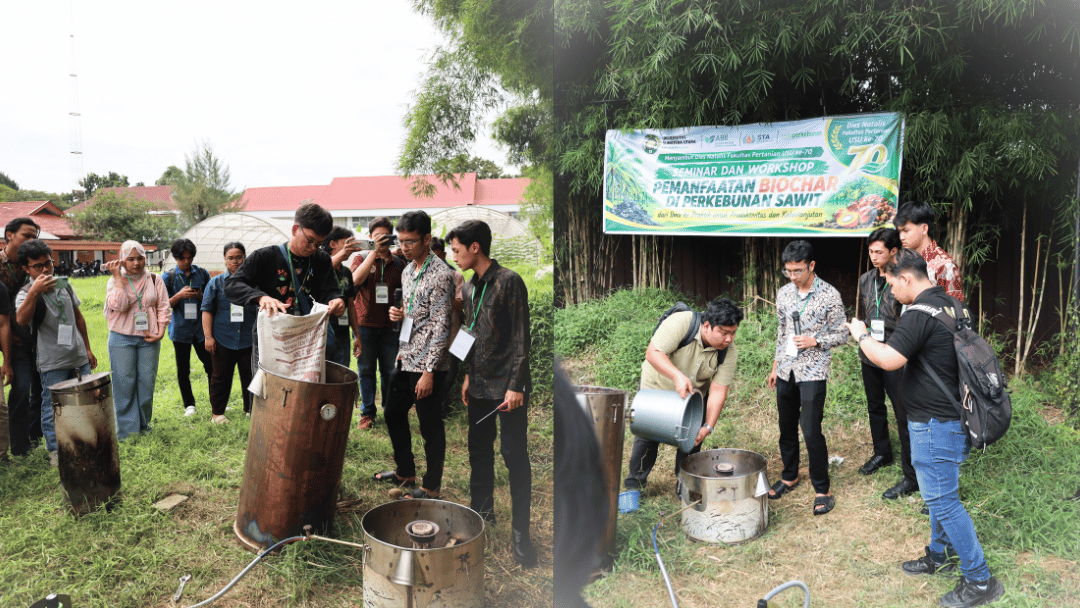
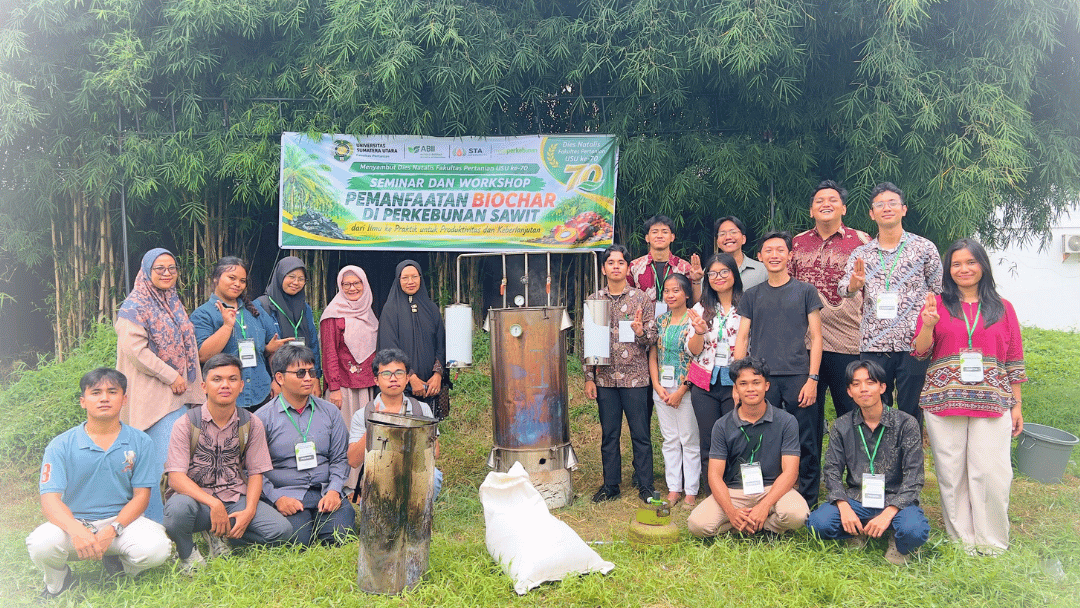
The activity then continued at the Faculty of Agriculture, USU grounds, where participants took part in hands-on biochar production. During this session, students who serve as assistants at the Soil Chemistry and Biology Laboratory, FP USU, also had the opportunity to demonstrate the production process before the participants. Through this demonstration, participants could directly observe the stages of processing biomass into biochar while gaining practical understanding of the production process.
The implementation of this workshop served as a continuation of the national seminar held the previous day, Thursday (November 12, 2026). While the seminar provided an understanding of the opportunities, characteristics, quality, and application of biochar in oil palm plantations, the workshop allowed participants to learn more about the production process and practical methods of making it.
Through this series of activities, FP USU hopes that knowledge about biochar will not only develop within the academic community but also be applied more widely by the public, practitioners, and industry players. The utilization of biomass residues to produce biochar is expected to add value to plantation waste, support improvements in soil quality, and contribute to environmental management and sustainable carbon storage.
This activity also supports the Sustainable Development Goals (SDGs) 4 on Quality Education through increased knowledge and skills, SDG 12 on Responsible Consumption and Production through the optimization of biomass utilization, and SDG 13 on Climate Action through the development of sustainable carbon management technologies.