


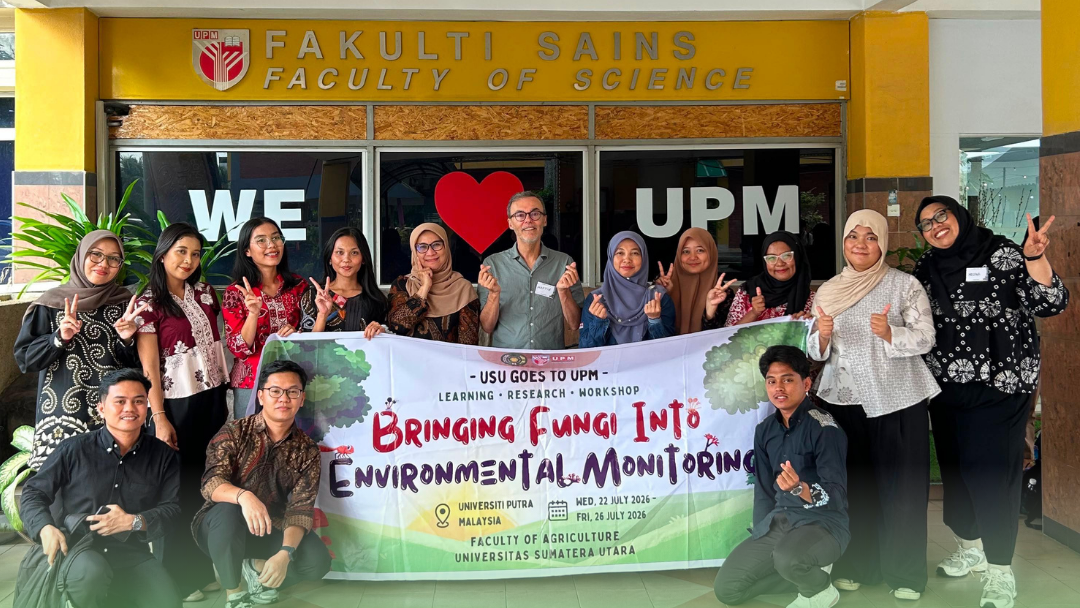
The commitment of the Faculty of Agriculture, Universitas Sumatera Utara (FP USU), to supporting sustainable development continues to be realized through strengthening education, advancing scientific knowledge, and expanding international academic networks. One such effort was the participation of the academic community of the Agrotechnology Study Program in the “Bringing Fungi into Environmental Monitoring” workshop organized by Universiti Putra Malaysia (UPM) in Serdang, Malaysia, on July 22–23, 2026.
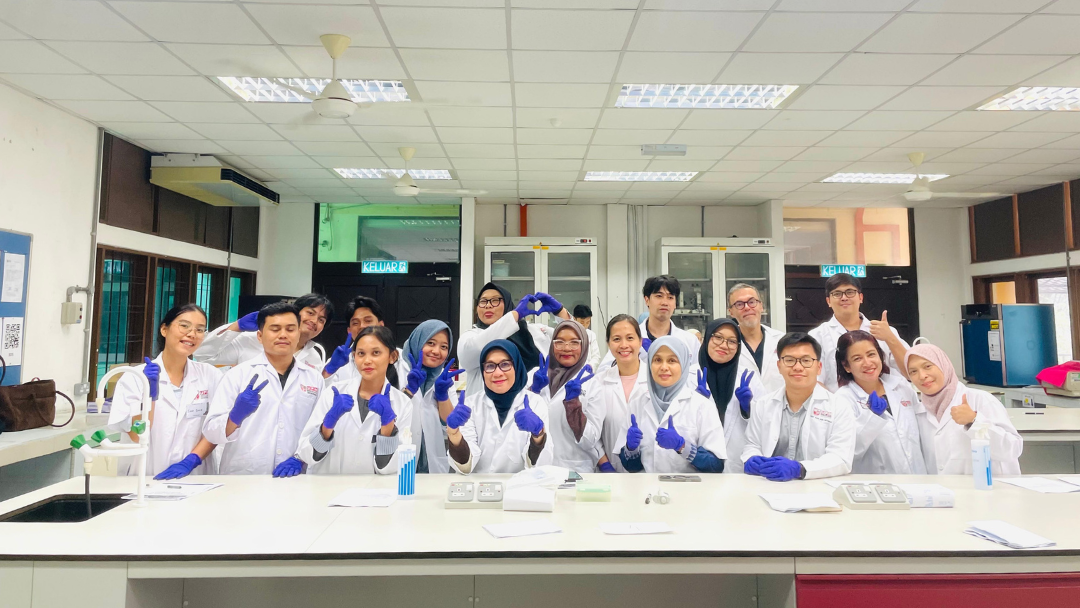
More than simply broadening knowledge, participation in this workshop formed part of FP USU’s efforts to support sustainable development. The use of fungi in environmental monitoring provides new perspectives on more sustainable ecosystem management, while interactions with academics and participants from various countries create opportunities to strengthen international networks. These efforts are in line with SDG 4 (Quality Education), SDG 15 (Life on Land), and SDG 17 (Partnerships for the Goals).
The workshop introduced the role of fungi, particularly mycorrhizae, in environmental monitoring and maintaining ecosystem balance. Participants also gained an understanding of fungal–plant interactions, nutrient cycles, and the application of molecular techniques to support research on fungi and the environment. Bringing together experts and academics from various institutions, the event also welcomed participants from Malaysia, Thailand, the Philippines, and the United Kingdom, creating a space for learning and knowledge exchange within an international academic environment.
Sharing Expertise, Strengthening Biological Innovation
One of FP USU’s contributions to the activity was demonstrated by Prof. Dr. Lisnawita, S.P., M.Si., a faculty member of the Agrotechnology Study Program, who served as one of the speakers. In the session “Integrating Trichoderma-Based Biocontrol with Mycorrhizal Approaches,” Prof. Lisnawita discussed the integration of Trichoderma as a biological control agent with mycorrhizae to support plant health and sustainable ecosystem management. This approach presents an opportunity for developing microorganism-based agricultural technologies that are environmentally friendly.
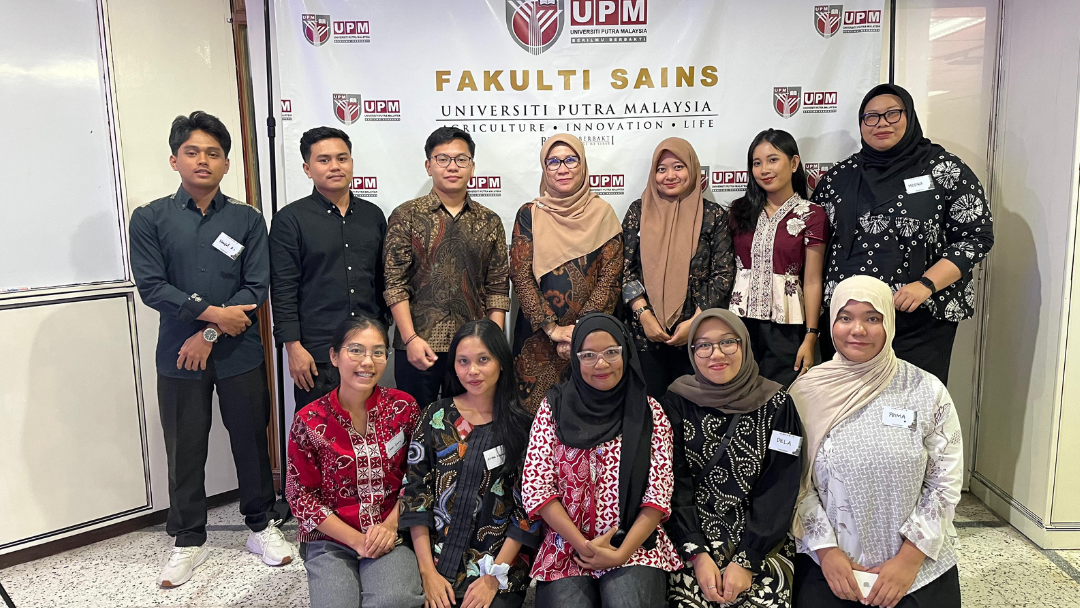
The activity was attended by three faculty members of the Agrotechnology Study Program, namely Prof. Dr. Lisnawita, S.P., M.Si.; Nahrisa Rahmadhani, S.Agr., M.Si.; and Triwanto Nababan, S.P., M.Agr.; one student from the Master’s Program in Agrotechnology, Medina Shafira; one laboratory technician, Indri Eqlesia Ujung; and six students from the Undergraduate Program in Agrotechnology, namely Naufal Adwiditya Sudanta, Salwa Khovivah Anggi Br. Manurung, Enjel Silvia Sebayang, Primanessy Uli Azzahra Simanjuntak, Dela Tri Ramadhani Hasibuan, and Kristin Natalia Br. Barasa. The participation of various members of the academic community demonstrates FP USU’s enthusiasm for expanding academic experiences at the international level.
The experience gained throughout the workshop serves as valuable capital for the academic community of FP USU to continue developing. Beyond enriching knowledge, the activity also provided new perspectives on developments in the fields of fungi and environmental science. This spirit is expected to encourage the emergence of innovations that c