


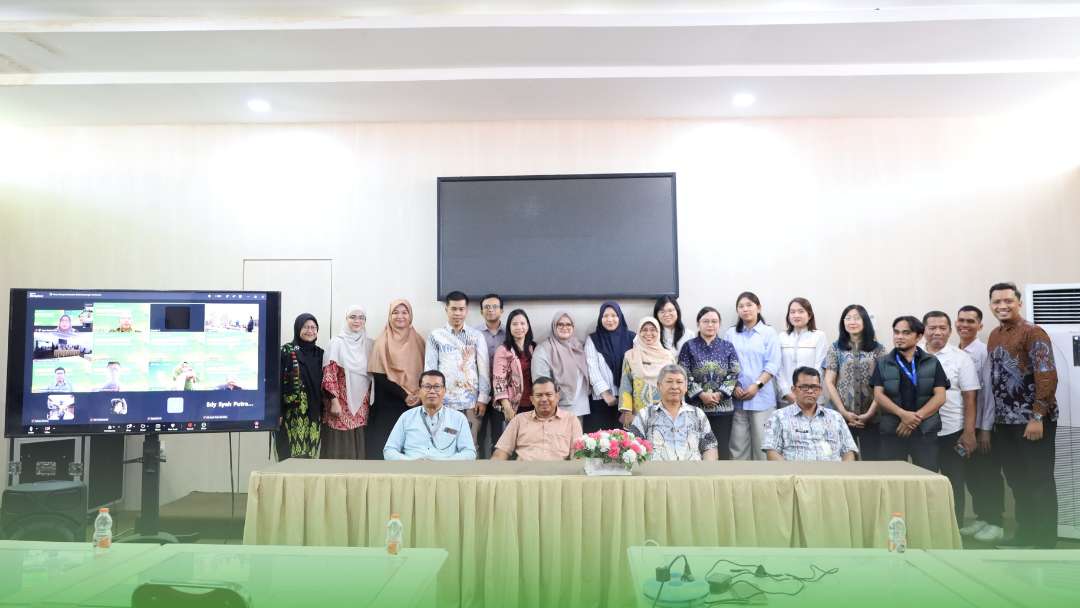
Medan, [6/8] — The Undergraduate Program in Food Technology, Faculty of Agriculture, Universitas Sumatera Utara (FP USU), organized a Focus Group Discussion (FGD) on an Outcome-Based Education (OBE)-based curriculum at the DH Penny Hall, Faculty of Agriculture USU. This activity was an important part of efforts to refine the curriculum so that it becomes increasingly relevant to developments in science and technology, industry needs, and future food development challenges.
The FGD brought together perspectives from various stakeholders, including higher education institutions, government agencies, industry, professional associations, alumni, and students. The involvement of various parties serves as an important foundation for ensuring that the curriculum is not only oriented toward theoretical mastery but also capable of developing the competencies, character, and readiness of graduates to contribute to society.
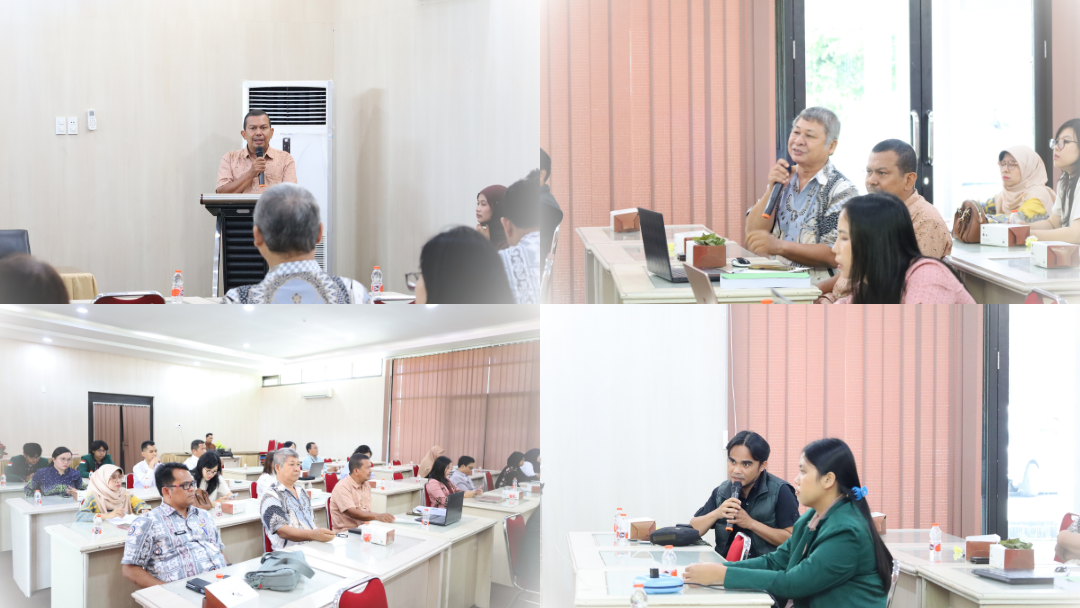
In the first session, Prof. Dr. Ir. Tyas Utami, M.Sc., Head of the Department of Food and Agricultural Product Technology, Faculty of Agricultural Technology, Universitas Gadjah Mada, delivered a presentation on the Implementation of Outcome-Based Education in Food Technology Curriculum Development. The curriculum development practices at UGM served as one of the benchmarks for developing the Food Technology curriculum at USU. Meanwhile, Prof. Dr. Ir. Eko Hari Purnomo, S.T.P., M.Sc., Professor at the Institute of Food Technology, IPB University, discussed Food Technology Graduate Competencies in Facing the Food Industry 5.0. In the OBE approach, the curriculum, learning process, and assessment system must be designed in an integrated manner so that learning outcomes can truly be measured through the competencies possessed by students.
A Curriculum More Relevant to Industry and Community Needs
The FGD produced a number of strategic inputs for curriculum refinement. These included sharpening Graduate Learning Outcomes (CPL), Course Learning Outcomes (CPMK), and Sub-Course Learning Outcomes (Sub-CPMK) to make them more specific and measurable, updating learning references, developing clearer assessment rubrics, and evaluating courses with overlapping study materials or those that are less relevant to the development direction of the Undergraduate Program.
The partners also emphasized the importance of strengthening competencies needed to address developments in the food industry, including food safety, HACCP, ISO, GMP, quality control, manufacturing technology, automation, digitalization, artificial intelligence (AI), food management, entrepreneurship, auditing, and competency certification. In addition, the curriculum is directed toward further strengthening the characteristics and potential of food commodities in North Sumatra. Several inputs included the development of cocoa, coconut, palm oil, sugarcane, and local tuber commodities, including strengthening the understanding of CPO downstreaming as one of North Sumatra's strategic commodities. Strengthening experiential learning was also a concern. Internship programs, field practice, industry involvement, and more applied learning were considered important so that students not only understand concepts but are also able to apply them in real situations.
Contribution to the Sustainable Development Goals
The refinement of the OBE Curriculum of the Undergraduate Program in Food Technology, Faculty of Agriculture USU, also has a strategic connection to the achievement of the Sustainable Development Goals (SDGs). Five goals relevant to the substance of the FGD include:
- SDG 1 – No Poverty
A curriculum that strengthens competencies in food technology, entrepreneurship, business management, and agricultural product downstreaming can equip students to create added value from local food resources. Strengthening food entrepreneurship and the ability to develop and market products can create opportunities for new innovations and food businesses. This is in line with the spirit of SDG 1 to expand economic opportunities and strengthen the resilience of communities to various vulnerabilities. - SDG 2 – Zero Hunger
Food technology plays a direct role in supporting food security through the development of processing technologies, increasing the added value of local commodities, food safety, nutritious food, and food product innovation. The FGD inputs regarding innovations in processing local tubers, downstreaming plantation commodities, and strengthening food safety demonstrate the importance of a curriculum in preparing graduates who are able to contribute to a safe, sufficient, and sustainable food system. SDG 2 itself emphasizes ending hunger, achieving food security, improving nutrition, and promoting sustainable agriculture. - SDG 3 – Good Health and Well-Being
Strengthening materials on food safety, HACCP, GMP, ISO, quality control, food safety regulations, and functional food development is an important part of producing graduates who understand the relationship between food quality, food safety, and public health. A curriculum that equips students with the ability to ensure safe and quality food ultimately supports the creation of a healthier food environment. - SDG 4 – Quality Education
The OBE Curriculum FGD directly supports SDG 4 through the development of higher education oriented toward learning outcomes. In OBE, the learning process, curriculum, and assessment system must be consistently connected. The FGD also encouraged active learning, assessment covering cognitive, psychomotor, and affective aspects, as well as strengthening learning experiences through internships and off-campus learning. This approach is aimed at producing relevant and effective learning for students. SDG 4 emphasizes the importance of inclusive and quality education and lifelong learning opportunities. - SDG 17 – Partnerships for the Goals
One of the main strengths of the FGD was the involvement of various stakeholders in the curriculum development process. Higher education institutions, industry, government agencies, professional associations, alumni, and students provided different perspectives to ensure that the curriculum has both academic relevance and practical relevance. This collaboration strengthens the relationship between higher education institutions and the world of work while opening opportunities for cooperation in education, research, community service, internships, competency certification, and innovation development. This is in line with the spirit of SDG 17, which places partnerships as an important instrument for achieving sustainable development.
Toward a Future-Ready Food Technology Curriculum
The results of the FGD will subsequently serve as important input for the Undergraduate Program in Food Technology, Faculty of Agriculture USU, in refining the curriculum design. Several follow-up agendas formulated include sharpening CPL, CPMK, and Sub-CPMK; updating references and assessment rubrics; reorganizing courses; strengthening food safety, management, entrepreneurship, and the latest technologies, including AI; as well as strengthening internship programs, competency certification, and student character development.
Through the implementation of the OBE Curriculum, the Undergraduate Program in Food Technology, Faculty of Agriculture USU, is committed to building an education system that is more relevant, adaptive, measurable, and oriented toward future needs. The curriculum is positioned not only as a learning instrument but also as a strategic instrument for preparing graduates who are able to contribute to strengthening the food system, public health, economic development, improving education quality, and sustainable development.
With a spirit of collaboration and continuous improvement, the Undergraduate Program in Food Technology, Faculty of Agriculture USU, continues to move forward to produce excellent, innovative, and well-rounded graduates who are ready to face the transformation of the food industry toward the 5.0 era.