


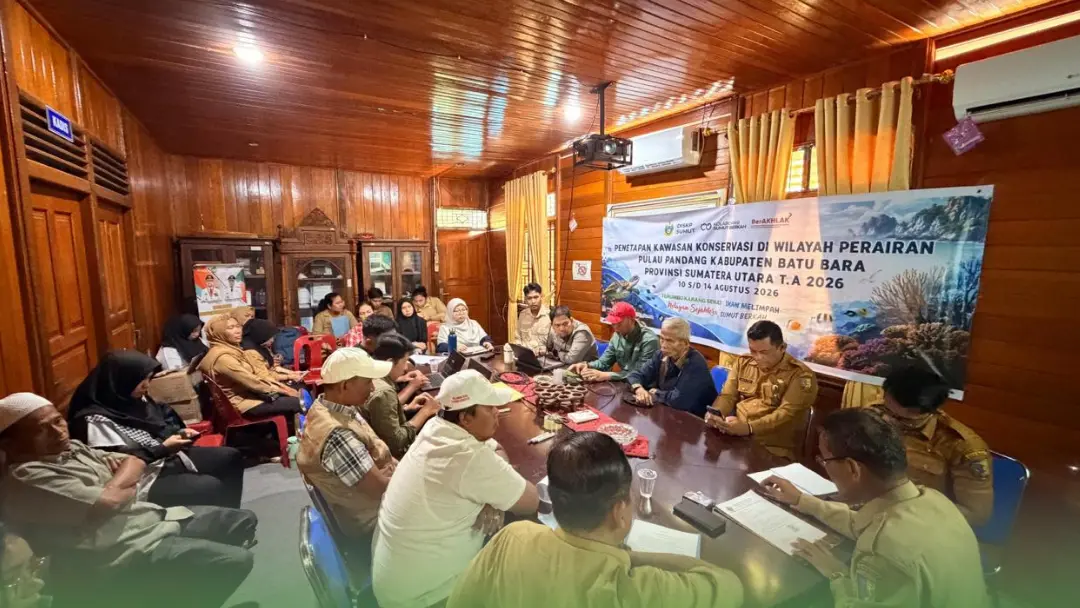
Universitas Sumatera Utara (USU) continues to strengthen the role of higher education institutions in supporting sustainable marine resource management through its involvement in the process of establishing the Pulau Pandang marine conservation area in Batu Bara Regency, North Sumatra Province. The activities, conducted from August 10–14, 2026, form an important part of developing a data-driven management framework that incorporates scientific evidence while considering the needs of coastal communities.
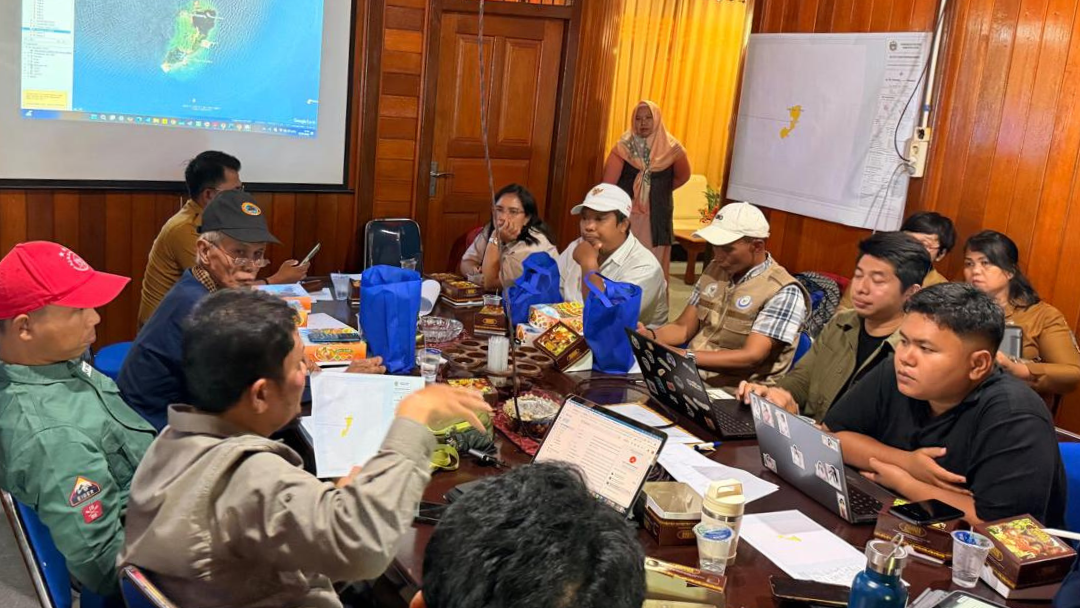
The activities involved various stakeholders, including local government, technical agencies responsible for marine and fisheries affairs, communities, and other relevant stakeholders. This collaboration was aimed at obtaining a comprehensive overview of ecosystem conditions, patterns of marine spatial use, fishing activities, as well as the social and economic conditions of communities surrounding Pulau Pandang.
The implementation team was led by Dr. Ahmad Muhtadi, S.Pi., M.Si., a lecturer in the Undergraduate Program in Aquatic Resources Management, Faculty of Agriculture, USU. According to him, the establishment of a conservation area is not solely intended to restrict community activities in marine spaces, but rather to create a management system capable of balancing ecosystem protection with sustainable resource utilization.
“The establishment of a conservation area must provide ecological as well as social and economic benefits for communities. Therefore, its development process needs to consider ecosystem conditions and community patterns of resource utilization,” explained Ahmad Muhtadi.
In developing the proposed conservation area, the USU team applied a scientific and participatory approach through several stages, including data collection and analysis, focus group discussions, field assessments, and consultations with stakeholders.
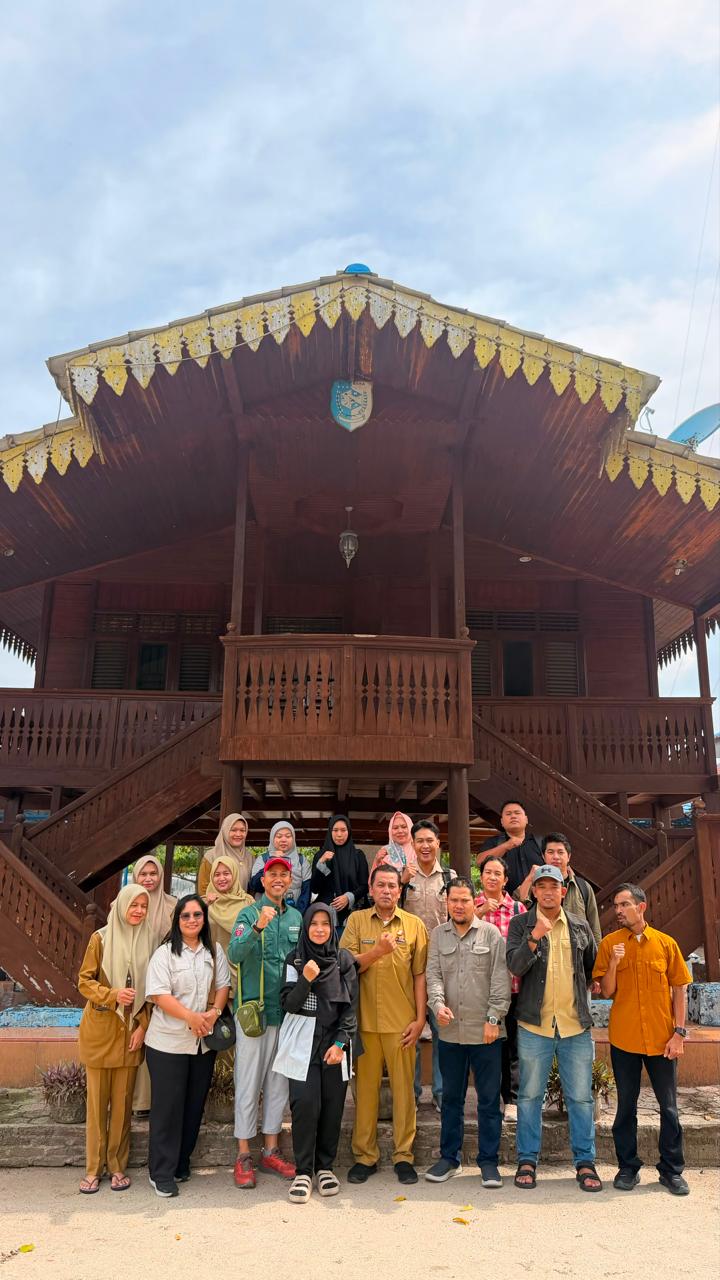
Ecological assessments were conducted on several important marine ecosystems and components, including coral reefs, seagrass beds, mangroves, reef fish, megabenthos, important habitats, protected species, and areas with high conservation value. The assessment also considered ecosystem resilience in responding to various pressures, including the impacts of climate change.
In addition to ecological aspects, the team assessed the socio-economic conditions of coastal communities. The assessment covered community dependence on fisheries resources, fishing patterns and locations, fisheries product marketing chains, community perceptions of ecosystem protection, and community readiness to participate in conservation area management.
The data and information collected were subsequently used as a basis for spatial planning analysis and zoning modeling. This approach is expected to produce recommendations regarding the location, function, and size of zones that can effectively protect habitats and maintain sustainable fish stocks while still providing space for community activities conducted in a sustainable manner.
USU’s involvement in the establishment of the Pulau Pandang marine conservation area also represents the university’s contribution to achieving the Sustainable Development Goals (SDGs).
The initiative directly supports SDG 14: Life Below Water through efforts to protect coral reefs, seagrass beds, mangroves, important habitats, and fishery resources. It also supports SDG 8: Decent Work and Economic Growth by maintaining the ecological foundations necessary for sustainable fisheries, marine tourism, and coastal livelihoods.
From an environmental resilience perspective, the initiative also contributes to SDG 13: Climate Action, particularly through the protection of coastal ecosystems that play an important role in climate change adaptation, coastal protection, and strengthening the resilience of ecosystems and communities.
Meanwhile, the collaborative process involving higher education institutions, government, communities, and various stakeholders reflects a contribution to SDG 17: Partnerships for the Goals.
Through this initiative, USU reaffirms its commitment to placing scientific knowledge at the foundation of public policy formulation and natural resource management. The involvement of lecturers and academic teams also represents an implementation of the Tridharma of Higher Education, particularly through applied research and community engagement that provides tangible benefits for regional development.
The results of the activities are expected to strengthen the proposal documents and recommendations for the establishment of the Pulau Pandang marine conservation area, including its zoning plan and management direction. With adequate scientific data and shared understanding among stakeholders, the Pulau Pandang conservation area is expected to help maintain marine ecosystem health, ensure the sustainability of fishery resources, and support the well-being of coastal communities in North Sumatra.