


Learn more about various concentrations, explore the Curriculum adjust your Course Schedule to fit your time, know the required Tuition Fees, and understand the expected learning outcomes All the information you need to start your academic journey is here.

Concentration
The following is a list of specializations contained in Undergraduate Program in Food Technology
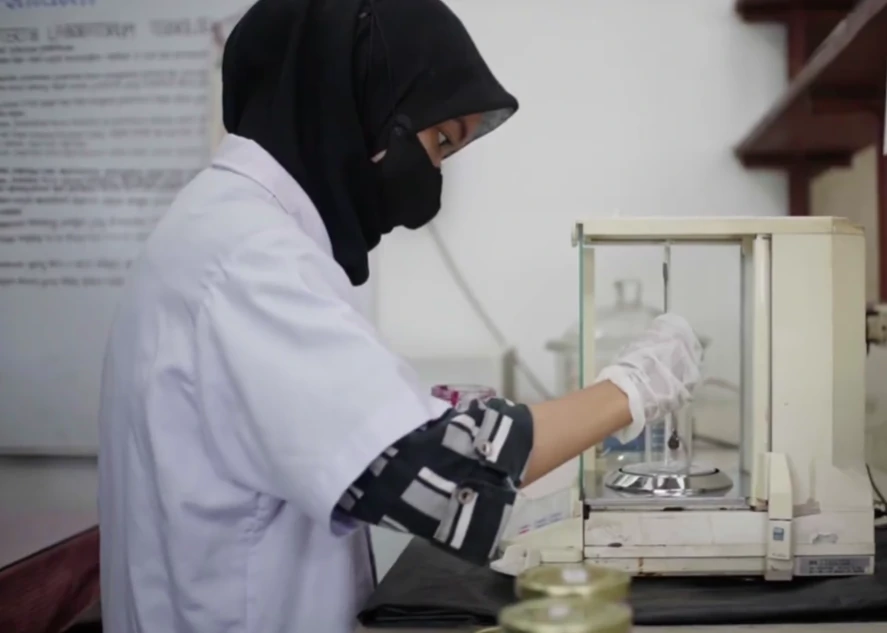
Food Chemistry and Analysis
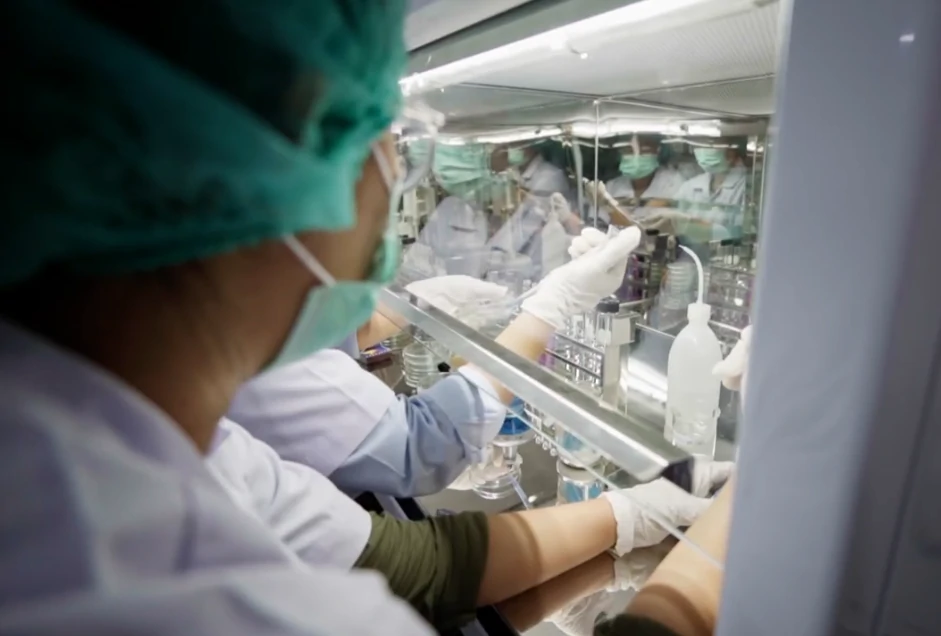
Microbiology and Food Safety
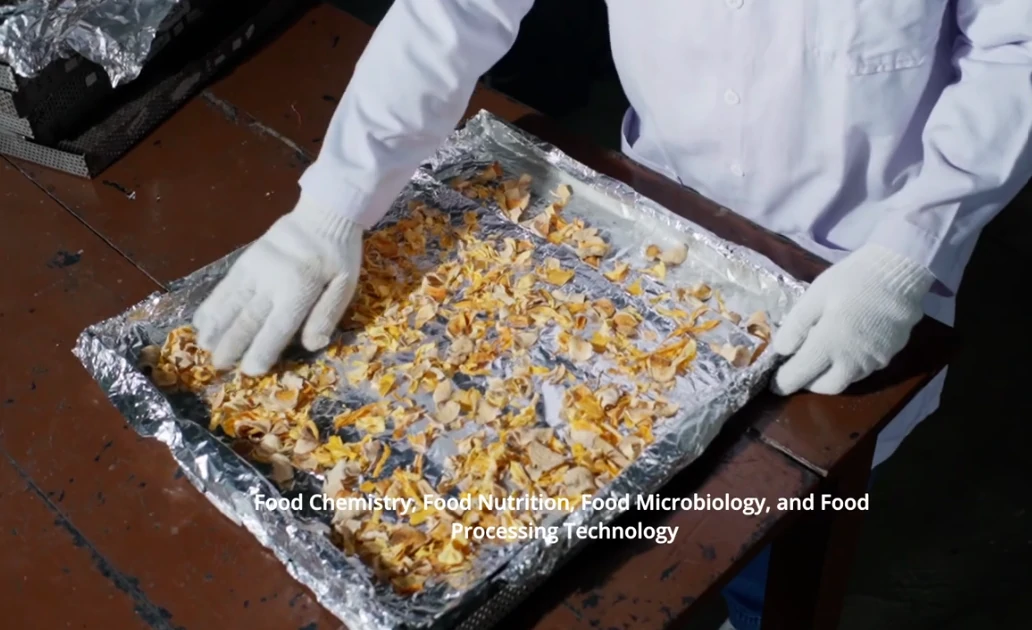
Food Process Engineering
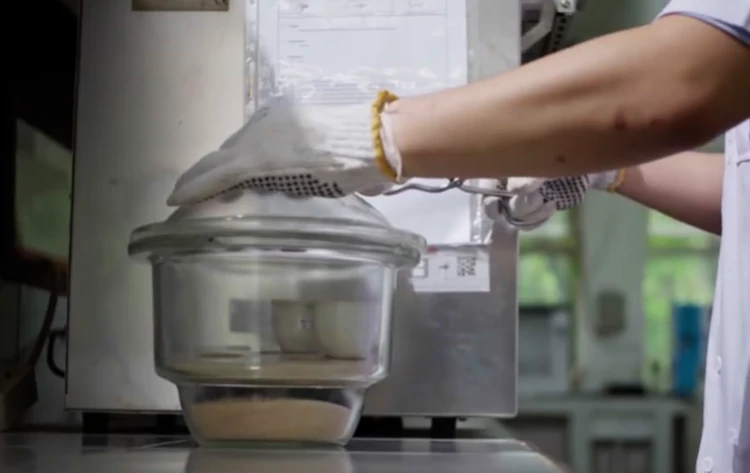
Food Science
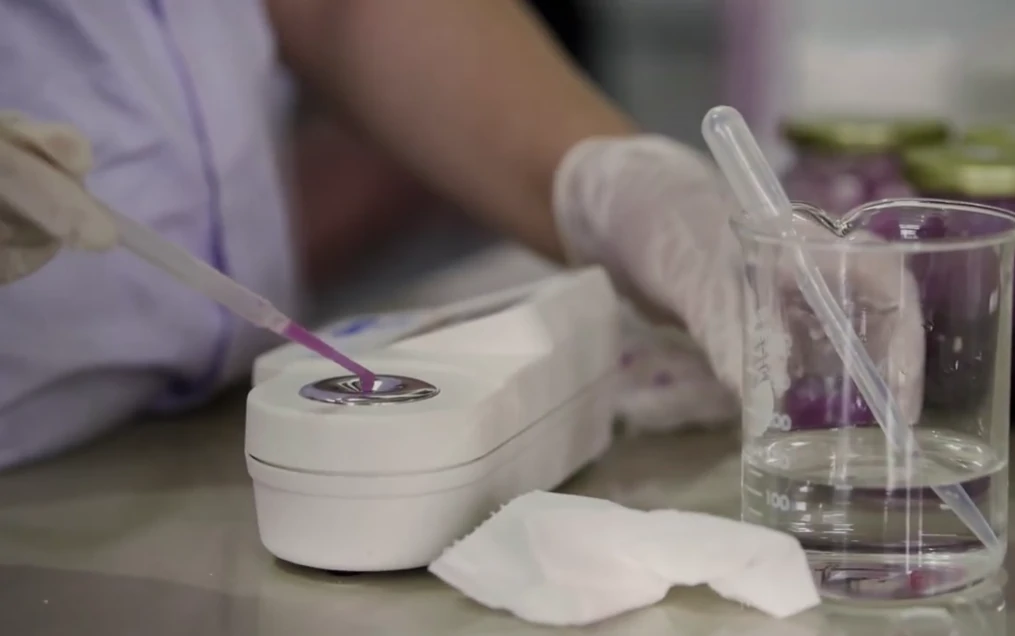
Food Biochemistry and Nutrition
Curriculum
In this course, students will learn the preparation of samples for chemical and physical analysis, how to analyze the content of protein, carbohydrates, fat and oil, ash, water, vitamins, minerals, pigments, anti-nutritional ingredients, and additives.
Students will learn extraction techniques, centrifugation, dialysis, spectrophotometry, chromatography and electrophoresis, as well as chemical analysis skills techniques which include the introduction of food chemical analysis tools, reagent calculations, proximate analysis (water, ash, protein, fat, carbohydrates, chemical analysis of vitamins and minerals) with various methods.
In this course, students will study the palm oil processing process which includes harvesting, processing, and changes that occur during processing.
Students will practice the determination of palm oil quality including free fatty acid (ALB) content, moisture content, impurities content. Students will also practice the determination of palm kernel quality which includes oil content, moisture content, color, broken fraction, and core impurities.
In this course, students will study the processing of cocoa, coconut, tea and sugarcane, as well as the physical and chemical changes that occur during processing.
Students will practice cocoa and coffee processing, determination of sugarcane quality including total soluble solid (TSS) and pH, and determination of caffeine content in coffee.
In this course, students will learn about writing scientific reports, observing and formulating problems, formulating hypotheses, collecting data, designing experiments, and analyzing and interpreting data.
In this course, students will study the background of new food product development, product idea development, product idea screening, product design (including technology and engineering in product development), prototype development, consumer behavior study and its role in food product development, market evaluation, marketing planning, product production and launch, legal protection of new products, and new food product development trends.
In this course, students will study the elements of body health, components and roles of nutrients and bioactive food, food commodities with potential as health food, principles of functional food processing, and analysis of commercial functional food products.
In this course, students will do work practice in companies / agencies / business units engaged in the food sector. This course teaches about industrial insight: work culture, discipline towards rules and time, work creativity, work motivation, accuracy and thoroughness of work, observation of industrial organization, and observation of industrial management, productive activities; introduction to production and production machines, production stages and production activities, communication; observation of the communication process, appreciation of the communication process, collaboration, observation of the process of collaboration in the industry, collaboration with workers, supervisors and superiors, and planned meetings.
This course discusses the understanding of the nature of man and the universe (kauniyah and tanziliyah verses). Tanziliyah verses include aqidah, sharia, morals, and Islamic history. The main emphasis is on the application of these teachings to daily behavior.
This course discusses the application of basic Christian faith and responsibility to God through empathy towards others and the environment.
This course discusses the concept of faith in the church, church life, and society to develop the personal attitude and mentality of a Catholic scholar for the benefit of Indonesian society as an expression of their faith.
This course discusses the understanding, appreciation and practice of Hinduism, strengthening faith and belief, the history of Hindu development, the Vedas, the basis of Hindu belief, techniques for achieving religious goals, Hindu philosophy, Hindu ethics, Yadnya, Hindu society, and the basis of Hindu leadership.
This course discusses the main teachings of Buddhism and its application in the fields of science and technology, and its proper practice in daily life, nation and state.
This course discusses the main teachings of Confucianism and its application in the fields of science and technology as well as its good and correct practice in daily life, nation, and state.
This course discusses the main teachings of Belief in God Almighty and its application in the fields of science and technology as well as its proper practice in daily life, nation, and state.
This course discusses the foundations and objectives of Pancasila Education, Pancasila in the context of the history of the struggle of the people of Indonesia, Pancasila as a system of philosophy, Pancasila as political ethics and national ideology, Pancasila in the context of the constitution of the Republic of Indonesia, and Pancasila as a paradigm of life in society, nation, and state.
This course discusses the measurement of physical quantities, unit systems, vectors, straight motion, motion in two dimensions, Newton's law, work and energy, the law of conservation of energy, particle systems, impulse and momentum, collisions, harmonic motion, statistics and fluid dynamics, heat, the laws of thermodynamics, waves and sound, electrostatics, direct current, alternating current, and magnetic fields.
This course discusses elements and compounds, stoichiometry, periodic systems, electron configuration, atoms and molecules, hybridization and resonance, gasses and gas laws, liquids and vapor pressure, solutions, types of solutions, colligative properties of solutions, equilibrium in solutions, and pH.
This course discusses derivatives and the use of derivatives, integrals and the use of integrals, integrating techniques, and an introduction to differential equations.
This course discusses the meaning and purpose of agricultural technology; food problems in relation to quality, shortages, and how to overcome them; types of damage, causes, and efforts to overcome them; principles of postharvest technology and preservation, a description of the basic processing of important commodities, both food and industrial crops; food and animal crops, rubber, oil palm, and cocoa.
This course discusses knowledge of plant and animal food commodities, including: sources, production, varieties/races/breeds, postharvest and postmortem physiology, morphology and histology, as well as preparation and treatment for fresh storage and distribution. The discussion is grouped by nature or source, namely: vegetables, fruits, grains, cereals, meat, poultry, fish, milk, eggs, fresheners and spices.
In this course, students will practice in observing the biological and physiological characteristics, physical, hydratation of materials, browning reactions, properties and quality of cereals, tubers, plantation products, livestock, and fisheries.
This course will study the understanding and physiology of nutrition related to the function and work of the food digestive system; body composition and nutrient requirements; the behavior of nutrients, carbohydrates, proteins, fats, vitamins, and minerals in the body; energy and water requirements, RDA, and nutrient deficiency and excess.
This course covers the functions and foundations, growth and understanding of Indonesian nationalism, Pancasila and the 1945 Constitution, government systems, moral ideology, the limits of citizenship, human rights and democracy and the rights and obligations of citizens, national insight and rationale, the purpose of national insight and basic elements, national resilience, and the main ideas about national resilience.
This course covers language as a means of oral and written communication, grammar (structure and effectiveness), composition spelling, diction, reasoning, paragraphs, and scientific writing.
This course studies the properties of carbon and its compounds, hydrocarbons, name and formula writing, isomers, hydrocarbon derivatives, alcohols and thioalcohols, ethers and thioethers, amines, aldehydes, ketones, acids, esters, acid derivatives, polyfunctional compounds, and introduction to biochemical compounds.
This course studies the latest developments in biology, basic materials and their applications in biotechnology and the environment, cell structure and function, bioenergetics, cell reproduction, gene structure and expression, DNA technology, recombinants, and the human genome.
This course studies agro-industry, agro-industry development strategies, as well as rubber, palm oil/coconut, cocoa, coffee, tea, tobacco, food, and horticulture agro-industries.
This course studies the basic application of process engineering which includes material handling, size reduction, enlargement, separation of materials by sedimentation, centrifugation, and filtration, mixing and homogenization.
Students will practice fluid mechanics, conduction heat transfer, convection heat transfer, combination heat transfer, calculate conductivity, calculate convection coefficient, size reduction, fineness modulus, and heating air flow rate.
This course will study the definition of microbiology, the nature of microbes history and the role of microbes in nature, an overview of protists, bacteria, actinomycetes, yeasts, molds, algae, protozoa, viruses, myxobacteria, viral rickettsia and microplasma, nutrition and metabolism, microbes and their environment, and microbial calculations.
Students will practice microbial identification and determination which includes observing the morphology of fungi from pure culture, yeast, painting and morphology of bacteria which includes negative painting, simple painting, gram painting and acid fast painting "Ziehl Neelsen Method", addition and isolation of microbes, making medium (nutrient agar) and observing the shape of bacterial growth colonies, calculating the number of microbes and milk microbiological tests.
This course studies the history and development of fermentation, fermentation principles, isolation and selection of microbes for fermentation, mechanisms of metabolic regularity and their manipulation for industrial fermentation products, fermentation kinetics, traditional food fermentation processes, secondary biosynthesis products, and bioconversion based on agricultural products.
This course studies the nation's challenges to progress, human quality, time factors and the demands of the times and the role of entrepreneurial mental attitudes, the meaning and important elements of entrepreneurship, ability, success and self-confidence, and the role of faith factors, the development of initiative between knowing and doing, the role of human thinking, ideas and the development of creativity, positive thinking, the meaning and role of capital, time and efficiency, action as capital, the meaning of capable life and factors that play a role, various business opportunities and various types of human needs, agribusiness, agrotourism, small businesses, factors to consider in business plans, the role of good relations, impressions and images and various selling techniques, business feasibility, and several examples of business profiles.
This course discusses various approaches to practice so as to develop individuals organically, neuromuscularly, intellectually and emotionally in practice including movement formation, social formation and body growth utilizing the local environment, regional culture, and traditional activities.
This course studies carbohydrates (mono-, di-, and polysaccharides), fatty acids, fats and other lipids, amino acids and proteins, nucleotides and nucleic acids, DNA and RNA, enzymes and cofactors, vitamins, carbohydrate metabolism, respiration and photosynthesis. Practice on monosaccharides, disaccharides, polysaccharides, fatty acids and fats, amino acids and proteins, enzymes and cofactors, vitamins, carbohydrate metabolism (anaerobic and aerobic respiration).
This course studies the understanding and position of quality control in a processing unit, quality determinants and measurement principles objectively with tools and subjectively with sensory tests, quality standards and their development, as well as how to control quality and develop process implementation in processing units.
In this course, students learn the application of chemical, microbiological and engineering principles in processing and preservation by considering quality factors (physical, chemical, microbiological, and nutritional) and product acceptability. The material covers fresh preservation technology, low temperature preservation, high temperature processing (drying, canning process, microwave application), chemical preservation, semi-wet products (IMF), extrusion, and the use of supercritical fluid extraction.
Students are given laboratory assignments to improve skills in food processing which include the introduction of process control equipment in food processing, high acid food canning technology, drying technology (ordinary / vacuum oven, drum dryer, sun drying), fruit cooling technology (minimal process technology), heat penetration, high pressure cooking, and material processing (case: soybean and corn processing).
In this course, students will study the chemistry of agricultural products, such as the constituents of agricultural products in general, the constituents of water, carbohydrates, proteins, lipids, enzymes, pigments, vitamins and minerals, as well as flavors and food additives.
In this course, students will learn the introduction of biochemistry in relation to food science and technology which includes prokaryotic and eukaryotic cell biochemistry, biomolecules, the role of water, protein and amino acid biochemistry, enzymes, hemoglobin, myoglobin, actin, myosin, antibodies, bioenergetics, glycolysis, Krebs cycle, electron transport, oxidative phosphorylation, gluconeogenesis, beta oxidation of fatty acids, biosynthesis of carbohydrates, amino acids and lipids, nucleic acid biochemistry, replication, transcription and translation.
In this course, students will study the purpose and function of packaging, interaction of food and packaging materials, types of packaging materials and the ability to select, use and test packaging materials, edible films and biodegradable films, expiration of food products, labeling systems, information and promotion, regulations in national and international trade concerning packaging (CODEX, ISO, GATT, Ecolabelling, AFNOR), packaging techniques with atmospheric settings, aseptic, various storage techniques for food ingredients and products, quality deviations of food ingredients and products during storage, understanding of warehouse pests, pesticides and pesticide residues, the ability to detect pest attacks and control them in an integrated manner, as well as microbial contamination and the formation of mycotoxins.
In this course, students will study changes in the physiological properties of microbes, microbiological food damage during processing and storage, the onset of disease and the occurrence of poisoning due to contaminant microbes in food, how to detect contaminant microbes that cause health problems, food microbiology standards as well as hygiene and sanitation in processing, observation of damage to plant and animal foods and processed products by microbes, the effect of low, medium and high temperatures on microbes, fermented food products, making microbial inoculum (baker's yeast, tape yeast, tempeh laru, nata starter), food formulations, and fermentation processes.
In this course, students will study parameters and measurements, measuring instruments and instruments, spectrophotometry, electrochemistry, electronics, measurement of electrical quantities, application of electronics in the laboratory, laboratory management, maintenance and repair of laboratory instruments.
Practice of parameters and measurements, measuring instruments and instruments, spectrophotometric instruments, electronics, measurement of electrical quantities, application of electronics in the laboratory, maintenance and repair of laboratory instruments.
In this course, students will study the types of hazardous substances in food and risk classification of microorganisms, viruses and parasites, chemical hazards and food poisoning hazards, as well as food safety and processing controls. Students will also learn the principles of HACCP in food safety control and the application of HACCP in the food industry, toxins in food ingredients, carcinogens that cause degenerative diseases, and how to overcome the danger of poisoning.
In this course, students will study lot and process, hypothesis testing, t-test, normality test, contingency table, ANOVA, regression and correlation, ANACOVA, experimental design, and optimum conditions.
In this practicum, students will practice completing tasks on descriptive statistics and inferential statistics, lots and processes, hypothesis testing, difference tests, linear regression, multiple linear regression, linear regression for design, complete randomized design with One Way ANOVA, and group randomized design with Multivariate Anova.
In this course, students will study the definition of sensory properties of agricultural products, senses and sensory mechanisms in relation to material assessment, psychological and physiological factors that affect sensory responses, sensory test facilities (samples, laboratories, and panelists), as well as types of sensory testing and statistical data processing (differentiation test, scoring test, favorability test, descriptive analysis, and consumer studies).
In this practicum, students will practice testing with the senses of taste, smell, touch, sight, and hearing. Students will also conduct practicum with humans as panelists, organoleptic laboratories, test presentation and preparation, test selection (differentiation test, scoring, favorability test), and data processing with organoleptic tests.
Course Schedule
Tuition Fee
Learning Outcomes
Graduates of the USU Undergraduate Program in Food Technology excel in applying the principles of food processing and post-harvest technology, designing food products with nutritional and functional characteristics, and applying food quality control (microbiological, chemical, physical), food chemical analysis, laboratory instrumentation, and developing new food products.
| Learning Outcomes | |
| 1 | Able to master the basic knowledge required in food technology. |
| 2 | Able to apply the principles of food technology effectively and responsively to produce food products with quality under applicable quality standards and optimal shelf life. |
| 3 | Able to utilize the concepts of food science and food process engineering, design agricultural food products creatively and innovatively, and utilize local Indonesian food ingredients that are good for public health. |
| 4 | Able to show independent, quality, and measurable performance in implementing food quality control methods and evaluating food quality characteristics during the production and post-harvest processes to produce food products under applicable regulations and safe for consumption. |
| 5 | Able to control microbes that cause damage and pathogens in food during the production and storage process carefully and responsibly based on phenotype characteristics, genotypes, growth factors, and microbiological analysis regarding the food products' safety. |
| 6 | Able to apply lifelong learning of food technology principles intelligently, tenaciously, and critically in evaluating food quality and safety programs in the food industry. |
| 7 | Able to apply the principles of food analysis and laboratory instrumentation and compile a scientific description of the analysis results into a scientific work under academic norms and ethics that the community can utilize in their daily lives. |
| 8 | Able to think logically and critically in identifying and presenting alternative solutions to food problems in society by upholding the value of BINTANG (Fearing God Almighty following the frame of diversity, Innovative with integrity, Tough, and Arif). |
| 9 | Able to implement the principles of developing new food products by maximizing soft skills, entrepreneurial spirit, and collaboration in terms of tenacity, creativity, and innovation in formulating Indonesian local food ingredients according to TALENTA's superior processing technology principles. |
| 10 | Able to master knowledge about managerial self-development, professionalism, nationalism, and ethics in the food industry and the wider community. |

Academic Calendar
You can view the USU Faculty of Agriculture’s academic calendar below.

Exam Schedules
You can view the USU Faculty of Agriculture’s exam schedules below.
Course Module
| Title | Description | Link |
| Module Book for the Undergraduate Program in Food Technology | - |

|