


The Doctoral Program in Agricultural Science, Faculty of Agriculture, Universitas Sumatera Utara (USU), held an International Public Lecture titled “Hidden Diversity, Visible Damage: Understanding Ascomycetes Plant Pathogens and Their Impact.” The event featured Assoc. Prof. Dr. Nur Ain Izzati Binti Mohd Zainudin from the Department of Biology, Faculty of Science, Universiti Putra Malaysia, as the main speaker, with Irda Safni, S.P., M.C.P., Ph.D. (Faculty of Agriculture, USU) serving as the moderator.
The lecture, conducted online via Zoom Meeting on Thursday (November 6) at 10:00 a.m. WIB, was attended by the Head and Secretary of the Doctoral Program in Agricultural Science, lecturers from the Faculty of Agriculture, and doctoral students.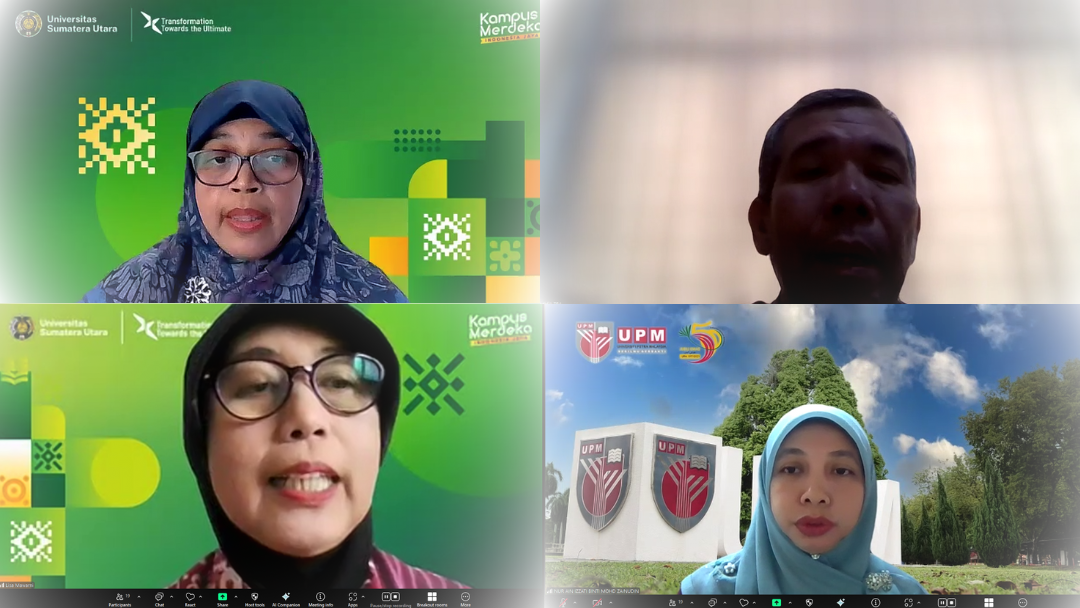
In his opening remarks, Prof. Luthfi Aziz Mahmud Siregar, S.P., M.Sc., Ph.D., Head of the Master’s Program in Agrotechnology and Doctoral Program in Agricultural Science, expressed his hope that the event would broaden participants’ knowledge about Ascomycete plant pathogens.
“Hopefully, this meeting will deepen our understanding of Ascomycete Plant Pathogens and their impacts on cultivation practices. May today’s topic also inspire students to develop relevant research themes,” said Prof. Luthfi.
In her presentation, Assoc. Prof. Dr. Nur Ain Izzati explained that fungi are hidden organisms yet play vital roles in life on Earth.
“Fungi are often invisible to the naked eye, yet they are everywhere — in the soil beneath our feet, in the air we breathe, and even inside plants,” she explained. She added that while many fungi contribute positively to ecosystem balance, others are responsible for plant diseases, damage, and crop losses.
She further elaborated on the classification of Ascomycetes based on morphological characteristics, reproductive cycles, and their relevance to plant diseases. At the end of her lecture, Prof. Nur Ain emphasized the importance of advancing research in genomics, biotechnology, integrated pest management (IPM), and climate change adaptation as future directions for scientific exploration.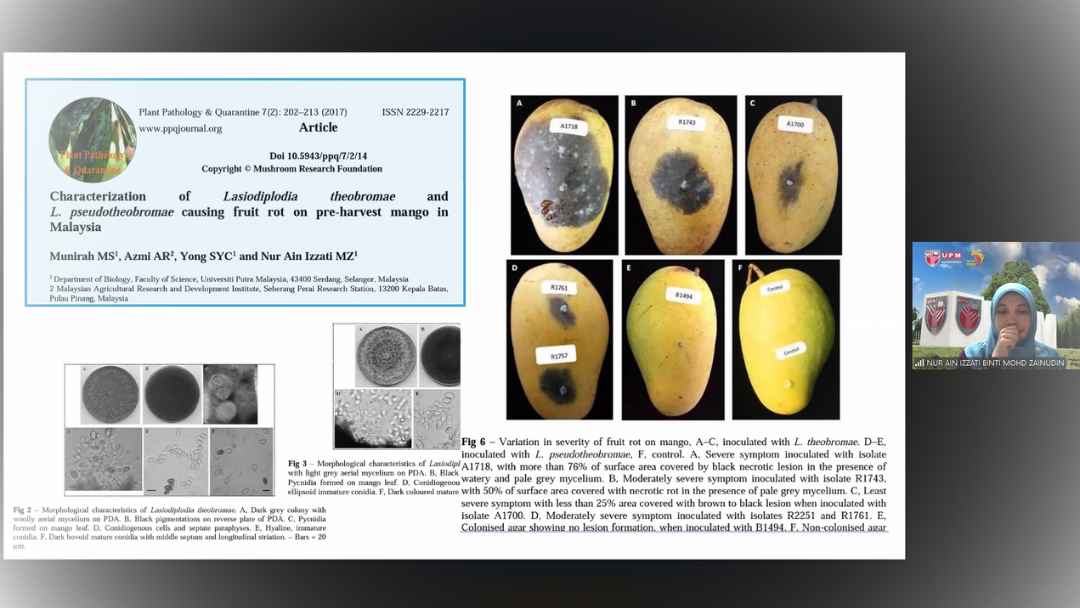
Meanwhile, in her closing remarks, Prof. Dr. Ir. Lisa Mawarni, M.P., Secretary of the Doctoral Program in Agricultural Science, expressed appreciation for the valuable insights delivered during the session.
“The material presented was highly valuable, especially for students interested in plant pathology research. This field still offers vast opportunities for further study and innovation. May the knowledge shared today become a continuous benefit for all of us,” said Prof. Lisa.
Through this International Public Lecture, participants gained new perspectives on the diversity and impacts of Ascomycete plant pathogens and were encouraged to pursue collaborative research that contributes to plant resilience and sustainable agriculture.