


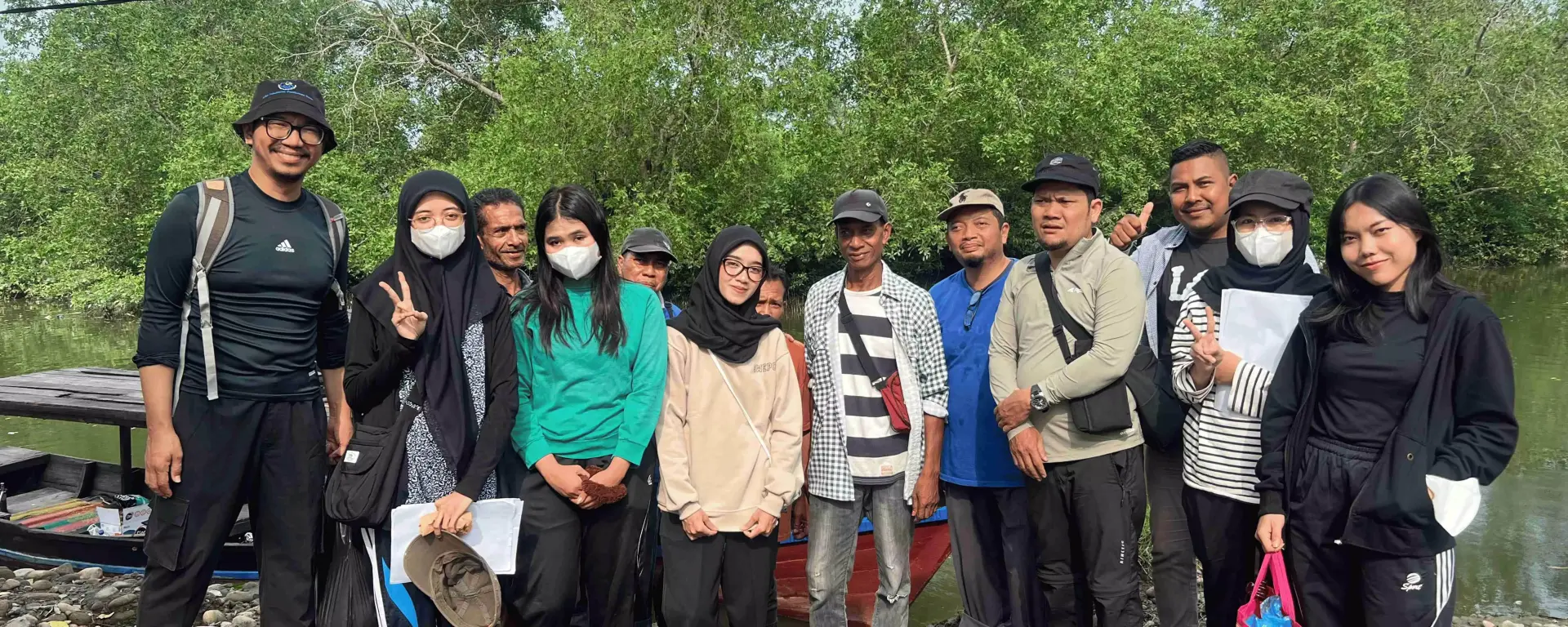
The Aquatic Resources Management (MSP) Study Program, Faculty of Agriculture, Universitas Sumatera Utara (FP USU), in partnership with the Yeah Foundation, conducted aquatic biodiversity research in the Baharu Estuary. The initiative also involved researchers from the National Research and Innovation Agency (BRIN) to strengthen institutional collaboration in aquatic biodiversity studies.
The research team was led by Dr. Ahmad Muhtadi, alongside Rusdi Leidonald, M.Sc., from the MSP Study Program FP USU, and Prawira A. Tampubolon, M.F.Sc., from BRIN. The study aimed to uncover the rich diversity of aquatic biota and provide baseline data for the sustainable management of the Baharu Estuary ecosystem.
As a transitional zone between riverine and marine environments, estuaries exhibit dynamic ecological conditions. The convergence of freshwater and seawater creates diverse habitats supporting various aquatic organisms. Comprehensive biodiversity documentation is crucial for understanding species richness, habitat characteristics, and ecological conservation needs in the area.
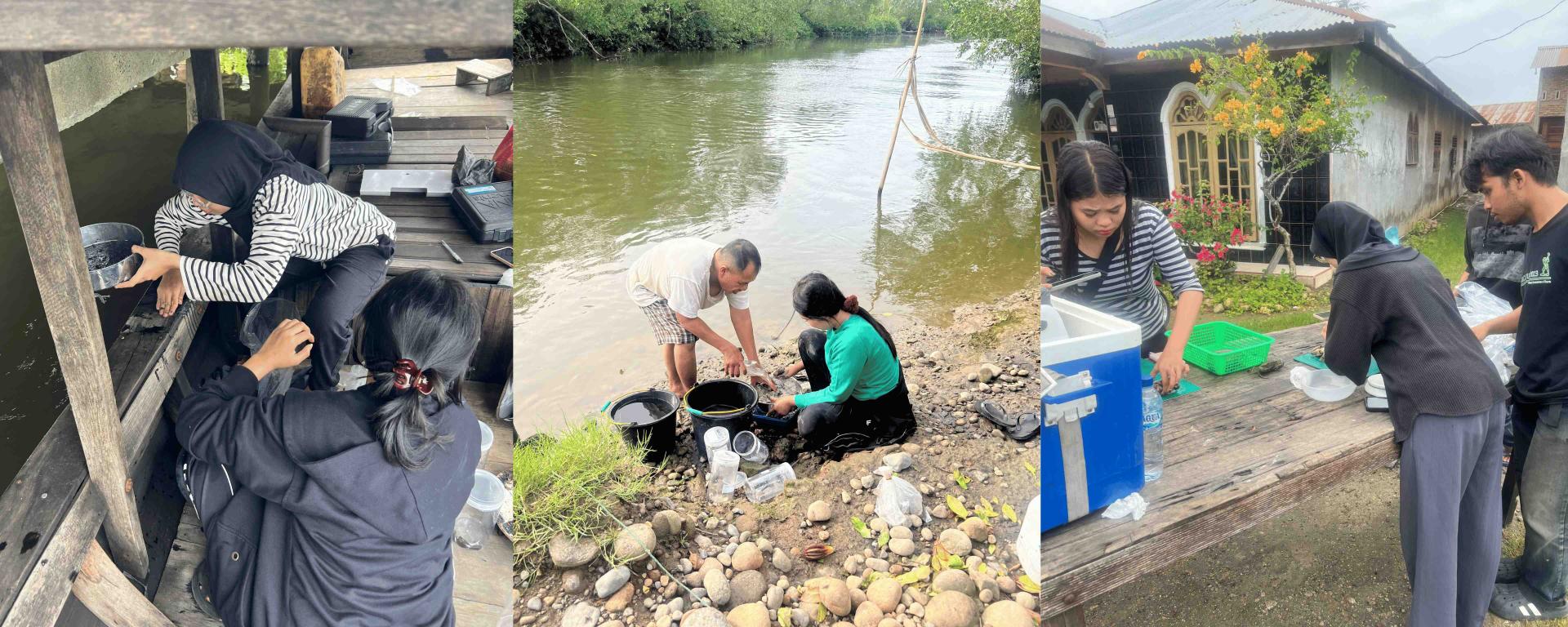
This activity also formed an integral part of the student research field practice (PLPS) within the MSP Study Program FP USU in partnership with the Yeah Foundation. Through direct research involvement, students had the opportunity to bridge classroom knowledge with field realities while learning alongside faculty members, researchers, and partner organizations.
Student involvement was structured to enhance field observation skills, data collection and recording, biota identification, and understanding of organism-environment interactions. This hands-on experience served to foster scientific rigor, teamwork, and environmental stewardship regarding aquatic resource preservation.
The collaboration among USU academics, the Yeah Foundation, and BRIN researchers is expected to enrich knowledge exchange and elevate the quality of aquatic biodiversity studies. Findings generated from this research will serve as a baseline for future studies, ecosystem monitoring, and policy recommendations for managing the Baharu Estuary.
This initiative exemplifies the integration of education, research, and partnerships in advancing environmental conservation. The execution of this project aligns directly with SDG 4 (Quality Education) through research-based learning, SDG 14 (Life Below Water) by expanding coastal and estuarine biodiversity data, and SDG 17 (Partnerships for the Goals) through multi-stakeholder collaboration among higher education, partner organizations, and research institutions.